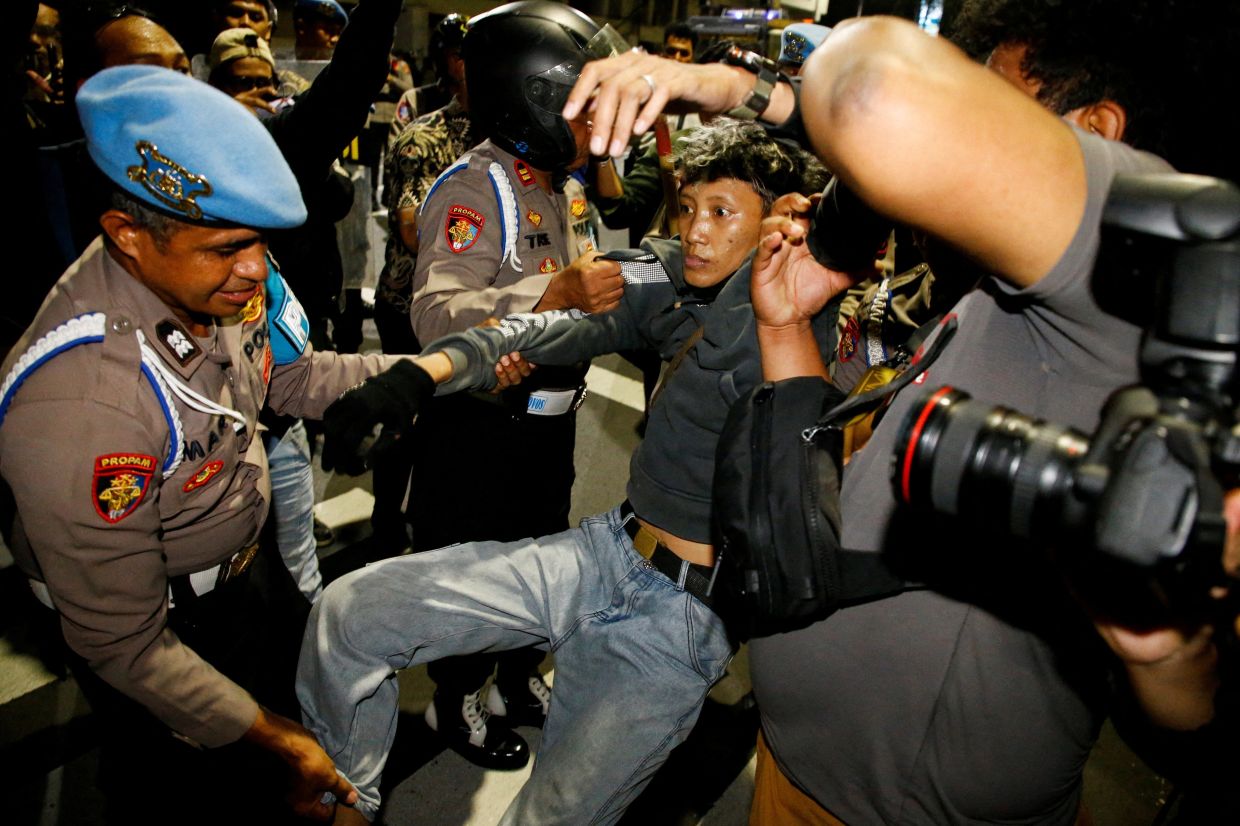
Indonesian police have pressed charges against four individuals following an anti-government demonstration in Surabaya on Friday, marking the latest enforcement action amid widespread public discontent over economic hardship and failed government initiatives. The charges come as authorities continue to grapple with mounting unrest across the archipelago stemming from decisions that have squeezed household budgets and raised serious questions about programme implementation and oversight.
The Surabaya rally, which drew an estimated 100 participants near a government building, reflected deeper frustrations within Indonesian society. Demonstrators gathered to voice opposition to the government's decision to raise prices of non-subsidised gasoline by approximately 30 percent—a significant jump that directly impacts the cost of living for ordinary citizens. Alongside fuel concerns, protesters directed their anger at a flagship free school meals initiative that has descended into controversy following widespread food poisoning incidents and corruption allegations, undermining the programme's stated mission to address child malnutrition.
According to Surabaya Police Chief Luthfie Sulistiawan, some demonstrators engaged in disruptive behaviour, throwing firecrackers and rocks at officers. These actions prompted police to employ what officials characterised as "firm actions" to disperse the crowd. The escalation led to the initial detention of 24 people on the day of the protest, though authorities subsequently released most without formal charges. The four individuals now facing prosecution have been identified as suspects in connection with property destruction and physical assault against police officers.
The enforcement response extends beyond those formally charged. Six additional detainees remain under investigation after authorities discovered controlled substances in their systems, suggesting police are pursuing a multi-pronged approach to address the demonstration and its participants. The selective charging strategy reflects typical Indonesian law enforcement patterns, where authorities distinguish between core organisers or those engaged in violence and peripheral participants.
The fuel price increase represents a critical economic decision by Indonesia's government, driven by the need to manage budget deficits as global oil market disruptions—particularly stemming from Middle East tensions—have elevated international energy costs. As Southeast Asia's largest economy and an oil-producing nation, Indonesia nonetheless remains dependent on petroleum imports to meet domestic demand. The government's reliance on fuel subsidies has created long-standing fiscal pressures, making the decision to reduce subsidies an inevitably unpopular but fiscally necessary measure.
Protests have spread well beyond Surabaya, with demonstrations erupting in multiple Indonesian cities throughout June. The movement has gained particular traction among student groups, with thousands mobilising in Jakarta to oppose both the fuel price hikes and the government's free meal scheme. Youth engagement signals that discontent extends beyond immediate economic concerns to encompass broader questions about government competence and accountability in executing major policy initiatives.
The free school meals programme has emerged as a particularly emblematic failure of government execution. Originally conceived as a comprehensive approach to combating childhood malnutrition—a legitimate policy objective—the scheme has unravelled through a combination of operational failures and corrupt practices. Since its launch, tens of thousands of individuals have suffered food poisoning linked to the programme, with investigations revealing quality control lapses and suspected embezzlement by officials. These revelations have proven especially damaging because they strike at the government's core promise to invest in human capital development and child welfare.
The partial suspension of the meals programme represents a tacit acknowledgment of its dysfunction, yet critics argue that suspension is insufficient given the scale of the problems uncovered. The convergence of the fuel price increase and the meals programme crisis has created a crisis of public confidence in government institutions. Demonstrators view these issues not as isolated policy failures but as symptoms of systemic problems affecting governance and institutional effectiveness across multiple domains.
For Malaysia and other Southeast Asian nations, Indonesia's experience offers instructive lessons about the political economy of subsidy reform and programme implementation. The Indonesian case demonstrates how well-intentioned social initiatives can backfire dramatically without adequate administrative capacity, transparency mechanisms, and anti-corruption safeguards. Indonesia's trajectory also underscores the persistent vulnerability of net energy-importing nations to global commodity price fluctuations and the difficult trade-offs governments face when managing fiscal sustainability against social stability.
The government's law enforcement response to the Surabaya demonstration reveals underlying tensions in how authorities balance legitimate protest rights with maintenance of public order. The decision to charge only four individuals and pursue selective enforcement suggests official efforts to avoid the appearance of blanket repression while still establishing consequences for disruptive conduct. However, this approach carries its own risks, potentially fuelling perceptions of arbitrary justice and deepening protest movements if citizens view enforcement as unfairly targeting certain demonstrators.
Looking forward, Indonesia faces the challenge of stabilising public sentiment while maintaining the fiscal discipline necessary for long-term economic health. The government's handling of both the fuel price adjustment and accountability for the meals programme will prove crucial in determining whether public unrest subsides or intensifies. The movement's youth composition suggests that discontent may persist and evolve, particularly if tangible improvements in living standards and government performance do not materialise in coming months.

