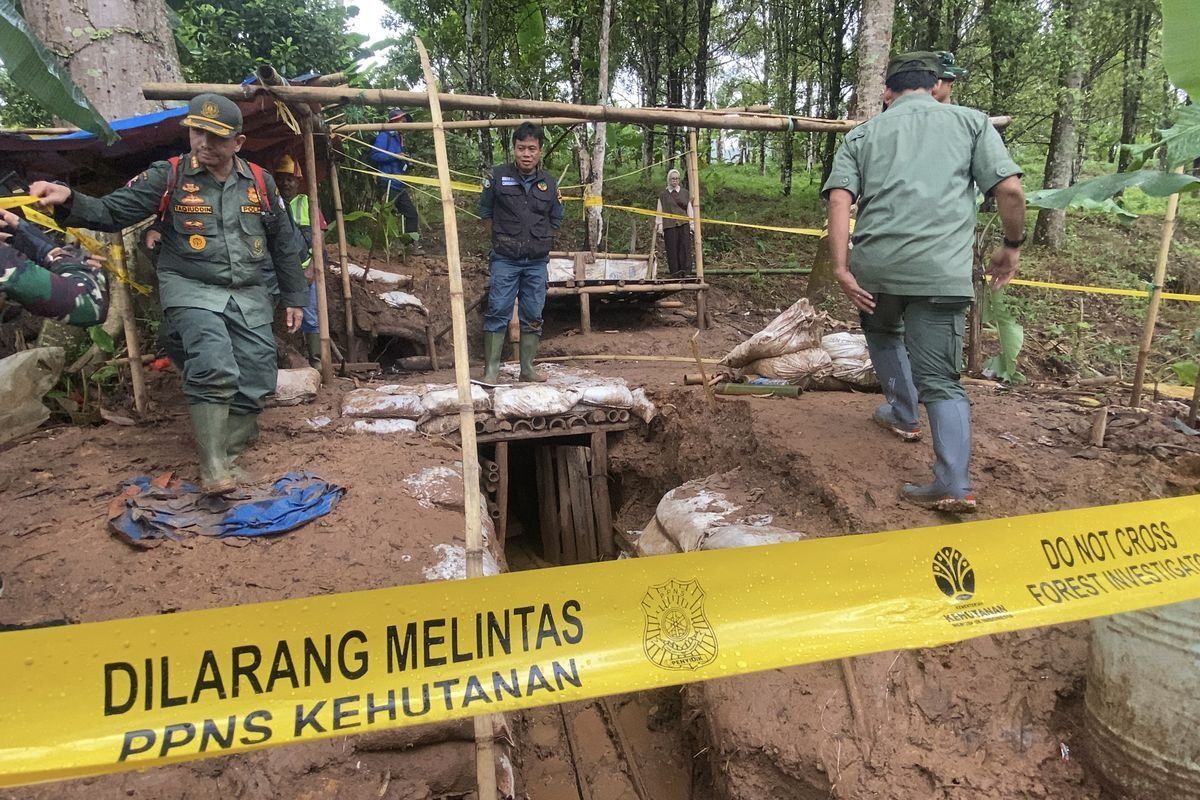
Indonesia's energy ministry has escalated enforcement against illegal mining by formally charging 24 foreign nationals as criminal suspects in connection with an unlicensed gold extraction operation spanning the Gunung Botak area of Maluku. The charges represent a significant move by Jakarta to combat the persistent problem of unauthorised mining activities that drain the nation's mineral wealth whilst evading taxation and environmental oversight. Energy ministry official Jeffri Huwae announced the action late Thursday, casting a spotlight on what authorities characterise as an organised effort to establish comprehensive mining infrastructure without proper licensing or permits.
According to the ministry's statement, the accused foreigners were engaged in constructing and operating essential facilities required for large-scale mining extraction. These installations encompassed access roads connecting to the mining sites, as well as ore processing plants where raw material would be refined into concentrated gold suitable for sale. The Gunung Botak locality, situated within Maluku province in eastern Indonesia, has emerged as a focal point for such illicit operations, suggesting the area possesses both significant mineral deposits and weak regulatory oversight that appeals to organised criminal networks.
Indonesian law prescribes severe penalties for illegal mining activities, with convicted offenders facing imprisonment terms reaching five years maximum. This sentencing framework reflects the seriousness with which Indonesia's legal system treats unauthorised extraction of natural resources, recognising both the economic harm to the state and the environmental degradation accompanying uncontrolled mining. The charges against these 24 individuals thus carry substantial personal consequences if they result in conviction, potentially serving as a deterrent to future involvement in similar schemes.
The identity of the foreign nationals involved remains undisclosed by the energy ministry, though news reports from late May indicated that 24 Chinese nationals had been detained at the Gunung Botak site for questioning. These workers allegedly operated under the sponsorship and direction of Indonesian company PT Harmoni Alam Manise, which may itself face corporate liability charges for enabling the illegal operation. The ministry's refusal to provide comprehensive details about the suspects' nationalities or the quantity of gold extracted hints at ongoing investigations into the broader network behind this operation, potentially encompassing additional individuals and entities still under scrutiny.
The enforcement action reveals a fragmented operational status typical of such cases. Whilst 12 of the 24 charged foreigners have been apprehended and remain in Indonesian custody, the other half have escaped and now operate outside Indonesia's territorial jurisdiction, substantially complicating prosecution efforts. This geographic dispersal underscores the transnational character of organised illegal mining, wherein operatives can flee across maritime boundaries when detection becomes imminent. Retrieving such fugitives would require international cooperation mechanisms that remain variable in their effectiveness across Southeast Asian jurisdictions.
Beyond the foreign suspects, Indonesian authorities have also named two domestic individuals as co-conspirators in the scheme. Their involvement likely encompasses financial arrangements, land access negotiations, and coordination with local officials—the essential connective tissue enabling foreign operatives to function within Indonesian territory. The inclusion of these Indonesian suspects signals that the criminal network operated with critical domestic assistance, raising questions about potential corruption within provincial authorities responsible for mining oversight.
The Maluku operation exemplifies a recurring challenge confronting Indonesia's resource management. Foreign mining networks have repeatedly targeted Indonesia's mineral-rich but administratively distant eastern provinces, where enforcement capacity is thinner and oversight mechanisms less rigorous than in Java-centric bureaucracies. The geographic and institutional distance between resource-rich peripheries and central law enforcement creates persistent vulnerabilities that criminal enterprises systematically exploit.
This case follows a similar enforcement action in Papua, Indonesia's easternmost province, where police arrested four Chinese nationals at Senggi district the previous year. That incident demonstrated the pattern of foreign mining operations concentrating in Indonesia's eastern frontier regions, correlating with lower population density, reduced government presence, and more limited economic alternatives for local communities. The recurring targeting of these regions by transnational criminal organisations points to systemic governance challenges requiring sustained institutional investment.
For Malaysia and other Southeast Asian nations, the Maluku prosecution carries sobering implications. The capacity of illegal mining networks to recruit workers, finance operations, and transport processed materials across borders demonstrates their structural resilience and adaptive methods. Regional security architectures depend increasingly on coordinated capacity-building among enforcement agencies, yet bureaucratic coordination across maritime Southeast Asia remains inconsistent. Malaysian authorities would be prudent to examine whether similar operations target mineral-rich areas within Malaysian jurisdiction, particularly given the geographic proximity and logistical connections between western Peninsular operations and Sabah-Sarawak mining zones.
The charges against these 24 individuals represent headline enforcement but illuminate deeper structural deficiencies in resource governance across the region. Illegal mining persists because it generates substantial profits relative to prosecution risks, particularly when operations can shift locations rapidly across national boundaries. Indonesia's action demonstrates commitment to enforcement, yet sustainable solutions require complementary investments in administrative capacity, land-use planning, and community economic alternatives that reduce vulnerability to exploitation by criminal networks. Without such parallel initiatives, individual prosecutions remain important but insufficient mechanisms for deterrence.

