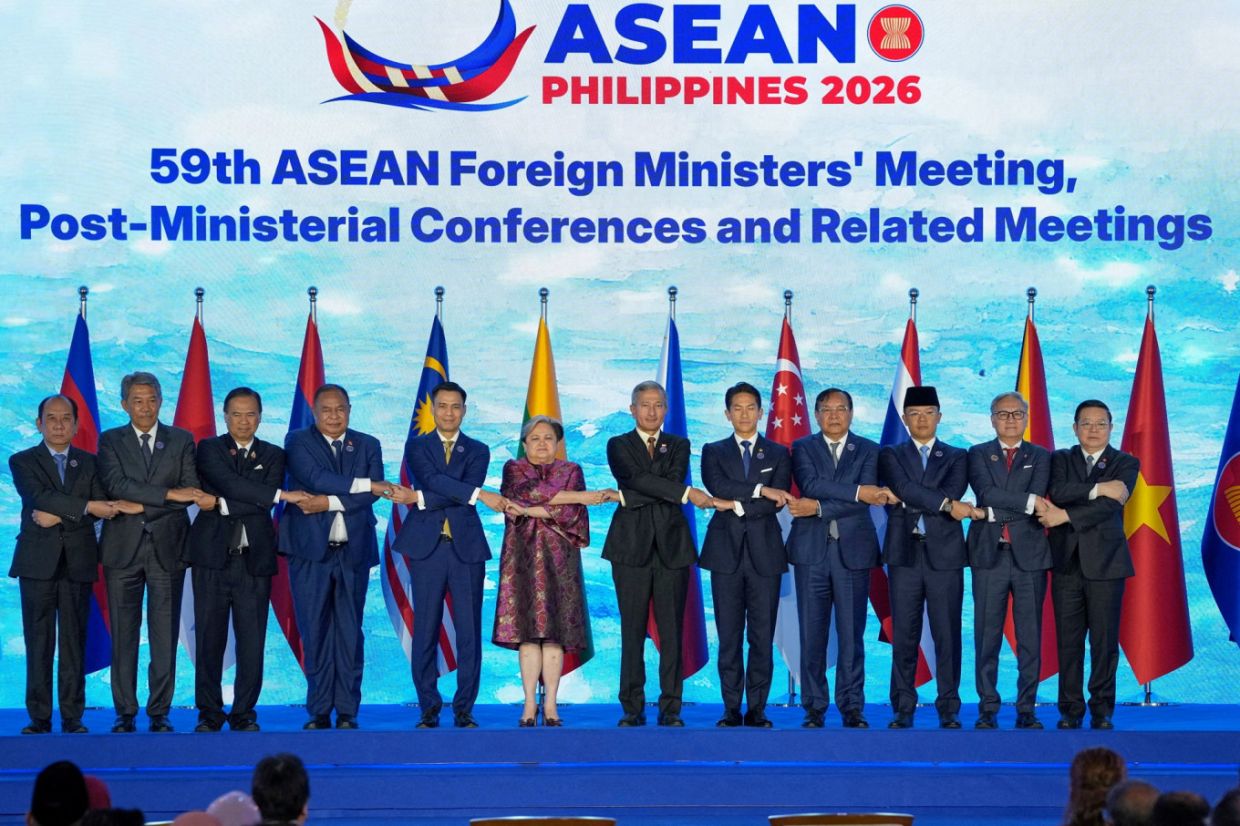
Indonesia has challenged the Association of Southeast Asian Nations to bridge the gap between its stated commitments and actual delivery, signalling that the regional bloc stands at a pivotal moment in demonstrating its ability to manage competing crises and external pressures. Speaking at the 59th Asean Foreign Ministers Meeting in Manila on Tuesday, Indonesian Foreign Minister Sugiono articulated what has become an increasingly urgent preoccupation within the 11-member organisation: the risk that ambitious regional agreements will remain merely rhetorical if member states cannot translate them into binding frameworks and coordinated action.
The timing of Indonesia's intervention carries particular weight given the nation's historical role as a founding architect of Asean and its continued influence in steering the bloc's direction. By directly questioning whether Asean can fulfil its promises, Sugiono has essentially framed the current gathering not as a routine diplomatic exercise but as a test of institutional viability. This stakes-raising rhetoric reflects deepening anxieties within Indonesian leadership that Asean's effectiveness as a multilateral mechanism is being eroded by its inability to forge consensus on the most pressing regional challenges.
The Manila talks brought together foreign ministers from all member states to align positions before engaging with external partners including the United States, China, and Russia on Wednesday. The convergence of three simultaneous crises—the Middle East conflict, unresolved territorial disputes in the South China Sea, and the ongoing instability in Myanmar—has created unprecedented pressure on Asean's institutional mechanisms. Indonesian officials view this moment as one where either Asean demonstrates capacity for decisive collective action or risks irrelevance as external powers reshape the regional landscape unilaterally.
The Middle East conflict has already begun reshaping Asean's economic dependencies and strategic calculations in ways that directly affect regional stability. A joint statement released after Tuesday's plenary session acknowledged serious concerns about the conflict's impact on member states' economies, the welfare of their citizens abroad, and the viability of existing diplomatic channels. However, the statement's careful language about supporting "mitigating measures" for socio-economic impacts and access to healthcare masked deeper anxieties about energy security and supply chain disruption.
Data indicating that the Philippines has more than doubled its solar panel imports from China in the first five months of 2024 compared to the previous year reveals how external shocks are subtly reshaping member states' foreign economic relationships. For Malaysia and other nations within Asean, this pattern signals a concerning trend: as Middle East tensions disrupt traditional energy sources, member states increasingly look toward Beijing as a supplier of both conventional and renewable energy solutions. This energy dependency creates an asymmetry in negotiating leverage that directly undermines Indonesia's argument for unified action on the South China Sea Code of Conduct.
The Code of Conduct negotiations represent perhaps the starkest illustration of Asean's credibility challenge. Indonesia emphasised that 24 years have elapsed since member states first committed to establishing rules governing conduct in one of the world's most economically vital and geopolitically contested waterways. Sugiono's declaration that the region's people should not wait another year for binding maritime rules appeared partly as exasperation with the glacial pace of negotiations but also as implicit recognition that Chinese power asymmetry has grown substantially during these two decades. The strategic irony is sharp: as Asean members become more dependent on Beijing for energy alternatives during global crises, they simultaneously become less able to negotiate effectively on South China Sea governance.
Myanmar's ongoing crisis presented yet another dimension of Asean's institutional difficulties. Tuesday's retreat session focused on implementing the Five-Point Consensus, the bloc's primary peace roadmap for Myanmar, yet Sugiono's characterisation of member states' contributions as merely "progressive" rather than transformative suggests limited movement. The decision to conduct a comprehensive review of progress metrics and explore reforms to Asean's special envoy mechanism by November's leaders' meeting indicates that existing approaches have proven inadequate. Deep divisions persist among member states regarding how aggressively to engage with Myanmar's military government, with some nations prioritising stability and others emphasising adherence to democratic principles.
Philippine Foreign Secretary Theresa P. Lazaro's comments on the Myanmar mechanism reforms pointed toward institutional adaptation rather than policy breakthrough. The acknowledged need to reformulate how progress is measured and to reconsider the special envoy approach suggests that Asean's consensus-based decision-making model has proven insufficiently flexible for managing active conflicts within the bloc. For Malaysian observers, this institutional strain carries implications beyond Myanmar itself: it raises questions about whether Asean can effectively address other security challenges requiring rapid, coordinated responses.
Indonesia's broader argument—that Asean's charter commitments to safeguarding political, economic, and social stability remain unfulfilled—reflects strategic frustration with the bloc's tendency toward incremental compromises that satisfy no party fully. The May Asean Summit's amendment of the charter to admit Timor-Leste as the 11th member was presented as evidence of institutional capacity for bold steps, yet Sugiono's subsequent questioning whether commitments can be delivered suggests that even procedural successes like membership expansion mask deeper governance deficits.
The emerging pattern across these multiple crises indicates that Asean's traditional strength—its consensus-based approach that accommodates diverse national interests—has become a constraint on decisive action. Indonesia appears to be positioning itself as the voice pressing for more assertive institutional leadership, yet paradoxically, such pressure may intensify the very divisions that prevent unified responses. The bloc faces a structural dilemma: member states require Asean's legitimacy and regional umbrella, yet each simultaneously pursues bilateral relationships with external powers that often undercut collective positions.
Wednesday's dialogue with external partners will test whether Asean can present anything resembling a consolidated regional perspective on the Middle East crisis, South China Sea governance, and Myanmar's trajectory. Given the economic pressures pushing individual member states toward Beijing, the diplomatic divisions over Myanmar, and the absence of binding agreements on maritime conduct, Indonesia's challenge to the bloc to deliver on its promises may in fact highlight how far short of consensus-building Asean currently falls. The question Sugiono posed—can Asean deliver?—appears increasingly rhetorical.

