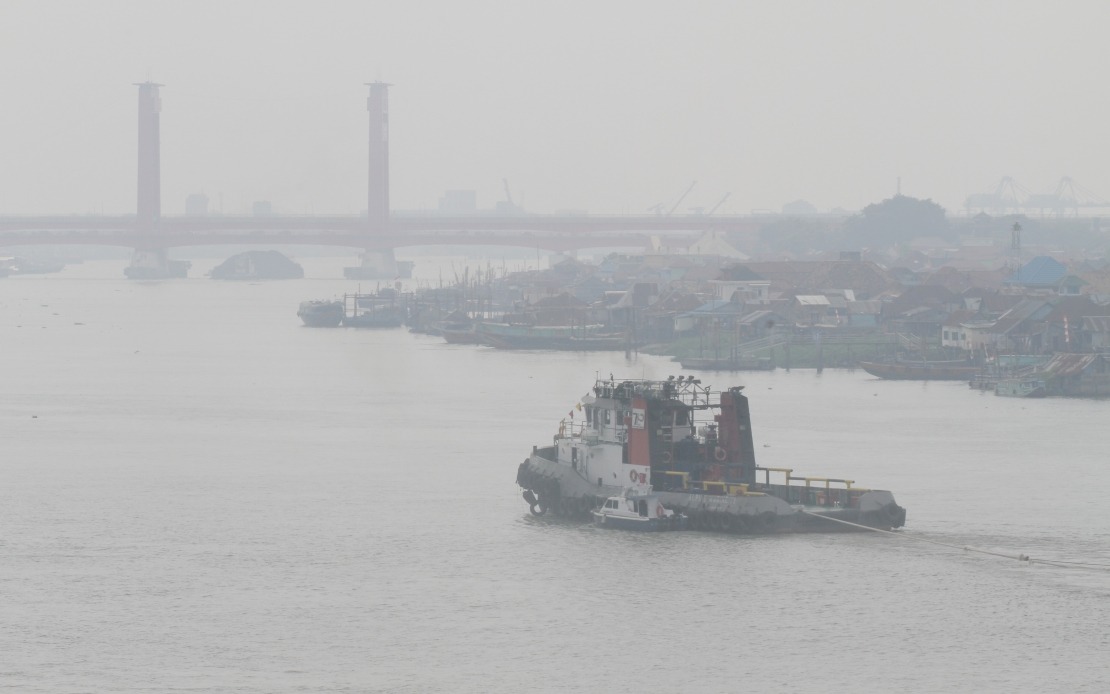
Indonesia has formally confirmed it is working closely with Malaysia to counter the escalating transboundary haze crisis, with weather modification operations in border regions emerging as a key intervention strategy. The coordinated response reflects growing urgency as smoke from extensive forest and land fires in West Kalimantan continues to degrade air quality across the eastern Malaysian state of Sarawak and several peninsular states, prompting both governments to activate their bilateral cooperation mechanisms.
The severity of the current haze episode is evident in the Air Pollutant Index readings reported from affected areas in Sarawak, where measurements reached 195 as of Friday morning—approaching the 201-plus threshold classified as very unhealthy. This marks a significant deterioration compared to recent years, with the Malaysian Consulate in Pontianak noting that 2024 and 2025 had been relatively free of severe transboundary haze incidents, making the current spike particularly noteworthy for regional observers and policymakers. The impact extends well beyond Sarawak, with Kuala Lumpur, Selangor, Penang, Kedah, and Perak all recording unhealthy air quality indices, indicating the regional scope of the problem.
According to Berton Panjaitan, Acting Head of Data, Information, and Disaster Communication Centre at Indonesia's National Disaster Mitigation Agency (BNPB), the two nations have moved beyond preliminary discussions to establish concrete cooperation frameworks. He emphasized that communication channels between neighbouring countries remain active, with Malaysia and Indonesia having already held bilateral meetings to align their response strategies. The agreement specifically encompasses prevention initiatives, enhanced monitoring systems, and crucially, coordinated support for weather modification operations—cloud-seeding activities that both nations view as essential tools in mitigating haze intensity.
The weather modification component represents a technological approach to haze management that has gained traction in Southeast Asia over the past decade. By deploying cloud-seeding aircraft and ground-based dispersal systems, both countries aim to accelerate precipitation processes and help clear smoke particles from the atmosphere. Malaysia has already secured formal permission from Indonesia to conduct cloud-seeding operations within Indonesian airspace, a diplomatic breakthrough that underscores Jakarta's commitment to collaborative problem-solving and removes a significant bureaucratic barrier to rapid implementation.
While discussions regarding direct firefighting assistance have progressed positively, Indonesia has not yet formally requested water-bombing support or deployed ground-based firefighting assets from Malaysia. However, Berton indicated that the Indonesian government remains receptive to such cooperation should circumstances warrant it, indicating flexibility within existing bilateral frameworks and protocols. This measured approach reflects both the political sensitivity of cross-border military or paramilitary deployments and the practical reality that on-the-ground firefighting capabilities require careful coordination and advance planning.
The current cooperation framework builds upon recent high-level diplomatic engagement between Malaysian Natural Resources and Environmental Sustainability Minister Datuk Seri Arthur Joseph Kurup and Indonesian Environment Minister Jumhur Hidayat, who met on August 24 to assess the haze situation and agree on intensified prevention and firefighting measures. This ministerial-level involvement signals that both governments treat transboundary haze as a priority issue requiring sustained political attention rather than a purely technical matter delegated to environmental agencies alone.
For Malaysian citizens residing in the affected region, the worsening conditions have prompted practical adaptations to daily life. The Malaysian Consulate in Pontianak, which oversees the welfare of 577 registered Malaysians in West Kalimantan, reports that residents—predominantly working as expatriates across the region—are adhering to local health directives including mandatory mask usage, conversion of school lessons to online formats, and restrictions on non-essential outdoor activities. These measures reflect both the immediate health risks posed by prolonged exposure to hazardous air quality and the broader socioeconomic disruptions that transboundary haze generates in communities across the maritime border.
Malaysia has demonstrated practical solidarity with Indonesian firefighting efforts in previous crisis periods. The 2023 haze episode prompted the Malaysian Consulate in Pontianak to contribute six water pumps to the West Kalimantan Governor's Office, establishing a precedent for material assistance that could be revived or expanded should the current situation deteriorate further. Such gestures underscore that while transboundary haze is fundamentally a shared environmental challenge requiring bilateral solutions, there exists a foundation of goodwill and practical cooperation that facilitates rapid mobilization of resources when emergencies escalate.
The transboundary nature of Southeast Asian haze presents unique governance challenges that single nations cannot resolve independently. Wind patterns carry smoke across borders with little regard for sovereignty, meaning that fires in Kalimantan directly compromise air quality in Sarawak and beyond. This geographic reality has pushed Malaysia and Indonesia toward institutionalizing cooperative frameworks rather than treating haze events as episodic crises requiring ad-hoc responses. Weather modification operations represent the technical frontier of such cooperation, offering the promise of reducing haze intensity through scientifically managed interventions rather than relying solely on firefighting at the source.
The current episode also highlights the vulnerability of Malaysian urban and rural populations to environmental hazards originating beyond national territory. While Peninsular Malaysia's major cities like Kuala Lumpur and Selangor have experienced haze episodes for decades, the consistent involvement of Sarawak—which shares a land border with West Kalimantan—underscores how geography determines exposure patterns. For policymakers in Kuala Lumpur, the persistence of transboundary haze despite repeated bilateral agreements suggests that stronger prevention mechanisms, greater investment in early detection systems, and more assertive approaches to holding Indonesian authorities accountable for fire prevention in high-risk zones may be necessary components of a comprehensive regional strategy.
Moving forward, the effectiveness of the current Indonesian-Malaysian coordination will likely depend on the scale of resources allocated to weather modification operations, the speed with which cloud-seeding teams can be deployed to optimal locations, and the degree to which Indonesian authorities can contain and suppress the underlying fires in West Kalimantan. The agreement to permit Malaysian cloud-seeding operations in Indonesian airspace removes procedural obstacles, but operational success requires sustained diplomatic cooperation, technical expertise, and willingness from both governments to treat haze mitigation as an ongoing priority rather than an emergency-response afterthought. For the nearly 600 Malaysians in West Kalimantan and millions of residents across Malaysia and Indonesia breathing compromised air, the success or failure of these coordinated efforts will have immediate, measurable impacts on public health and quality of life.

