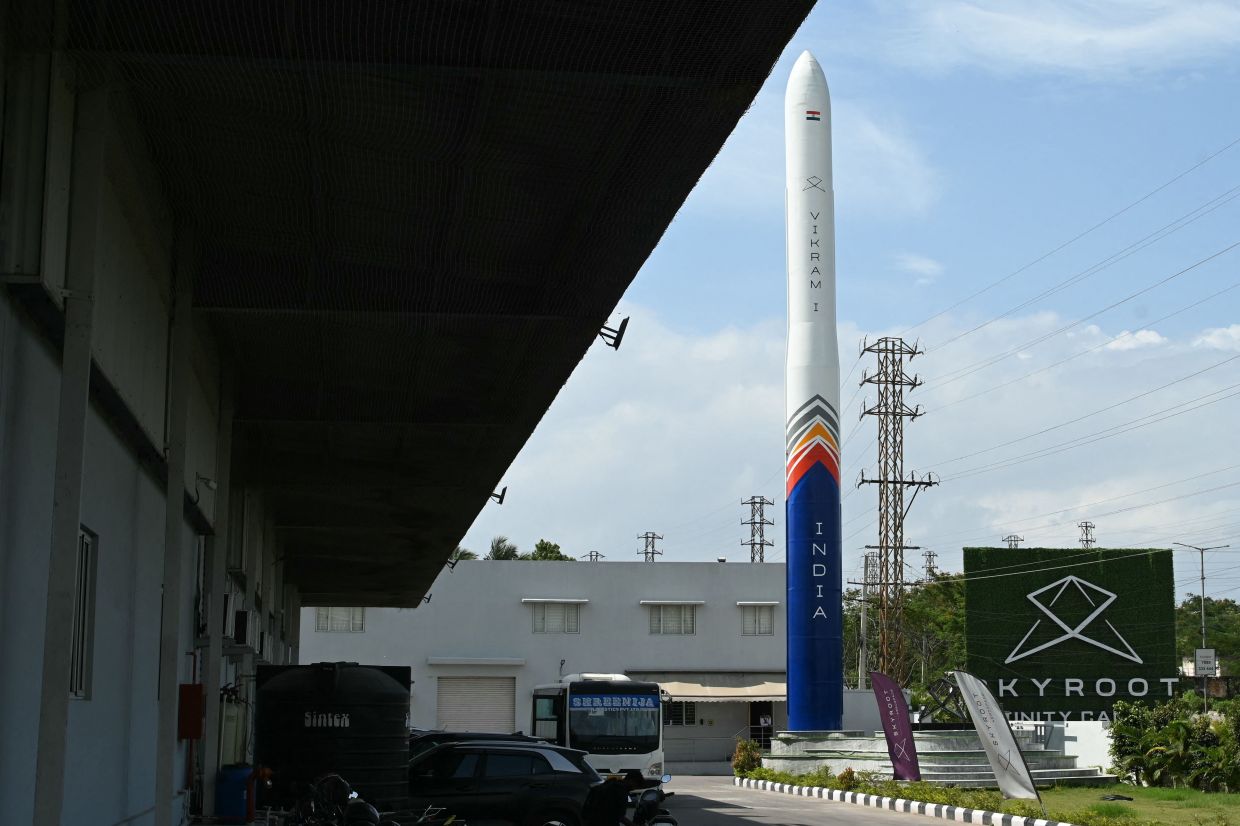
India's space programme is entering a pivotal new chapter. The country that has successfully reached Mars, explored the Moon, and placed hundreds of satellites in orbit is now on the cusp of achieving another milestone: Skyroot Aerospace is preparing to launch India's first privately developed orbital-class rocket, with the test flight scheduled between July 12 and August 4. This moment represents far more than a single company's achievement—it signals the maturation of India's broader ambitions to establish itself as a major player in the rapidly expanding global commercial space sector.
The transformation of India's space economy has been dramatic. Valued at $8.4 billion today, the sector has undergone a fundamental shift since 2020, when the Indian government opened the space industry to private participation. This regulatory liberalisation has catalysed explosive growth, attracting more than 400 space startups to establish operations within India. The Department of Space describes this expansion as reflective of "growing confidence, technological maturity, and a long-term vision for India's role in the global space ecosystem." These are not mere aspirational statements—they are grounded in concrete achievements accumulated over decades.
India's credentials in space exploration are substantial. In 2014, the country became the first Asian nation to successfully place a spacecraft into orbit around Mars, a feat that required overcoming immense technical challenges at relatively modest cost. The Indian Space Research Organisation's lunar exploration programme, Chandrayaan, has demonstrated even more impressive capabilities. Following an orbital mission in 2008 and an unsuccessful landing attempt in 2019, India achieved a significant breakthrough with its 2023 mission, becoming the fourth nation globally—after Russia, the United States, and China—to successfully land an unmanned rover on the Moon. This achievement carries particular significance for the region, as it positions India alongside the world's most advanced spacefaring nations and demonstrates indigenous technological capacity.
India's ambitions extend far beyond these celebrated achievements. The government is planning a fourth Chandrayaan mission for 2027 specifically designed to return Moon samples to Earth, a capability that only a handful of nations possess. Concurrently, a Venus orbital mission is scheduled for 2028, expanding India's presence across the inner solar system. An ongoing solar observation mission, Aditya, is currently studying the Sun's corona and monitoring space weather phenomena. Closer to home, India is leveraging its space technology in unexpected ways: ISRO technology is contributing to the development of the Matsya submarine, which is designed to carry scientists six kilometres beneath the ocean surface by 2027 to explore deep-sea resources, including rare earth and critical minerals.
India's reputation in the international space sector has been built on a foundation of cost-efficiency and reliability. Since launching its first satellite aboard a Soviet rocket in 1975, India has developed a reputation for accomplishing sophisticated missions at significantly lower costs than comparable international efforts. This cost advantage has proved commercially attractive. The Indian Space Research Organisation has successfully launched over 430 foreign satellites, generating more than $600 million in revenue, while simultaneously deploying more than 144 of its own satellites. These figures demonstrate that India's space programme functions not merely as a research endeavour but as a genuine commercial enterprise with real economic returns.
Infrastructure development is accelerating to support this expansion. India is currently expanding its primary launch facility at Sriharikota on the southeast coast in Andhra Pradesh. More significantly, the government is constructing an entirely new spaceport at Kulasekarapattinam in Tamil Nadu on India's southern tip, indicating confidence in sustained growth. These infrastructure investments represent long-term commitments to expanded launch cadence. Government projections reflect this optimism: India's space industry is forecast to reach $44 billion by 2033 and potentially $100 billion by 2040. These figures, if realised, would represent a more than tenfold increase from current levels and would position India among the world's top space economies.
The private sector landscape is becoming increasingly diverse and sophisticated. Skyroot Aerospace's Vikram-1 rocket, scheduled for imminent launch from Sriharikota, represents the most visible marker of this transition but is far from alone. Pixxel is developing observation satellites with applications spanning agriculture and environmental monitoring—sectors of particular relevance across South Asia where monitoring crop health and environmental change carries direct economic consequences. Bellatrix Aerospace is creating satellite propulsion systems, while Agnikul Cosmos is manufacturing small satellite launch vehicles featuring 3D-printed rocket engines, employing advanced manufacturing techniques. These companies collectively demonstrate that India is not merely adopting space technology but actively innovating across multiple domains.
India's international space partnerships have expanded significantly, reflecting the country's growing stature in the sector. Beyond its long-standing relationship with Russia, which continues to support human spaceflight preparations, India now actively collaborates with NASA, the European Space Agency, France, Germany, Italy, Japan, and Saudi Arabia. These partnerships facilitate technology transfer, joint missions, and shared learning. For Malaysia and other Southeast Asian nations, India's progress carries strategic implications: a strong Indian space industry can support regional satellite and launch services, providing alternatives to reliance on non-regional providers and supporting the region's digital infrastructure development.
Yet India's space sector cannot be viewed purely as a civilian endeavour. The defence dimension of space technology has become increasingly prominent. The Indian Space Research Organisation maintains active coordination with the government's Defence Research and Development Organisation, and has developed close relationships with the BrahMos missile programme, a joint venture with Russia. The same companies supplying ISRO with critical components—launch rockets, propulsion systems, satellites, electronics, and guidance systems—are also receiving growing orders from India's military and defence establishment. These technologies serve dual purposes, supporting both space exploration and India's expanding missile and military drone programmes. Companies specialising in avionics and guidance systems are particularly benefiting from this surge in military demand.
This civil-military overlap reflects broader geopolitical realities. While India's space achievements deserve recognition as genuine scientific and technological accomplishments, they simultaneously reflect India's strategic interests in developing autonomous space capabilities, reducing dependence on foreign systems, and establishing the technological foundation for military applications. For the region, this development carries complex implications. On one hand, India's growing space capabilities could support regional infrastructure and economic development. On the other, the military dimension suggests India is prioritising strategic autonomy and defence capabilities alongside civilian applications.
The timing of Skyroot Aerospace's imminent launch therefore carries significance beyond commercial space markets. It represents a watershed moment in India's transition from a space programme dominated by government institutions to one increasingly characterised by public-private collaboration and private sector leadership. Success would validate India's 2020 decision to open the sector to private investment and could accelerate the emergence of additional Indian space companies. Failure would test the resilience of India's emerging commercial space ecosystem but would not fundamentally alter the trajectory of a programme with decades of achievements behind it and ambitious targets ahead.
For Southeast Asian observers, India's space sector expansion warrants attention. A capable Indian space industry could become a regional player in satellite services, launch provision, and space-based Earth observation. Simultaneously, India's strategic investments in space capabilities reflect its broader ambitions in the Indo-Pacific region and its desire to establish technological sovereignty. As India's space economy approaches the next phase of expansion, these dual civilian and strategic dimensions will shape not only India's future trajectory but also the evolving regional balance of technological and military capabilities.

