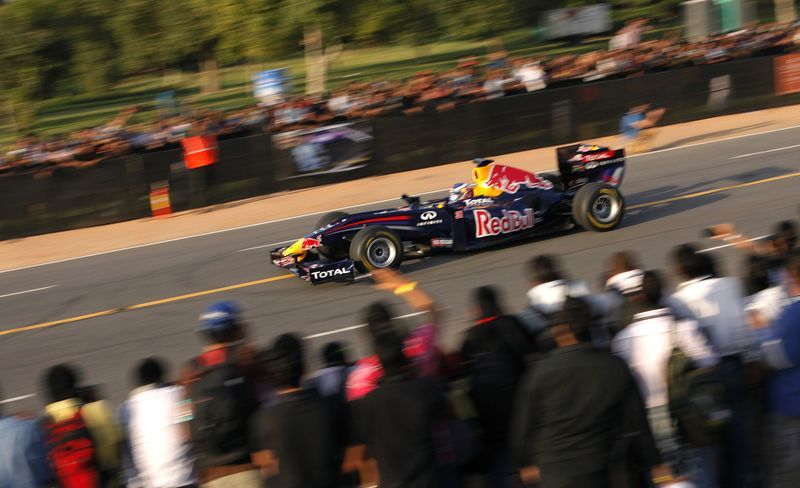
India's ambitions to restore Formula One racing have moved into a concrete planning phase, with the government assembling a dedicated task force to dismantle the bureaucratic and financial barriers that previously derailed the sport in the country. The Buddh International Circuit on the outskirts of New Delhi could host the global motorsport elite once again by 2028, marking a significant comeback for a nation that was home to one of the world's most promising racing destinations before regulatory complications forced its abandonment a decade ago.
The Indian Grand Prix enjoyed a promising start when it debuted in 2011, capturing the imagination of the nation's growing motorsports enthusiast base and establishing India as a serious player on the international racing calendar. However, the race's momentum proved short-lived. After just three editions, culminating in 2013, persistent disagreements over taxation frameworks and regulatory requirements between the government, track operators, and Formula One's governing bodies led to the event being shelved indefinitely, leaving India conspicuously absent from the sport's global circuit.
Sports Minister Mansukh Mandaviya has taken the lead in reversing this trajectory by initiating high-level consultations with multiple stakeholders essential to the race's revival. These discussions have included the Adani Group, which is actively acquiring ownership of the track's operating company, and officials representing India's motorsports federation. The minister's proactive engagement signals that the government recognises both the sporting significance and the economic potential of reinstating Formula One in India, a nation with more than 1.4 billion people and a burgeoning middle class with disposable incomes.
The newly created task force will tackle the multifaceted challenges that undermined the previous Formula One experiment in India. Tax policy stands at the forefront of these concerns, with the panel specifically mandated to examine how India's complex indirect taxation structures and various levies might be streamlined to accommodate the enormous logistical and financial requirements of hosting a world championship event. Regulatory harmonisation across multiple government departments represents another critical focus area, as Formula One events demand precise coordination between infrastructure authorities, safety regulators, environmental agencies, and local administration bodies.
The composition of the task force reflects the government's determination to cut through administrative red tape. Representatives from India's tax authorities will sit alongside officials from the country's premier policy think tank, positioned to coordinate between different ministries and eliminate the jurisdictional conflicts that plagued previous negotiations. This inter-agency approach acknowledges that no single government body can unilaterally resolve the interconnected issues surrounding international sporting events of Formula One's magnitude and commercial complexity.
The Adani Group's involvement carries particular weight given the conglomerate's established track record in infrastructure development and port operations across India and beyond. While the company has declined to comment on the revival efforts, Karan Adani, Managing Director of Adani Ports & Special Economic Zone Ltd, has publicly stated his personal commitment to bringing Formula One back to Indian soil. This high-level corporate engagement suggests that the private sector possesses confidence in the venture's viability, provided government support materialises in tangible policy reforms rather than rhetorical commitments alone.
Formula One's international leadership appears receptive to India's overtures, though with measured expectations about timelines and preconditions. Chief Executive Stefano Domenicali recently reiterated the sport's considerable interest in returning to India, acknowledging simultaneously that substantial preparatory work remains essential before any concrete arrangements can be formalised. His remarks to FanCode, India's official Formula One broadcaster, underscore that the sport's return depends on establishing reliable promotional partnerships, securing appropriate governmental collaboration frameworks, and identifying a suitable competitive window within the crowded Formula One calendar—none of which will materialise through hasty negotiations.
For Malaysia and the broader Southeast Asian region, India's determination to reclaim its place in Formula One carries wider implications. The successful revival of Indian motorsports would inject additional vitality into Asia's automotive and sports industries, potentially spurring neighbouring countries to enhance their own racing infrastructure and regulatory environments. Malaysia's own experience as a former Formula One host, having discontinued the Malaysian Grand Prix after 2017 due to financial constraints, provides instructive lessons about the delicate balance required between government support, private investment, and international sports governance.
The 2028 target date positions India's comeback within a realistic yet ambitious timeframe, allowing the task force sufficient opportunity to resolve foundational issues without losing momentum to competing global events. This timeline also aligns with broader economic projections for India's growth trajectory, suggesting that the government views Formula One's return as emblematic of the nation's development aspirations and its emergence as a destination capable of hosting the world's most demanding sporting spectacles.
The success of this revival effort will ultimately depend on whether India's government can translate its stated commitment into substantive legislative and regulatory changes. Previous experiences demonstrate that resolving taxation disputes and streamlining regulatory frameworks require more than goodwill; they demand genuine policy innovation and inter-ministerial consensus that can sometimes prove elusive in complex federal systems. Nevertheless, the assembly of a dedicated task force and the involvement of committed private sector partners represent meaningful progress toward breaking the impasse that has kept Formula One absent from India since 2013.

