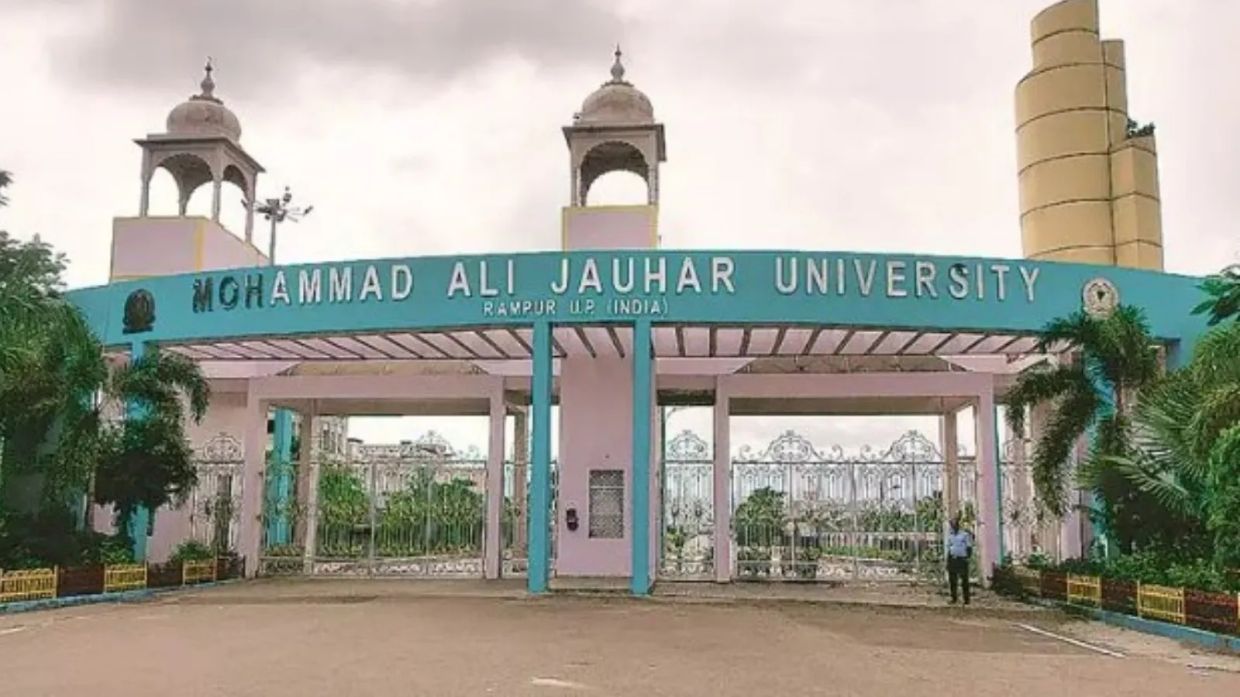
The Rampur Development Authority has issued a sweeping demolition directive affecting Mohammad Ali Jauhar University in Uttar Pradesh's Rampur city, with 38 of the institution's 40 buildings slated for removal due to alleged violations of construction regulations. The order, released on Wednesday, July 15, encompasses structures across the university's sprawling 250-acre campus and represents a significant development in an ongoing dispute over the educational facility's legal standing.
Mohammad Ali Jauhar University, established in 2006, carries the name of a celebrated figure in India's struggle for independence and represents an ambitious educational venture by its founder, Azam Khan. A veteran politician and former state minister, Khan transformed the institution into a substantial academic operation over nearly two decades, reflecting his considerable influence within regional politics and society.
The demolition order arrives at a particularly fraught moment for Khan and his family. The politician, widely recognised across India as an influential orator and community leader, currently remains incarcerated following a court conviction in a case involving forged documents. His son, Abdullah Khan, shares his confinement, having faced similar charges in the same matter. The legal troubles extend to Khan's wife, Tazeen Fatima, who spent time in custody over a separate birth certificate case, though she has since secured bail pending further proceedings.
These criminal charges represent the most visible manifestation of a broader pattern that the Khan family characterises as politically motivated persecution. The family's public statements consistently emphasise what they describe as a coordinated campaign of legal harassment, framing the various court cases as expressions of political vendetta rather than genuine responses to wrongdoing. This narrative has resonated among supporters who view the prosecutions through a lens of partisan conflict.
Azam Khan's political trajectory intersects directly with broader shifts in Uttar Pradesh's governance landscape. His base of power historically centred within the Samajwadi Party, which controlled the state government between 2012 and 2017, a five-year period during which Khan wielded considerable ministerial authority. The party's subsequent electoral defeat to the Bharatiya Janata Party fundamentally altered the political equilibrium within which Khan operated, removing him from positions of governmental influence and subjecting him to heightened scrutiny from authorities now aligned with a rival political formation.
The timing of the demolition order invites scrutiny regarding the interplay between administrative enforcement and political considerations. University demolitions typically proceed through defined bureaucratic channels based on documented code violations, yet observers note that the scale of action—affecting 95 per cent of the campus structures—and its timing relative to Khan's imprisonment raise questions about whether standard regulatory procedures have been applied with consistent vigour or whether political factors have influenced the authority's determination and prioritisation.
For Malaysian observers, this episode illuminates dynamics relevant to Southeast Asian politics. The case demonstrates how shifts in governmental control can weaponise regulatory apparatus against opponents' institutional interests, a phenomenon not unfamiliar in the region's political evolution. Educational institutions founded by prominent political figures occupy a particularly vulnerable position during transitions of power, as they embody previous administrations' legacies and may become targets for replacement with aligned alternatives.
The university's educational mission now faces existential threat from the demolition order. Thousands of students enrolled at the institution confront profound uncertainty about their academic futures, potential disruption to their studies, and the loss of infrastructure they depend upon. Faculty members similarly face employment precarity. The broader higher education landscape in Uttar Pradesh may be reshaped by this action, depending on whether demolished facilities are reconstructed under revised governance or whether they disappear entirely from the state's academic ecosystem.
The construction authorisation claims warrant examination, as universities frequently navigate complex permitting processes that involve legitimate disputes over interpretations of building codes and land use regulations. The RDA's determination that unauthorised construction occurred represents one stakeholder's assessment rather than a final, uncontestable factual finding, particularly given the absence of published detailed documentation regarding specific code violations that prompted the wholesale demolition directive.
International educational accreditation and recognition bodies may scrutinise this situation closely, as institutional disruption of this magnitude can trigger questions about operational continuity and governance legitimacy. International students and faculty may reassess their involvement with the university given the instability its leadership and physical plant now face.
The Mohammad Ali Jauhar University demolition order ultimately reflects the complex entanglement of educational administration, political power, and personal rivalries that characterises governance in substantial portions of South Asia. Whether viewed as legitimate regulatory enforcement or as partisan weaponisation of state authority, the action carries profound consequences for thousands of individuals whose educational aspirations depend upon the institution's survival and operational capacity.

