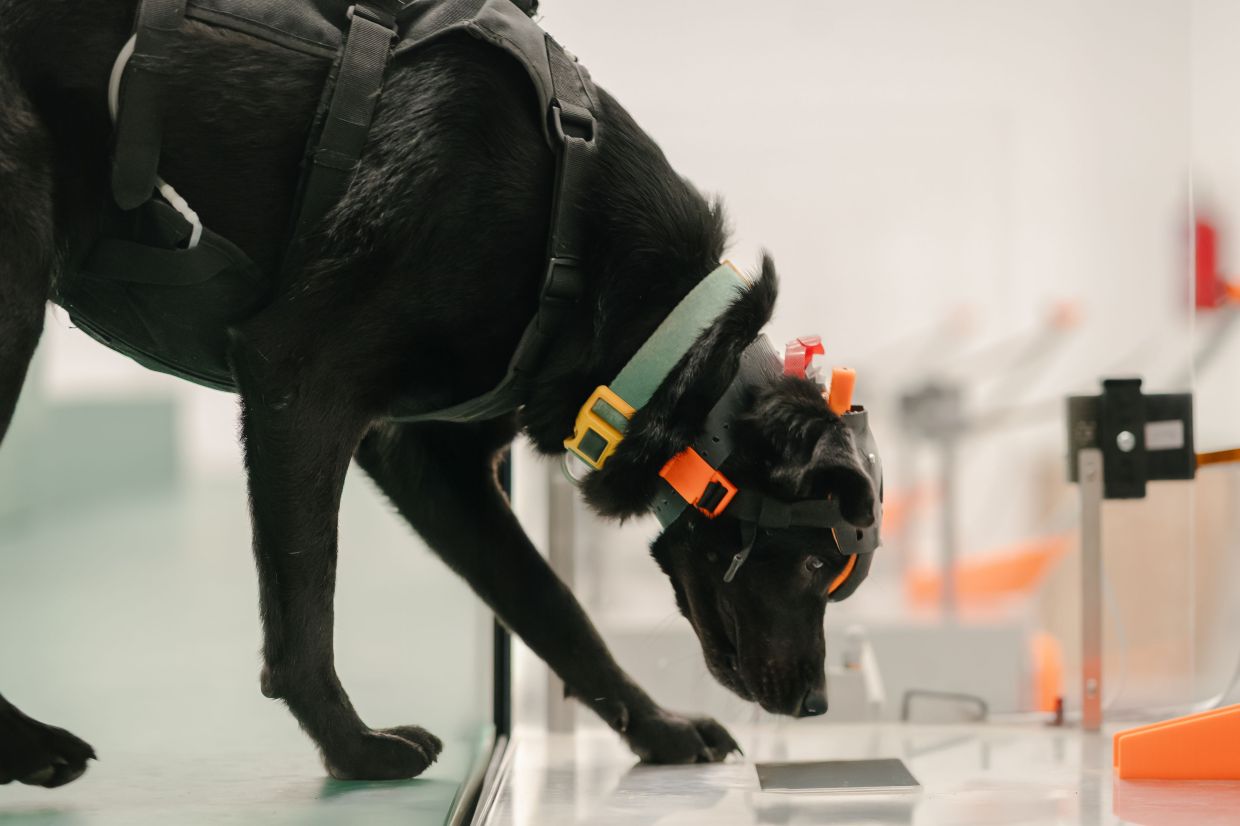
On a working farm just outside Bengaluru, a team of specially trained dogs has begun their daily routine of sniffing breath samples to identify traces of cancer. Billy, Jessie and Banu are part of an unusual workforce at Dognosis, a two-year-old company that is applying one of nature's most sophisticated biological tools—the canine nose—to solve one of India's most pressing public health challenges: the lack of affordable cancer screening. Rather than relying on expensive imaging equipment, blood tests or biopsies, the startup has developed a system where dogs detect molecular markers in human breath, their findings then refined through artificial intelligence and sensor technology to assess cancer risk.
The approach represents a creative repurposing of skills long used for security and law enforcement. For decades, dogs have excelled at detecting drugs, explosives and missing persons through their olfactory prowess, which operates on a vastly different scale than human smell. Dognosis's innovation lies in systematically redirecting this ability toward health diagnostics while building the technological infrastructure to make it scalable and reproducible. When patients breathe into masks, their breath samples are transported to Dognosis's facility where the dogs are exposed to them. The animals' reactions—captured through sensors monitoring their movements, respiration patterns, brain activity and body language—are then interpreted by machine learning algorithms trained to identify the specific olfactory signatures associated with various cancer types.
The financial backing for this unconventional venture underscores growing investor confidence in novel approaches to healthcare challenges. Dognosis has secured US$1.5 million through its initial pre-seed funding round in 2024, with support from established venture firms including Accel India and San Francisco-based Caffeinated Capital, alongside an additional undisclosed investment in subsequent months. According to co-founder Akash Kulgod, these resources provide sufficient runway for approximately two years of operations aligned with the company's growth strategy. This funding level reflects broader market recognition that solutions addressing India's healthcare gaps can attract serious capital, particularly when they offer potential scale at lower costs than traditional diagnostic infrastructure.
The clinical evidence gathered so far presents a compelling case for pursuing this path. In a Phase 2 study published in the Journal of Clinical Oncology, Dognosis reported approximately 90 percent sensitivity for early-stage cancers across seven broad categories encompassing more than 20 distinct cancer types, including breast cancer. A particularly striking finding emerged during training sessions: dogs that had been conditioned to recognise the scent signatures of ten cancer types spontaneously identified an eleventh type they had never previously encountered, suggesting their olfactory discrimination abilities may generalise beyond their formal training. These results, though promising, represent controlled laboratory conditions—the critical next step involves demonstrating whether this performance persists when the system encounters the messier realities of population-based screening.
India's cancer burden makes this effort all the more urgent. According to the International Agency for Research on Cancer, India ranks third globally in new cancer incidence, with an estimated 1.5 million new cases and over 900,000 deaths recorded in 2024. Approximately one in ten Indians face a lifetime risk of developing cancer before age 75. Breast cancer remains the most frequently diagnosed malignancy, followed by oral cavity cancers, lung cancer and cervical cancer. Yet despite these alarming figures, screening rates remain shockingly low. A recent national survey found that only 1.9 percent of Indian women had ever undergone cervical cancer screening, while less than one percent had been tested for breast or oral cancers. Among men, the figure for oral cancer screening reached merely 1.2 percent. This massive gap between disease burden and early detection capability creates precisely the conditions where an affordable, non-invasive screening approach could generate substantial population health benefits.
The logistics of Dognosis's operating model demonstrate how the company has structured work to maximise both dog welfare and diagnostic accuracy. The animals live communally at the Bengaluru facility and maintain regular schedules of exercise and recreation. Their primary work consists of 30 minutes to one hour daily spent on the detection platform, deliberately gamified to keep the activity engaging. Successful identifications trigger immediate rewards in the form of treats, creating positive reinforcement that maintains motivation. During one recent session, a two-year-old beagle named Whiskey methodically worked through ten samples, bypassing the first five before pausing at the sixth, sniffing repeatedly and circling the location for several seconds before the system registered a positive result. This methodical, almost ritualistic approach contrasts sharply with the speed at which the algorithms process and interpret the underlying biological data.
The commercialisation strategy reflects Dognosis's understanding of India's healthcare market dynamics. The company intends to launch an at-home, multi-cancer prescreening test in India during the coming year at a cost of a few thousand rupees—a price point designed to position the offering well below conventional diagnostic imaging while remaining accessible to India's expanding middle class. Longer-term ambitions include processing one million tests annually by scaling the dog population to thirty animals while reducing turnaround time from the current period to approximately one week. Beyond the Indian market, Dognosis is actively planning international expansion, with Kulgod indicating that a facility in the United States could materialise by late 2027 or early 2028. Already, an American competitor, New Jersey-based SpotitEarly, has reported comparable results from canine cancer-detection trials, suggesting the underlying science resonates across different regulatory and market contexts.
The critical validation phase now underway involves Dognosis's Phase 3 trial, which commenced in April across ten hospitals spanning India's major metropolitan centres. The company anticipates recruiting approximately 10,000 participants over a twelve-month period, creating a substantially larger and more representative sample than previous clinical studies. The trial specifically targets asymptomatic individuals at elevated cancer risk and cancer survivors vulnerable to recurrence. Participants flagged by the dog-AI screening system will receive conventional confirmatory investigations including imaging and tissue biopsy, establishing whether the novel screening approach can identify genuine cases that would otherwise remain undetected during this critical window when interventions typically prove most effective.
However, this innovation confronts significant hurdles beyond technical and operational challenges. A fundamental barrier involves persuading the medical profession and public confidence in a screening methodology built around animals rather than instruments. Pankaj Chaturvedi, deputy director of the Centre for Cancer Epidemiology at Tata Memorial Centre in Mumbai, cautioned that emerging technologies must strengthen rather than replace existing screening frameworks. This perspective reflects legitimate concerns about displacing proven prevention strategies while simultaneously highlighting how novel approaches might expand screening capacity in contexts where conventional infrastructure remains insufficient. The regulatory pathway also presents a strategic consideration: Dognosis operates the system as a prescreening tool rather than a diagnostic device, positioning it outside India's medical device regulatory framework, which technically applies only to confirmatory diagnostic devices. This classification choice enables faster market entry but potentially invites regulatory scrutiny as the technology gains prominence.
Dognosis plans to launch its prescreening test in Bengaluru next year before expanding nationally through partnerships with diagnostic laboratory chains and healthcare provider networks. The company's leadership articulates confidence that widespread familiarity with working dogs in security, rescue and service roles will facilitate acceptance of canine contributions to medical diagnostics. Kulgod emphasises that the fundamental challenge has never involved the dogs' inherent capability but rather whether their olfactory abilities could be systematically standardised, scaled and integrated into reproducible clinical workflows. As India confronts a cancer epidemic characterised by late diagnosis and limited screening penetration among vulnerable populations, Dognosis represents an intriguing experiment in applying biological capabilities to address healthcare system gaps where conventional infrastructure and resources have proven insufficient.

