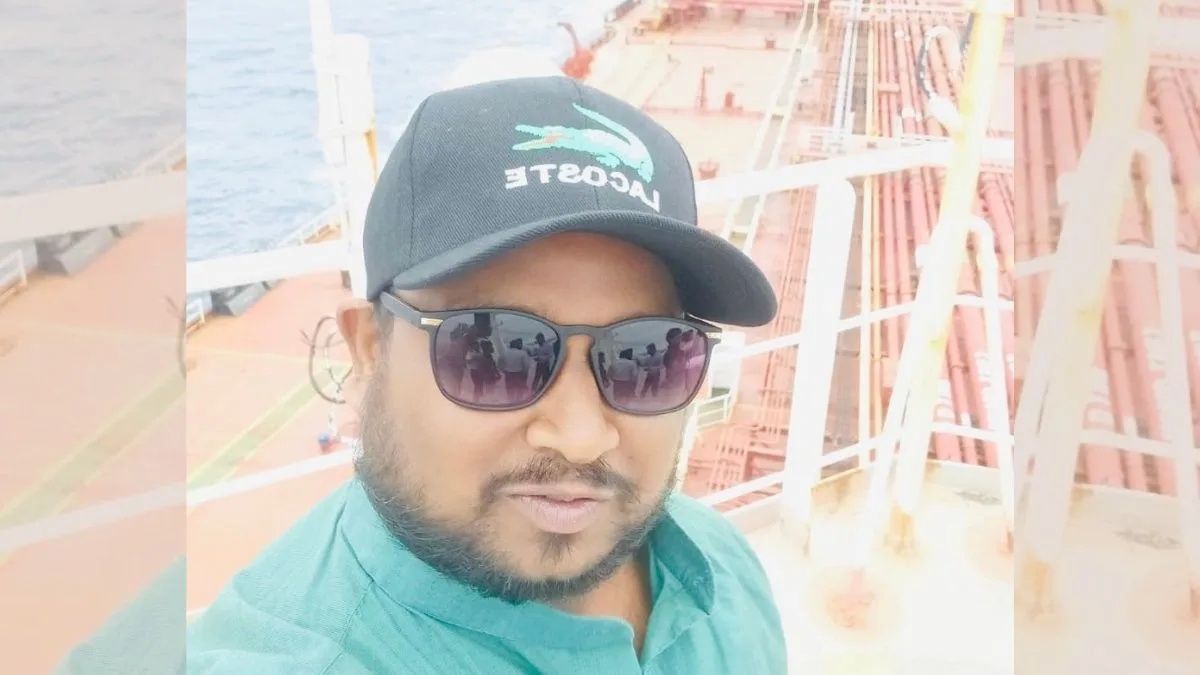
The death of 33-year-old Rakesh Chauhan, an Indian merchant marine worker, has uncovered a disturbing medical puzzle that has ignited urgent calls for government intervention and a formal inquiry. Chauhan, who hailed from Deoria district in Uttar Pradesh, travelled to Venezuela in November 2025 to work aboard a commercial vessel. When his body was repatriated to India in early June, a re-autopsy conducted in Uttar Pradesh revealed that virtually every significant internal organ had been surgically removed, leaving medical examiners unable to determine the actual cause of death.
The circumstances surrounding Chauhan's death remain opaque. According to the account provided by his family, company officials initially informed them that the seafarer had sustained injuries from a fall onboard the vessel and was receiving medical care. Within hours, they were told his condition had deteriorated sharply, with doctors estimating only a five percent survival rate. By evening of the same day, the family received notification that Chauhan had succumbed to complications from his injuries. The shipping company assured the family that his remains would arrive in India within seven days, yet the body did not materialise until nearly a month later, on June 4.
When Chauhan's body finally reached India, it bore unmistakable signs of prior surgical intervention. The Indian post-mortem examination documented extensive stitching patterns: one line of incisions running the full length of the torso from neck to pubic region, and another line crossing the back of the skull from ear to ear. These surgical traces strongly suggested that a comprehensive autopsy had been performed in Venezuela, yet no autopsy report or official documentation accompanied the body upon repatriation. The Venezuelan authorities provided no explanation for the procedures, no medical findings, and no cause-of-death determination to the deceased's family or representatives.
The inventory of missing organs is chilling in its comprehensiveness. The Indian post-mortem report documented the absence of the brain, heart, both lungs, liver, kidneys, spleen, pancreas, stomach, intestines, thyroid gland, hyoid bone, larynx, and trachea, along with major blood vessels and numerous other internal tissues. This wholesale removal of vital organs rendered it medically impossible for Indian doctors to establish how Chauhan died. The body had remained frozen from May 7 until June 5, potentially obscuring any natural disease processes or trauma that might otherwise have been visible. No ante-mortem injuries—damage sustained before death—were recorded during the Indian examination, which further contradicts the shipping company's account of a fatal onboard accident.
The Federation of Seafarers' Unions of India has characterised the case as emblematic of a deeper crisis affecting seafarers operating in foreign jurisdictions. The organisation released statements detailing what it describes as "horrifying" irregularities in the handling of Chauhan's remains. The federation's analysis points to deliberate obfuscation: vital organs were extracted without family consent or knowledge, no Venezuelan autopsy report was ever disclosed to the family, and the repatriation process proceeded without transparency or accountability from Venezuelan medical or port authorities. For families dependent on remittances from seafarers working overseas, such opacity breeds legitimate fear that their relatives' deaths may be concealed for undisclosed reasons.
Beyond the medical questions, the federation has identified administrative discrepancies that suggest possible falsification of documentation. The receipt accompanying Chauhan's body bore a name—"Anjana Chauraisya"—that did not match the woman identified as signing on behalf of Chauhan's wife, Ranjana Chaurasiya. Additionally, the employment agreement documentation referenced a vessel that did not correspond to the ship on which Chauhan was actually deployed at the time of his death. These gaps in record-keeping raise the spectre of deliberate document manipulation to obscure the true circumstances of his employment and death. The federation has publicly questioned whether these discrepancies point toward a coordinated cover-up and what precisely might be concealed.
The organ trafficking dimension has emerged as a particularly alarming angle. The systematic removal of every major organ, without any corresponding medical documentation or family notification, has prompted the federation to raise grave concerns about the possible harvesting and trafficking of human organs. India and Southeast Asia have long grappled with international organised crime networks targeting vulnerable workers, particularly seafarers and migrant labourers operating in jurisdictions with weak regulatory oversight. The Venezuelan port system and medical infrastructure have not been subject to robust international scrutiny, creating potential vulnerabilities that criminal organisations might exploit. Whether Chauhan became a victim of such trafficking remains speculative, but the evidence pattern is sufficiently alarming to demand thorough investigation.
The family's experience reflects a systemic vulnerability affecting Indian seafarers operating globally. Merchant marine workers represent one of India's significant labour export sectors, with tens of thousands employed on international vessels at any given time. However, seafarers often labour in legal grey zones where employer accountability is diffused across shipping companies, flag states, port authorities, and maritime insurers. When a death occurs in a foreign port—particularly in a nation with limited diplomatic relations with India or weak rule of law—families frequently find themselves powerless to obtain transparent information or accountability. Chauhan's family had no mechanism to insist upon transparency from Venezuelan authorities, no leverage to demand the Venezuelan autopsy report, and no ability to prevent the repatriation of an incompletely investigated body.
The Federation of Seafarers' Unions has articulated a comprehensive set of demands addressing these systemic failures. The organisation has called for a full investigation by both Indian and Venezuelan authorities with international coordination, immediate diplomatic intervention by the Indian Embassy in Caracas, release of all Venezuelan autopsy reports and medical documentation, disclosure of the complete circumstances surrounding Chauhan's death, and significant financial compensation for his family. The federation has also implicitly called for systemic reforms in how seafarer deaths abroad are handled, emphasising that workers should not become "scapegoats" for the negligence, corruption, or criminality of shipping companies and foreign authorities.
For Malaysia and broader Southeast Asia, the Chauhan case underscores vulnerabilities within regional maritime labour systems. The region hosts major shipping hubs including Port Klang, Singapore, and numerous Thai and Vietnamese ports where thousands of workers from India, Myanmar, the Philippines, and Indonesia labour aboard international vessels. If organ trafficking or other forms of worker exploitation are occurring with impunity in Venezuelan ports, similar criminal networks may operate with equal impunity in Southeast Asian jurisdictions. The absence of coordinated international standards for investigating seafarer deaths, coupled with weak enforcement of worker protections across the region, creates an environment where exploitative practices can flourish. Southeast Asian governments, maritime authorities, and international organisations must examine whether their own port and workplace safety systems provide adequate protection and transparency when worker deaths occur.
The Indian government's response to the Chauhan case will establish important precedent. Diplomatic pressure on Venezuela to release complete documentation, willingness to pursue bilateral or international investigations, and commitment to establishing new protocols for seafarer death investigations will signal to Indian seafarers and their families whether the state adequately protects their interests abroad. Given India's significant maritime labour export sector and its aspirations as a regional power, allowing worker deaths to pass without full investigation represents both a humanitarian failure and a strategic vulnerability. The case also provides an opportunity for India to collaborate with Southeast Asian nations and maritime organisations to establish binding international standards for transparency and accountability in seafarer deaths occurring in foreign jurisdictions, creating structural protections that extend beyond individual cases.

