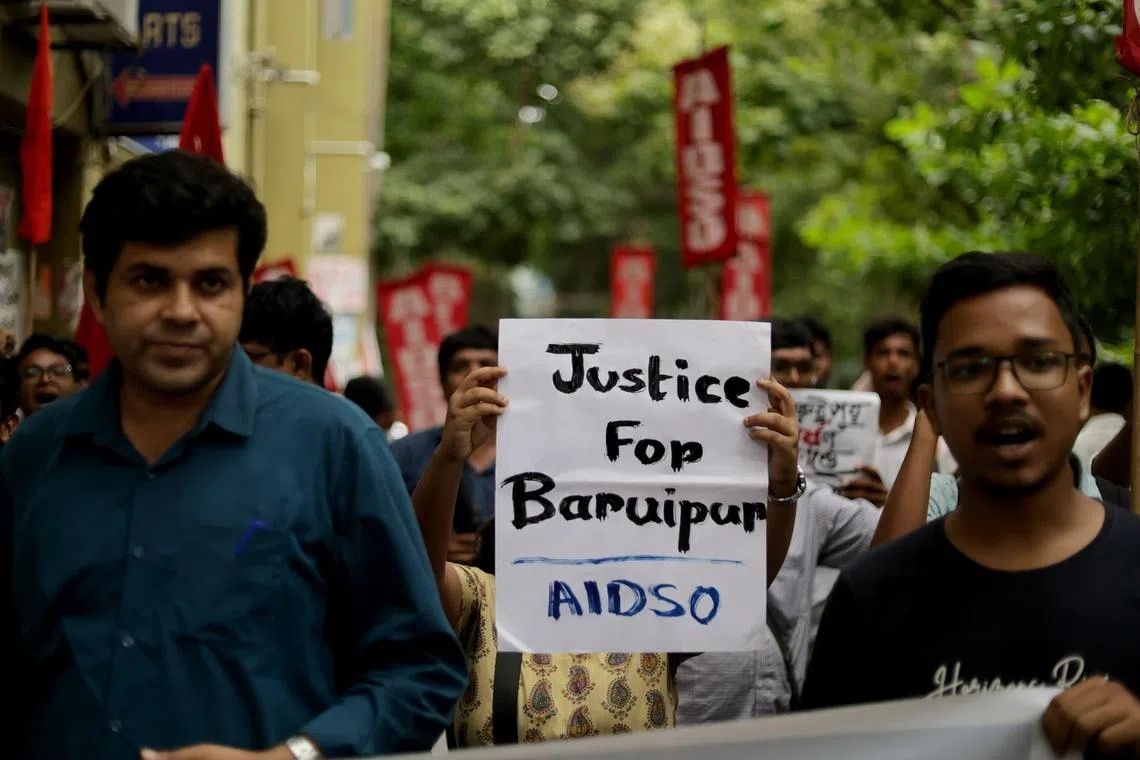
Indian authorities have intensified their crackdown on violent street protests that erupted following the discovery of a murdered 11-year-old girl in West Bengal, with police announcing the arrest of 35 individuals accused of destruction and assault. The detentions represent an effort to impose order on demonstrations that have convulsed Baruipur city, located roughly 30 kilometres south of Kolkata, since the child's body was recovered from a pond on July 5, one day after she disappeared from her neighbourhood.
The case has triggered one of the most volatile public responses to a crime in recent months, with angry crowds taking matters into their own hands even as formal investigations proceeded. Senior state police officer Arvind Kumar Anand stated that the 35 arrests so far represent those directly involved in violence and vandalism, though authorities are continuing to identify additional suspects by analysing viral video footage circulating on social media platforms. The scale of violent disorder—including roadblocks and vehicle torching—indicates the depth of public rage at what many view as systemic failures to protect vulnerable children.
In a controversial development that has drawn scrutiny from civil rights advocates, police fatally shot one of four men arrested in connection with the rape and murder. The suspect, identified as Prabhas Mondal, was killed in the early morning hours of July 8 while allegedly attempting to flee as officers took him to the crime scene for investigative purposes. While police characterised the shooting as a justified response to an escape attempt, such encounters remain contentious in India, where extrajudicial killings by law enforcement have prompted repeated international concern and domestic debate about due process.
The case has resonated deeply within the suspect's own family, with his mother publicly rejecting her son's body in an extraordinary statement that underscores the moral revulsion the crime has provoked. During a television interview, she declared she could not bring herself to accept his remains because he "did not do anything good," adding that "the sin committed by my son, he has received punishment for it." Her words capture the profound shame and anguish that such crimes inflict on families and communities, yet also raise difficult questions about collective responsibility and redemption.
Meanwhile, questions about the accuracy of the arrests themselves have begun emerging. The family of one of the other three suspects has alleged that he was apprehended through mistaken identity, claiming his detention represents a grave miscarriage of justice. The absence of public comment from the families of the remaining two accused suggests either their withdrawal from public discourse or ongoing uncertainty about their cases. These developments underscore the risk that during periods of intense social pressure, law enforcement agencies may sometimes prioritise appearing responsive to public outrage rather than conducting methodical investigations.
Newly appointed West Bengal Chief Minister Suvendu Adhikari has sought to position his administration as uncompromising on crimes against women and girls, as well as on vigilante violence. Following his party's victory in state elections in May, Adhikari pledged on social media platform X that his government would show "no leniency" toward those who commit rape, violence, or who take extrajudicial action against others, even in service of justice. He promised that authorities would "pursue such criminals to the fullest extent of the law and ensure justice is served," signalling his intent to differentiate his government from its predecessors on this critical issue.
The Baruipur murder has reignited persistent anxieties about the safety of women and girls across India, a crisis that has festered despite legislative reforms enacted in the aftermath of India's most infamous sexual assault case. The 2012 Delhi gang rape and murder of a 22-year-old woman sparked unprecedented nationwide demonstrations and led to the introduction of harsher criminal penalties, including expanded definitions of sexual assault and increased prison sentences. Four men convicted in that case were subsequently hanged, yet the passage of more than a decade has not substantially reduced the frequency or severity of such crimes, suggesting that legal reform alone is insufficient to address deeply entrenched social pathologies.
West Bengal specifically has faced intense international attention on women's safety following the rape and murder of a trainee doctor at Kolkata's prestigious RG Kar Medical College and Hospital in 2024. That case triggered nationwide protests and sparked broader conversations about workplace safety, institutional accountability, and the vulnerability of women within structures ostensibly designed to serve and protect them. The convergence of multiple high-profile crimes against women and girls within a single state has created a sense that institutional safeguards are failing at multiple levels.
For Malaysian and regional observers, the Baruipur case demonstrates how rage over gendered violence can rapidly destabilise civil order and create conditions where vigilantism, police violence, and wrongful arrest become interwoven. The tension between public demands for swift justice and the requirements of due process remains as unresolved in India as elsewhere in South Asia, raising broader questions about how democracies in developing regions can reconcile accountability with fairness during moments of acute moral crisis.

