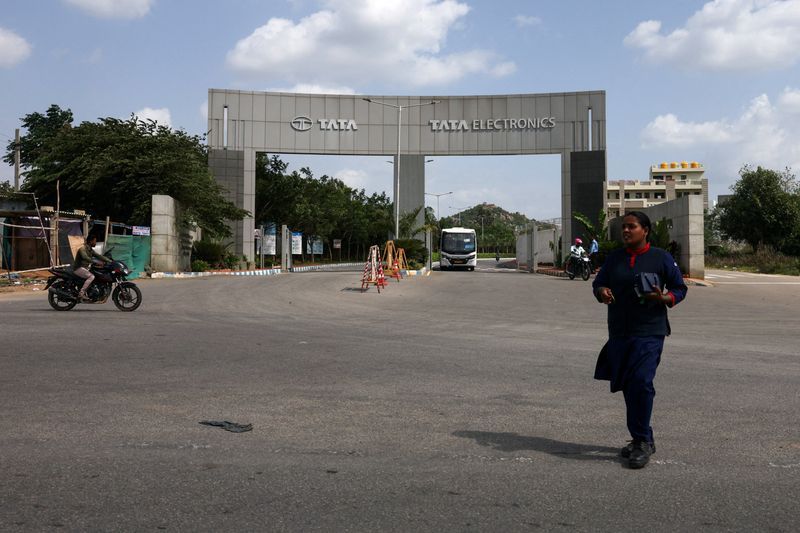
India's Ministry of Electronics and Information Technology has launched a formal investigation into a major data breach at Tata Electronics that exposed confidential information about Apple's forthcoming iPhone 18 Pro, marking the government's first public acknowledgment of the incident. The breach, which surfaced this week, represents a serious security failure at a facility crucial to Apple's global supply chain operations in South Asia, and has prompted swift action from New Delhi's technology regulators.
The compromised data, which appeared on dark web platforms frequented by cybercriminals, contains extensive technical documentation and imagery of the unreleased iPhone 18 Pro handsets. Among the sensitive materials leaked are detailed component specifications and a previously undisclosed list of suppliers contracted to manufacture specific parts for the device. Such granular supply chain information is normally kept under strict confidentiality agreements, as it provides competitors with valuable insights into Apple's manufacturing partnerships and product architecture ahead of official launch announcements.
S. Krishnan, secretary of India's Ministry of Electronics and Information Technology, confirmed the investigation during a media briefing on Thursday. The government official stated that India's Computer Emergency Response Team, the nation's primary cybersecurity authority responsible for managing digital security incidents, has been formally notified and is coordinating the response. This escalation to government level underscores the severity with which Indian authorities are treating the breach, given the involvement of a major multinational corporation and the exposure of proprietary technology data.
The timing of the leak carries particular significance for Apple's product calendar. The company is slated to unveil the iPhone 18 Pro and Pro Max models in September, making the premature disclosure of technical specifications and supplier relationships a substantial competitive concern. By exposing which manufacturers produce which components, the breach inadvertently reveals Apple's sourcing strategies and could provide rival smartphone makers with actionable intelligence about alternative suppliers and production methodologies.
The breach extends well beyond Apple, indicating a more widespread attack on Tata Electronics. According to reports, the same ransomware group also obtained and published confidential documents from technology titans including Tesla, Qualcomm, and TSMC. This suggests the attackers conducted a sophisticated, multi-target operation targeting high-value intellectual property across the semiconductor and consumer electronics industries. The simultaneous targeting of these companies indicates either a coordinated campaign or a single successful penetration of interconnected systems that process data for numerous clients.
In response to the incident, Tata Electronics has engaged international forensic specialists to conduct a comprehensive security audit of its systems. This external investigation aims to determine how the breach occurred, which systems were compromised, and what security measures failed to prevent the theft. Such forensic reviews typically examine access logs, network traffic patterns, and security configurations to reconstruct the attack timeline and identify vulnerabilities that may have been exploited.
For Malaysia and Southeast Asia, this breach carries important implications for the region's growing role in global electronics manufacturing. As countries in the region increasingly compete to attract investment from major technology companies, the Tata Electronics incident highlights the critical importance of robust cybersecurity infrastructure and regulatory oversight. Companies considering establishing or expanding manufacturing operations in Southeast Asia will likely scrutinise the security capabilities and incident response protocols of potential host countries and suppliers.
The incident also underscores the vulnerability of concentrated supply chains. Apple's reliance on Tata Electronics as a significant Indian manufacturing partner means that a security failure at a single facility can compromise proprietary information spanning multiple product lines. For Malaysian companies involved in electronics manufacturing and component supply, the breach serves as a cautionary example of why investing in enterprise-grade cybersecurity is not a discretionary expense but a fundamental business requirement.
The ransomware group responsible for the breach has employed the classic extortion model of stealing data and publishing it publicly, presumably hoping to extract payment from affected companies in exchange for deletion guarantees. This approach, sometimes called "double extortion," leverages reputational damage and competitive harm as leverage alongside the threat of system encryption or destruction. Apple and other affected companies face a difficult calculus: paying ransoms risks funding criminal enterprises, while refusing payment means accepting the loss of sensitive information and the resulting competitive disadvantage.
The Indian government's swift response demonstrates New Delhi's commitment to protecting high-value technology operations within its borders, a crucial factor as the country positions itself as an alternative manufacturing hub to China. By publicly confirming the investigation and engaging relevant cybersecurity agencies, India is signalling to multinational technology companies that breaches will be taken seriously and investigated thoroughly. This commitment is essential for attracting further foreign investment in manufacturing operations, particularly from companies as security-conscious as Apple.
For Apple, the breach presents a complex challenge. The company has invested substantially in diversifying its manufacturing base away from China, with India emerging as an increasingly important production centre. However, incidents like this threaten to undermine the case for expanding operations in India if security standards cannot match those in more established manufacturing hubs. Apple's response to this breach—and the effectiveness of the forensic audit Tata is conducting—will likely influence the company's future manufacturing investments not just in India, but across South Asia more broadly.
The investigation also raises questions about information security practices across India's technology sector. While Tata Electronics is a sophisticated operation with significant resources, the breach suggests that even well-established companies may face challenges in implementing and maintaining world-class cybersecurity standards. As India seeks to establish itself as a reliable alternative to China in global supply chains, addressing security vulnerabilities in manufacturing facilities will be essential to maintaining investor confidence and competitive advantage in attracting technology investment.

