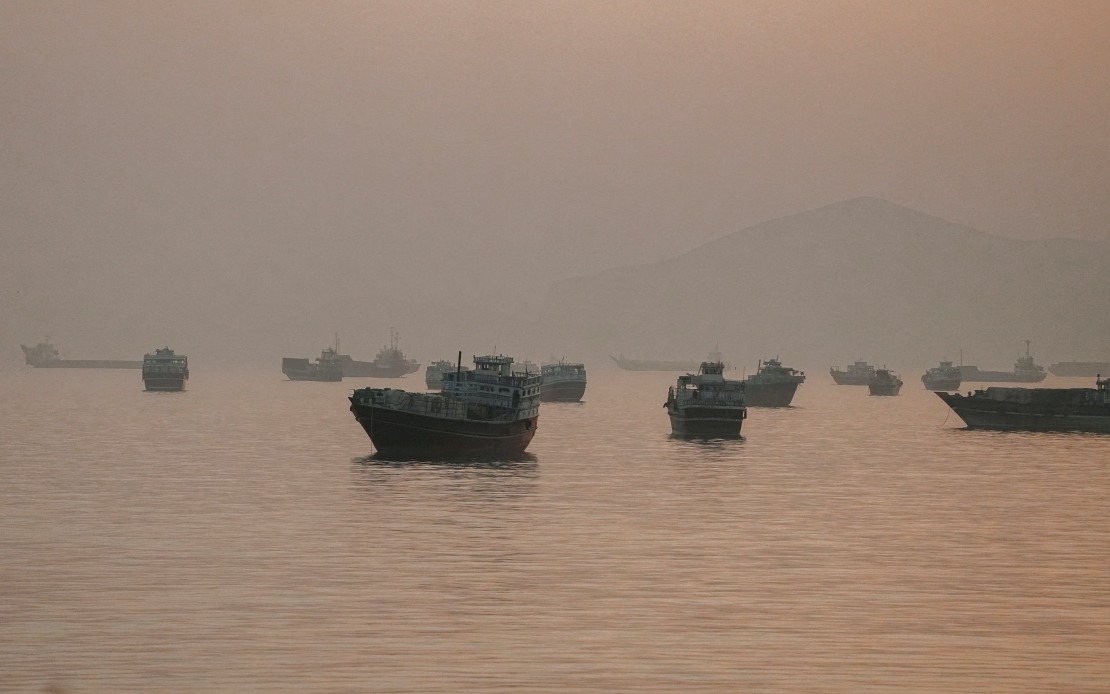
India has taken decisive action to protect its maritime workforce by imposing a blanket prohibition on the deployment of Indian seafarers aboard vessels transiting the Strait of Hormuz. The Directorate General of Shipping, the country's principal maritime authority, issued this directive on Wednesday evening, effectively restricting shipowners, vessel managers, and crewing companies from assigning Indian nationals to routes passing through this critical waterway. The measure represents a significant intervention by New Delhi into maritime labour practices, reflecting the acute dangers now confronting commercial shipping in one of the world's most strategically important chokepoints.
The order emerges from a deteriorating security situation in the Persian Gulf region, where merchant vessels have faced repeated attacks over the preceding days. The incident pattern has fundamentally altered the risk calculus for maritime operators, particularly those responsible for Indian crew welfare. The Directorate General of Shipping determined that the cumulative effect of these attacks has created an environment where the safety guarantees ordinarily expected in international shipping can no longer be reasonably assured. This assessment carries particular weight in India's maritime sector, which relies heavily on seafaring employment as a crucial component of its broader shipping industry and labour economy.
The human cost of recent violence has directly motivated this governmental response. Over a three-day period immediately preceding the directive, two Indian seafarers lost their lives in vessel attacks conducted within the region, while several others sustained injuries. These fatalities represent not merely statistical losses but tragic cases of workers caught in geopolitical crossfire—individuals whose primary occupation involves navigating commercial routes that have unexpectedly become contested zones. The loss of life among Indian nationals operating in foreign waters carries particular resonance within India's maritime communities and among families dependent on seafaring wages.
The escalating tensions between the United States and Iran form the underlying geopolitical context driving this advisory. This renewed confrontation has substantially elevated regional instability, with the Strait of Hormuz emerging as a flashpoint where strategic interests collide. Through this narrow waterway passes approximately one-third of global seaborne traded oil and liquefied natural gas, making it indispensable to international energy security. However, the strategic importance of the strait has simultaneously rendered it vulnerable to deliberate disruption, whether through state-sponsored action or non-state actors operating with implicit support. The current escalation between Washington and Tehran has crystallized these vulnerabilities, transforming what was already a tension-prone region into an actively dangerous maritime environment.
For Malaysia and other Southeast Asian nations with significant seafaring populations, India's action carries important implications. Southeast Asia supplies substantial numbers of crew members to international shipping, and the Strait of Hormuz remains a critical transit route for vessels serving regional ports and markets. The Indian directive signals that major maritime labour-supplying nations now actively assess geopolitical risk when authorizing crew deployments. This precedent may influence how other Asian maritime authorities manage their own personnel assignments, particularly if regional tensions persist. Malaysian shipowners and crewing companies operating in these waters face emerging pressure to evaluate security protocols and potential liability implications.
The Strait of Hormuz's role in global and regional energy markets further amplifies the significance of India's decision. Disruption to shipping through this passage directly affects fuel prices and availability across Asia, including Malaysia, which imports substantial petroleum volumes through these routes. When vessels are attacked or rerouted due to safety concerns, the resulting inefficiencies and insurance cost increases ultimately translate into higher energy costs for consuming nations. India's decision to restrict its seafarers from these routes, while primarily motivated by crew safety, simultaneously signals New Delhi's assessment that maritime security in the Persian Gulf has deteriorated beyond acceptable parameters—a judgment that carries weight internationally.
The enforcement mechanisms underlying this directive present practical challenges for the maritime industry. Shipowners and managers now face pressure to comply with Indian government restrictions while maintaining competitiveness in international shipping markets. Non-compliance could result in sanctions against Indian shipping companies or restrictions on their operational licenses. However, the global nature of maritime labour markets means that vessels previously reliant on Indian crew members must now source replacements from alternative labour pools, potentially increasing operational costs and requiring recruitment timeline adjustments. This ripple effect extends beyond Indian nationals to affect the entire structure of crew management in international shipping.
The involvement of recruitment companies in this prohibition adds another dimension to implementation. These entities, which constitute essential intermediaries between seafarers and shipowners, must now actively screen their contract portfolios to eliminate assignments involving Hormuz transit. This screening process requires real-time monitoring of vessel routeing and updated intelligence on specific maritime security threats. For some recruitment operations, the burden of compliance may prove substantial, particularly given the dynamic nature of vessel scheduling and the possibility that routes may change after initial deployment.
Regionally, India's action reflects broader concerns within South Asia about maritime security and the protection of nationals working abroad. The Indian government's willingness to intervene decisively in labour deployment decisions underscores the political sensitivity surrounding crew safety and the potential for domestic criticism if maritime deaths mount without visible protective measures. Other South Asian maritime labour suppliers may face similar pressure to adopt comparable restrictions, creating a potential coordinated approach to managing risks in high-threat maritime zones. This coordinated approach, should it materialize, could substantially impact shipping economics throughout the Indian Ocean region.
The longer-term consequences of this directive depend heavily on whether regional tensions ease or continue escalating. Should the current US-Iran confrontation de-escalate, the Directorate General of Shipping may eventually lift its restrictions, allowing normal crew deployment patterns to resume. Conversely, if maritime attacks persist or intensify, India may maintain or even expand its restrictions, potentially extending prohibitions to additional high-risk maritime zones. The precedent established here—that governments can and will restrict crew deployments in response to geopolitical threats—fundamentally alters maritime industry expectations regarding state intervention in labour markets.
For Southeast Asian stakeholders monitoring this situation, the Indian directive provides important strategic information about how major Asian governments assess maritime security risks and the thresholds triggering protective state intervention. Malaysian maritime interests, whether shipowners, recruitment agencies, or seafarers themselves, should observe how this policy evolves and whether other major labour-supplying nations follow India's example. The broader implication suggests that geopolitical volatility in strategically critical maritime zones increasingly translates into direct restrictions on maritime labour deployment, making risk assessment and geopolitical analysis essential components of international shipping operations.

