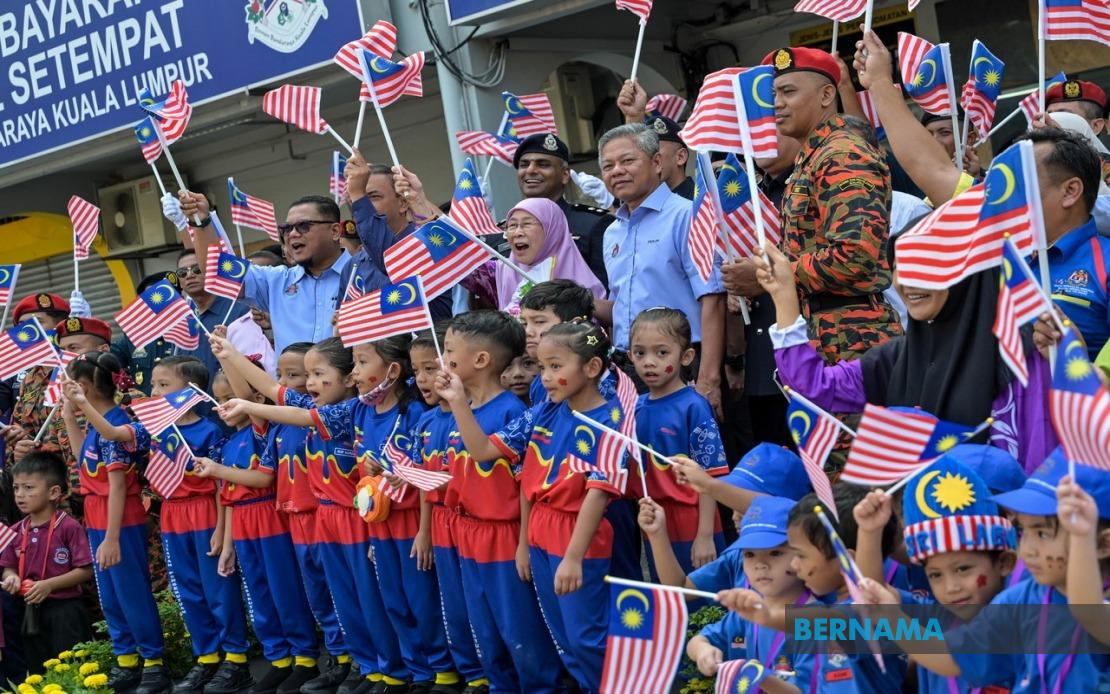
The true essence of independence transcends ceremonial gestures and nationalist symbolism, according to Prime Minister's wife Datuk Seri Dr Wan Azizah Wan Ismail, who highlighted that maintaining Malaysia's peace and unity demands active appreciation and shared commitment from all citizens. Speaking at the Semarak Merdeka Programme in Kuala Lumpur, Dr Wan Azizah moved beyond traditional Independence Day rhetoric to frame national sovereignty as an ongoing responsibility rather than a historical achievement to be merely commemorated each August.
Dr Wan Azizah, who represents Bandar Tun Razak as Member of Parliament, articulated a nuanced understanding of what freedom actually represents for a multiethnic nation like Malaysia. Shouting "Merdeka" and raising the Jalur Gemilang, she explained, captures only the surface of independence. The deeper significance lies in recognising the freedom secured through sacrifice, honouring the struggles of previous generations who fought to establish a sovereign nation, and accepting the responsibility to maintain that sovereignty through continued unity and harmony. This interpretation reframes National Day not as a historical footnote but as an active mandate for contemporary Malaysia.
The timing of her remarks during the National Day period, when the country observes the theme "Malaysia Madani: Jiwa Merdeka," underscores the government's broader agenda of linking traditional commemoration to modern governance priorities. According to Dr Wan Azizah, this year's theme aligns with concrete policy objectives: improving living standards, ensuring equitable opportunities across communities, and reinforcing social cohesion. For Malaysian policymakers, the connection between celebrating independence and delivering tangible improvements in citizens' lives has become increasingly important as public expectations grow regarding what government can achieve beyond symbolic gestures.
Bandar Tun Razak itself exemplifies the demographic diversity that Dr Wan Azizah presented as the foundation for harmony. With approximately 191,000 residents comprising 60 per cent Malays, 24 per cent Chinese, and eight per cent Indians, according to Malaysian Population and Housing Census data, the constituency reflects the multiethnic composition that has defined Malaysia since independence. For Dr Wan Azizah, such diversity is not incidental but rather the essence of what makes independence meaningful—a shared national project rather than dominance by any single community. This framing becomes increasingly relevant as Malaysia navigates persistent questions about social integration and national identity.
Beyond the rhetorical emphasis on unity and sacrifice, Dr Wan Azizah's National Day activities demonstrated the practical dimension of what she considers responsible citizenship. She visited families residing in public housing projects at Seri Pulau Pinang and Desa Tun Razak, presenting welfare assistance from the Social Security Organisation (PERKESO) and the Federal Territories Islamic Religious Council (MAIWP). This combination of philosophical reflection on independence with direct support to vulnerable households illustrates how contemporary Malaysian political leadership attempts to connect national celebration with addressing material hardship.
One beneficiary receiving assistance was K. Moganavalli, a 39-year-old whose household circumstances exemplify the economic fragility affecting working-class Malaysians despite the country's middle-income status. Following the sudden death of her husband Edwin Anthony Dass on August 2, Moganavalli confronted the immediate challenge of supporting three young children without employment income. PERKESO provided a funeral management benefit of RM3,000 along with a monthly survivor's pension of RM1,118.33, supplemented by additional aid. For families like Moganavalli's, such assistance proves critical in preventing catastrophic financial collapse, yet the amounts involved—roughly RM1,100 monthly—raise questions about whether social safety nets adequately protect against poverty.
A second household receiving support highlighted different vulnerabilities within Malaysia's welfare system. Khalijah Binti Nazir, aged 64, had abandoned employment to provide full-time care for two children, one facing hearing impairment. Her income consists of fragmented assistance streams: RM800 monthly from Baitulmal, RM300 through the Boost eWallet initiative, and RM150 under the Sumbangan Asas Rahmah (SARA) programme, with her son receiving an additional RM100 monthly through SARA. The patchwork nature of these payments—derived from multiple government and religious sources—reflects the often-uncoordinated approach to social protection in Malaysia, where eligible households must navigate several programmes rather than receiving unified support.
These assistance distributions underscore a tension inherent in Dr Wan Azizah's independence message. While she emphasised collective responsibility for maintaining national unity and prosperity, the material realities facing recipients like Moganavalli and Khalijah suggest that substantial segments of Malaysia's population struggle with basic economic security. Independence, in this context, extends beyond political sovereignty to encompassing whether citizens can secure dignified living standards. For Malaysian policymakers, the gap between rhetorical commitments to shared responsibility and the lived experiences of households depending on fragmented welfare assistance remains a pressing challenge.
The choice to conduct these welfare activities during National Day celebrations carries symbolic weight within Malaysian political culture. By positioning social support provision as an expression of national responsibility and unity, Dr Wan Azizah attempted to link abstract ideals about independence with concrete government action improving citizens' circumstances. This approach reflects broader efforts within the current administration to redefine national identity around the concept of "Malaysia Madani"—associating civilisational progress with inclusive development rather than ethnic or religious supremacy. Whether such reframing resonates with voters and translates into sustained policy changes remains to be seen as Malaysia approaches future electoral contests.
For Southeast Asian observers, Malaysia's approach to Independence Day celebrations and social welfare demonstrates how middle-income countries attempt to balance historical commemoration with contemporary governance demands. As regional economies mature and citizen expectations rise, National Day observances increasingly serve as platforms for articulating development visions and reaffirming social contracts. Dr Wan Azizah's emphasis on independence as ongoing shared responsibility rather than static achievement reflects this evolution, suggesting that future political success in Malaysia will hinge on whether leaders can convincingly demonstrate that national unity translates into improved circumstances for ordinary families.
The broader implications for Malaysian society involve recognising that independence, seventy years after Merdeka, has entered a new phase. Rather than celebrating freedom from colonial rule, contemporary Malaysia must grapple with whether independence genuinely translates into freedom from poverty, inequality, and insecurity for all citizens. Dr Wan Azizah's invocation of previous generations' sacrifices implicitly acknowledges this generational responsibility: those who benefit from independence secured through sacrifice must ensure that subsequent generations inherit not merely political sovereignty but also material prosperity and genuine equality of opportunity. Whether Malaysia's political leadership and institutions can deliver on this expanded vision of independence will ultimately determine whether National Day celebrations reflect genuine national accomplishment or unfulfilled aspiration.

