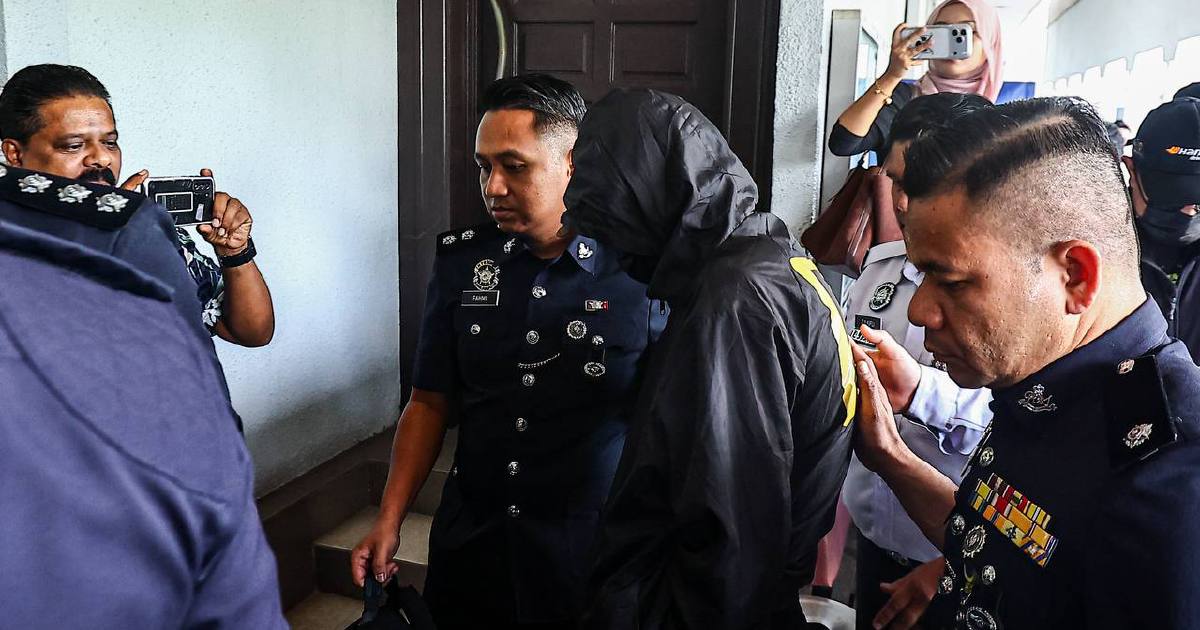
A driver employed by Malaysia's Immigration Department made his initial appearance before the Kuala Lumpur Magistrates' Court today following a fatal vehicular accident that occurred along Jalan Sultan Ismail yesterday, arriving at the courthouse surrounded by a substantial police contingent. The high-profile nature of the incident, involving a government agency vehicle and resulting in loss of life, prompted authorities to implement heightened security measures during the driver's transit to and presence at the court.
Jalan Sultan Ismail, one of the capital's major thoroughfares connecting the business district with residential areas, has experienced periodic traffic incidents despite ongoing road safety initiatives. The location remains a key arterial route through central Kuala Lumpur, handling significant daily traffic volumes throughout business hours and peak commuting periods. Yesterday's collision added to concerns about vehicular safety on this frequently congested corridor, which has historically witnessed multiple accidents ranging in severity.
The involvement of an Immigration Department vehicle in this incident carries particular significance given the department's essential role in national border security and population management operations. Government agency vehicles operating throughout Kuala Lumpur and other urban centres must maintain rigorous safety and maintenance standards, yet accidents involving such vehicles occasionally occur despite established protocols. The circumstances surrounding this specific collision remain subject to ongoing police investigation and court proceedings.
The decision to deploy substantial police resources during the driver's court appearance reflects the gravity attributed to the case by law enforcement authorities. Such security arrangements are typically implemented when cases attract significant public attention or when authorities anticipate potential complications during court proceedings. The visible police presence also serves to manage media interest and maintain order during what may be an emotionally charged proceeding for those affected by the tragedy.
Malaysian courts handle traffic fatality cases with considerable seriousness, with potential charges ranging from dangerous driving causing death to other vehicular homicide offences depending on established facts and evidence presented by prosecution teams. The magistrate's court serves as the initial forum for such cases before potential escalation to higher courts. Today's appearance represents an early procedural stage, likely involving bail considerations, formal charge reading, or other preliminary matters determined by judicial officers.
The fatal nature of yesterday's accident distinguishes it from routine traffic incidents and elevates its significance both within government circles and broader public discourse surrounding road safety. Malaysia has consistently grappled with traffic fatality rates that concern public health authorities and road safety advocates, who point to speeding, driver fatigue, and vehicle maintenance as recurring contributing factors. This collision exemplifies the real-world consequences of road accidents that claim thousands of lives nationally each year.
Investigative authorities will likely examine multiple factors in reconstructing the accident sequence, including vehicle mechanical condition, driver conditions at time of collision, weather circumstances, road surface conditions, and other vehicles or road users involved. Evidence gathering and witness statements form critical components of establishing circumstances that led to the fatal outcome. Technical accident reconstruction specialists frequently assist in determining precise collision dynamics and contributing factors.
The Immigration Department's institutional response to this incident remains to be seen, though government agencies facing workplace-related fatalities typically implement internal reviews and potential policy adjustments to prevent recurrence. Staff welfare considerations for colleagues of the involved driver may also emerge as an institutional concern requiring management attention. Questions may arise regarding vehicle maintenance schedules, driver fatigue protocols, and operational procedures within the department.
Public interest in this case extends beyond the immediate parties involved, as the incident touches on broader national conversations regarding governmental accountability, occupational safety, and road safety priorities. Media coverage of the court proceedings will likely maintain public awareness throughout the legal process, particularly given the government agency dimension and fatal outcome. The case may prompt renewed discussions about whether current traffic enforcement and safety measures adequately protect road users across Kuala Lumpur's increasingly congested urban environment.
As proceedings continue through the judicial system, additional details regarding charges, evidence, and legal arguments will emerge during subsequent court dates. The balance between accountability measures and fair legal process will be carefully calibrated by judicial officers overseeing the case. Resolution of this matter will carry implications not only for the individuals directly involved but potentially for policy discussions within the Immigration Department and broader government vehicle operations protocols across Malaysia's public sector.

