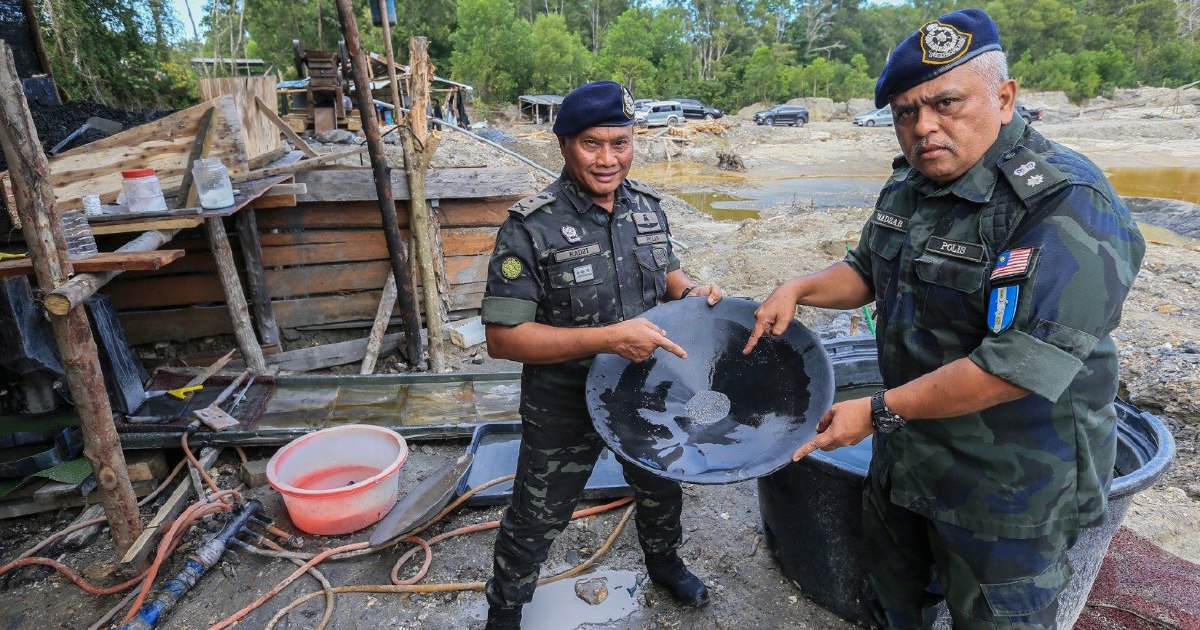
Police in Terengganu have successfully dismantled a sophisticated illegal gold mining operation at Bukit Kor, Marang, resulting in the detention of 15 suspects accused of running the lucrative unlawful enterprise. The syndicate, allegedly known as 'Mak Siti', had established itself as a significant organised criminal venture, with authorities estimating daily profits reaching RM13,000 through illicit mineral extraction activities.
The operation represents a concerning expansion of underground mining networks across Peninsular Malaysia, where unregulated extraction of precious metals poses substantial environmental and public safety threats. Such syndicates typically exploit remote or hilly terrain in states like Terengganu, where regulatory oversight can be limited and escape routes multiple. The scale of this particular operation—generating nearly RM470,000 monthly—underscores the financial incentives driving criminal participation in illegal mining.
Illegal gold mining in Malaysia has become increasingly professionalised, with syndicates employing machinery, labour networks, and logistics operations that rival small legitimate businesses. These groups often operate across district boundaries, moving equipment and personnel to evade detection. The use of surnames or code names like 'Mak Siti' suggests hierarchical organisation with identified leadership structures, indicating networks involving coordination beyond simple opportunistic extraction.
The Bukit Kor site would have required substantial preparation and investment in equipment, making this less a casual operation and more an embedded criminal enterprise. Operators of such schemes typically maintain connections with downstream buyers, including unlicensed traders and occasionally legitimate gold merchants willing to purchase unverified material at discounts. This supply chain integration makes comprehensive enforcement particularly challenging, as disrupting the mining site alone does not necessarily eliminate demand or secondary transactions.
For Terengganu and neighbouring states, illegal mining carries compounded risks beyond simple resource theft. Uncontrolled extraction degrades land stability, contaminates water sources, and creates environmental liabilities extending far beyond the immediate operational areas. Communities downstream face potential water pollution from heavy metals and processing chemicals, while the landscape itself becomes hazardous with unfilled pits and unstable ground.
The arrest of 15 individuals suggests a coordinated enforcement response, likely involving multiple agencies and intelligence gathering. Malaysian police operations against illegal mining typically require cooperation between state and federal units, environmental authorities, and sometimes immigration personnel when foreign nationals are involved in labour components. The scale of arrests indicates authorities allocated substantial resources to this particular case, suggesting either intelligence-driven targeting or escalated enforcement priorities in the region.
For Malaysian authorities, this operation exemplifies the persistent challenge of combating organised resource crime in rural and semi-rural zones. Unlike urban-based criminal enterprises vulnerable to visible surveillance and informant networks, mining syndicates operate in dispersed locations where community reporting may be limited and terrain provides natural concealment. Seasonal variations in water levels and accessibility further complicate consistent enforcement.
The economic appeal of illegal mining extends beyond pure profiteering. In regions experiencing economic pressure or limited formal employment, such operations attract labourers who may be aware of their illegality but lack viable alternatives. This creates resilient networks where even successful raids simply prompt relocation rather than cessation of activities. Addressing such operations thus requires not only enforcement but sustained engagement with local economies and employment prospects.
International demand dynamics for gold also fuel domestic illegal mining. Global gold prices create standing incentives for extraction regardless of local regulatory frameworks. Premium pricing for precious metals ensures that even modest-scale operations become economically significant at household and village levels, complicating community cooperation with authorities who may be perceived as threatening local livelihoods.
The recovery of equipment, materials, or cash from the Bukit Kor site would provide forensic evidence of operational scope and duration. Authorities typically conduct follow-up investigations into financial flows, seeking to identify buyers, transporters, and anyone providing capital or licensing arrangements. Such secondary investigations sometimes reveal connections to larger organised crime networks or corruption of officials facilitating operations.
Moving forward, sustained operations against similar syndicates require enhanced coordination between enforcement bodies and consistent presence in identified hotspots. Intelligence sharing between state police units and federal authorities helps prevent simple relocation of operations to adjacent jurisdictions. Technology including aerial surveillance and satellite monitoring of landscape changes provides tools for identifying new mining sites in their early operational phases.
The successful dismantling of the 'Mak Siti' syndicate represents meaningful enforcement action, yet authorities acknowledge that persistent resource crime requires systematic long-term strategies rather than discrete operations. Without addressing underlying economic drivers and establishing more robust regulatory presence across rural Terengganu and similar regions, comparable operations will continue emerging. The RM13,000 daily revenue captured by authorities serves as both a law enforcement success and a reminder of the substantial economic pressures incentivising illegal mining across Malaysia.

