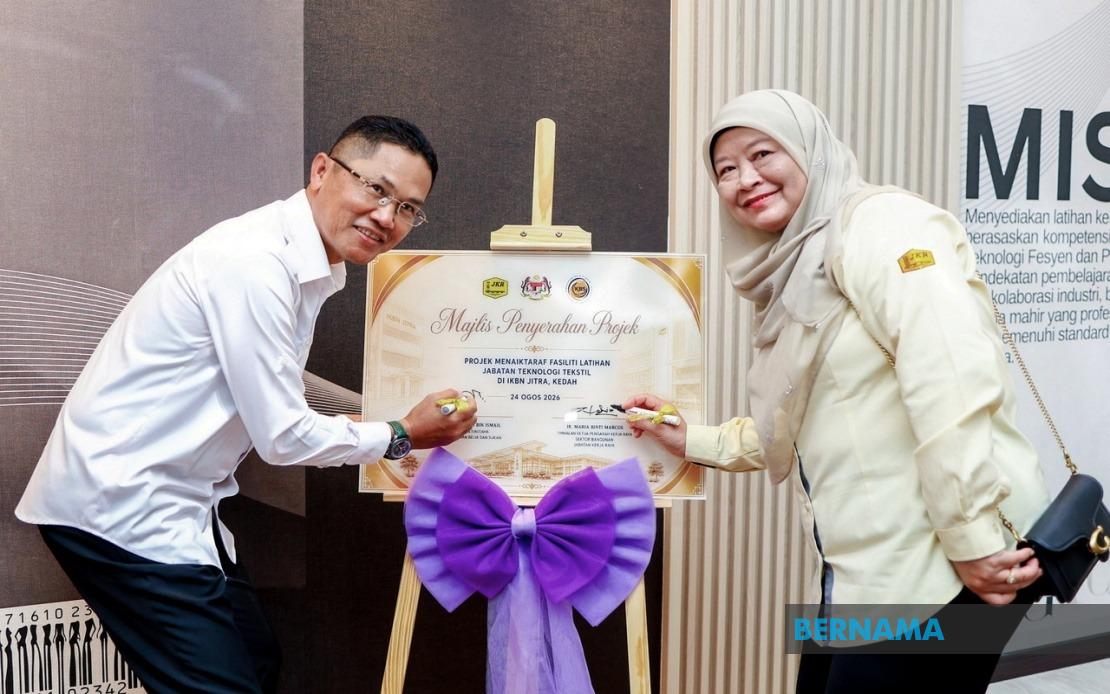
The government has formally handed over a RM3.7 million upgrading project for the Fashion and Clothing Technology Department at the National Youth Skills Institute (IKBN) in Jitra, Kedah, signalling its determination to bolster Malaysia's technical and vocational education landscape. The initiative, unveiled during a handover ceremony, represents a tangible investment in modernising training infrastructure at a time when Southeast Asia is increasingly competing for skilled labour in fashion and textiles, industries with significant regional economic clout.
According to Youth and Sports Ministry secretary-general Datuk Rahimi Ismail, the comprehensive refurbishment encompasses structural upgrades to the facility, acquisition of information and communications technology (ICT) equipment, and new furnishings designed to create a contemporary learning environment. The scope of work extends beyond cosmetic improvements; it fundamentally reimagines how fashion and clothing technology is taught at the institution, with particular emphasis on bridging the gap between classroom theory and real-world industrial practice. This distinction matters considerably for Malaysian vocational institutions, which have historically grappled with the perception that TVET offerings lag behind academic pathways in terms of quality and relevance.
The project forms part of Rolling Plan 4 under Malaysia's 12th Malaysia Plan, cementing its position within the broader national development framework. The Public Works Department (JKR) executed the building upgrades beginning on June 15, 2025, with a contract value of RM1.577 million allocated solely to structural and renovation work. This methodical, phased approach suggests careful planning and resource allocation, reflecting lessons learnt from previous infrastructure projects across the region. The remaining funds targeted modern equipment and furnishings that would equip students with hands-on experience using technology commonplace in contemporary fashion manufacturing and design operations.
A centrepiece of the upgrade is a Level Three fashion workshop alongside a smart classroom facility, both designed to replicate industrial working conditions. The significance of this design choice cannot be overstated for a region where fashion manufacturing remains concentrated in Bangladesh, Vietnam, and Indonesia, with Malaysia seeking to establish itself as a higher-value-added player in design and technology-driven segments. By exposing IKBN Jitra students to industry-standard facilities during their formative training years, the institution positions graduates to command better employment prospects and potentially attract foreign direct investment in specialised fashion technology ventures within Malaysia.
Datuk Rahimi emphasised that the fashion industry's rapid evolution, propelled by technological advancement, digital marketing, and shifting consumer preferences, demands that TVET institutions maintain pace with these shifts. This observation reflects a broader regional challenge: vocational institutions across Southeast Asia struggle to update curricula and facilities fast enough to remain relevant as global supply chains and consumer behaviours transform. Malaysia's investment in IKBN Jitra signals awareness of this challenge and a commitment to ensuring that the country's vocational graduates possess genuinely marketable skills rather than outdated competencies.
The modernised training environment is expected to enhance teaching quality and learning outcomes by fostering creativity and innovation among students. Beyond academic metrics, the upgraded facilities should cultivate an entrepreneurial mindset among trainees, encouraging them to view themselves as potential innovators within the fashion sector rather than merely skilled workers executing predetermined tasks. This psychological shift, though subtle, carries profound implications for how graduates approach their careers and whether they remain in Malaysia or migrate to regional hubs offering greater opportunities for advancement and creative expression.
Datuk Rahimi articulated an ambitious vision wherein IKBN Jitra students would gain recognition not merely at state and national levels but achieve breakthroughs in international markets and the global fashion landscape. This aspiration, while idealistic, reflects a strategic understanding that Malaysia's demographic and geographic position within Southeast Asia positions it well to serve as a fashion technology hub if investments in human capital are sustained. The fashion industry's integration with e-commerce, sustainable manufacturing practices, and digital design technologies means that Malaysian graduates trained in these domains could command significant market value across Asia and beyond.
The upgrade also underscores a policy shift toward viewing TVET as a prestigious and viable educational pathway rather than a fallback option for academically underperforming students. Historical stigma surrounding vocational education in Malaysia has persisted despite government initiatives, with families often pressuring children toward university degrees regardless of aptitude. Strategic investments in facilities and infrastructure at institutions like IKBN Jitra serve multiple objectives simultaneously: they provide tangible evidence of government commitment, improve actual training quality, and subtly reshape perceptions by creating environments that rival or exceed those found in university facilities.
For regional observers and policymakers, IKBN Jitra's upgrade offers instructive lessons about prioritising TVET modernisation as an economic development strategy. Thailand, Vietnam, and Indonesia have similarly invested in vocational infrastructure, recognising that demographic shifts and global competition for manufacturing competitiveness necessitate a well-trained, adaptable workforce. Malaysia's RM3.7 million investment, whilst significant domestically, represents a measured but meaningful commitment to a sector often underfunded relative to its economic importance.
The timing of the project completion carries additional significance given Malaysia's broader industrial policy objectives and regional competition for investment in knowledge-intensive manufacturing. As neighbouring countries enhance their vocational training ecosystems, Malaysia's ability to supply graduates with cutting-edge skills becomes a competitive advantage in attracting multinational corporations seeking regional production hubs for specialised fashion and textile goods. IKBN Jitra's upgraded facilities enhance the institution's capacity to fulfill this role.
Looking forward, the success of this initiative will be measured not merely by facility quality but by employment outcomes for graduates, industry partnerships forged, and evidence of innovation emerging from the institution. The government has created the physical and technological infrastructure; the challenge now lies in ensuring that pedagogical approaches, instructor training, and curriculum design evolve in tandem with the facilities. Sustained investment and adaptive management will determine whether IKBN Jitra becomes a genuinely competitive player in the regional fashion and textile education landscape.

