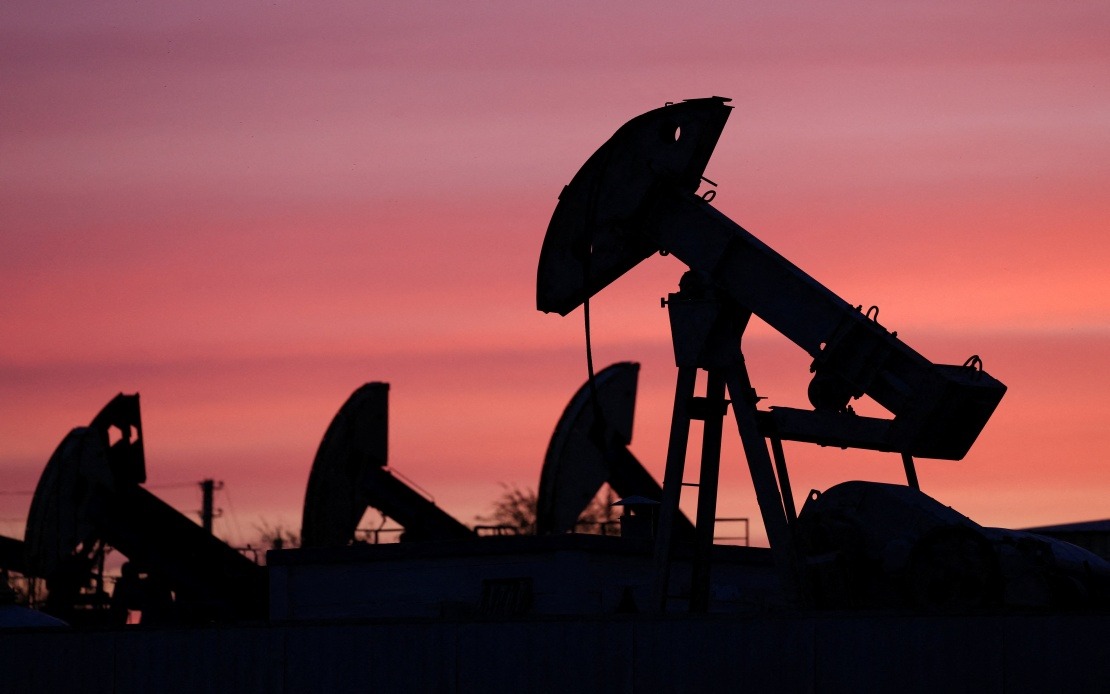
The International Energy Agency has revised upward its projections for global oil demand and supply in 2026, offering a more optimistic outlook for energy markets even as demand growth continues to decelerate. Released in its Friday report, the updated forecast signals subtle but meaningful adjustments to the agency's expectations for how petroleum markets will evolve over the next two years, with implications for pricing, investment decisions, and energy policy across Asia-Pacific and beyond.
The agency now anticipates that worldwide oil consumption in 2026 will reach 103.463 million barrels per day, a modest improvement from the previous estimate of 103.292 million barrels per day released approximately one month prior. While this represents an upgrade, the underlying story remains one of slowing growth in oil demand, with the IEA projecting that consumption will decline by 1.05 million barrels per day compared to current levels. This deceleration reflects ongoing structural shifts in global energy systems, including the accelerating transition toward renewable energy sources, improvements in fuel efficiency across transport and industry, and the growing electrification of vehicle fleets in developed economies.
Moreover, the agency has trimmed its forecast for how sharply demand will fall this year, now predicting a decline of 1.047 million barrels per day rather than the 1.118 million barrels per day it anticipated in the previous month's assessment. This 71,000 barrel-per-day reduction in expected annual contraction suggests that near-term demand patterns are proving slightly more resilient than previously anticipated, possibly reflecting stronger-than-expected industrial activity, transportation demand, or downstream consumption in certain regions.
For Southeast Asian countries and other emerging markets with growing energy appetites, these forecasts carry particular weight. The region's economies have demonstrated relative resilience in recent years, with industrial production and mobility demand continuing to expand despite global headwinds. The IEA's slightly upgraded demand outlook may ease concerns about energy scarcity or sustained price spikes, potentially benefiting economies heavily dependent on affordable petroleum for transportation, manufacturing, and power generation. However, the agency's underlying message—that demand growth is decelerating—underscores the urgency for diversification away from fossil fuels.
On the supply side, the IEA has raised its forecast for global oil production in 2026, now expecting it to increase by 0.22 million barrels per day compared to the previous projection. This adjustment brings the anticipated total production figure to 102.6 million barrels per day, compared to the earlier estimate of 102.37 million barrels per day. The revision reflects the agency's assessment that production growth will be somewhat stronger than previously thought, driven by continued development of reserves in various jurisdictions and improvements in extraction technologies.
The earlier forecast had anticipated that production would decline by 3.87 million barrels per day from current levels, but the updated assessment moderates this pessimism, now predicting a smaller contraction of 3.65 million barrels per day. This shift suggests that the IEA believes supply-side factors—including capital investments in existing fields, natural production trajectories from maturing reserves, and perhaps contributions from newer projects coming online—will help offset some anticipated declines in mature basins.
The narrowing gap between projected demand and production in 2026 carries significance for market stability. With demand expected at 103.463 million barrels per day and production at 102.6 million barrels per day, the agency anticipates a deficit of approximately 0.863 million barrels per day, assuming stable inventory draws and accounting for adjustments. Such a configuration could support firm pricing while incentivising continued investment in exploration and production capacity, though it remains tight enough to avoid generating the kind of severe supply shocks that characterized earlier commodity cycles.
These forecasts arrive as geopolitical tensions, climate policy acceleration, and technological disruption continue reshaping energy markets. For Malaysian policymakers and energy sector participants, the IEA's revised outlook underscores the necessity of preparing for a lower-growth oil consumption environment while simultaneously exploring opportunities in downstream refining, petrochemicals, and liquefied natural gas sectors where comparative advantages remain substantial.
The IEA's methodology involves continuous refinement as new data emerges regarding economic growth, industrial output, transportation trends, and renewable energy deployment. Monthly revisions such as these, while sometimes appearing marginal in absolute terms, aggregate over time and influence the strategic calculus of oil companies, governments managing sovereign wealth funds, and investors positioning themselves in energy markets.
For Malaysian stakeholders, particularly those in the energy industry or dependent on stable fuel prices, the agency's slightly more optimistic near-term demand outlook may provide temporary reassurance. However, the fundamental trajectory toward moderated consumption growth remains clear, reinforcing the importance of economic diversification and accelerated green energy investments. The balance between supply and demand projected for 2026 suggests that markets will likely remain competitive without severe stress, though structural shifts will continue rewarding efficiency and punishing over-reliance on hydrocarbon revenues.

