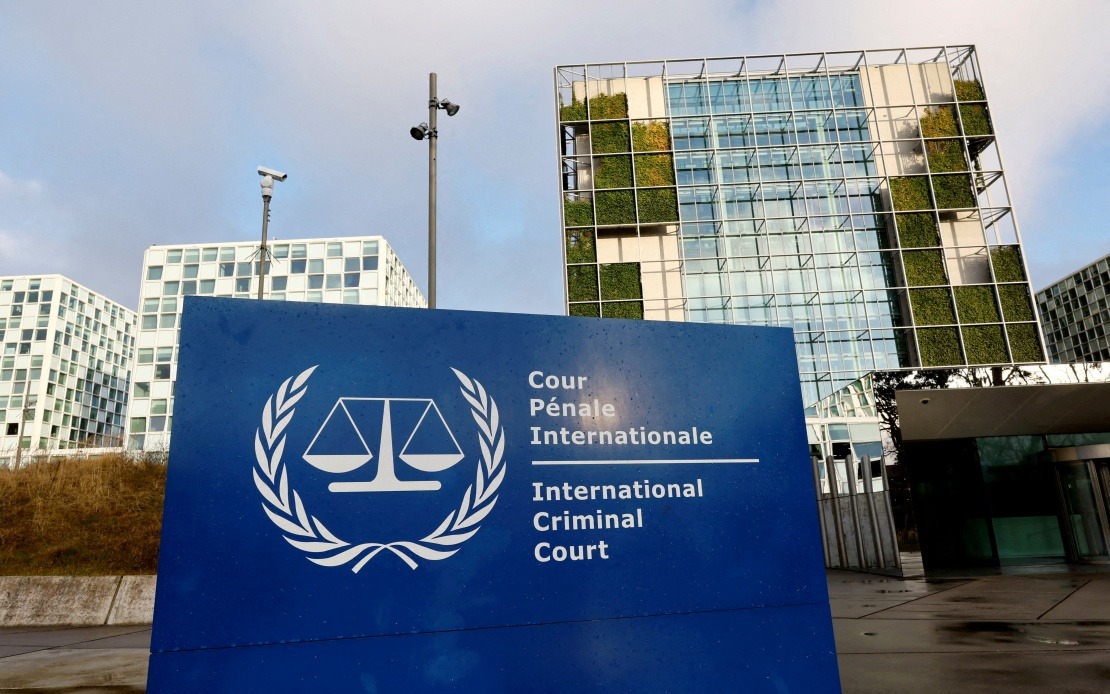
The International Criminal Court delivered a stinging rebuke to the United States this week after Washington imposed fresh sanctions targeting the tribunal's highest leadership. The new designations focus on ICC President Tomoko Akane of Japan and Abdoulaye Seye of Senegal, who serves as a senior trial lawyer within the Office of the Prosecutor. The move marks an escalation in American pressure against the Hague-based institution, which has faced mounting hostility from Washington over its investigations into activities involving US allies and personnel.
These latest penalties expand what has become an increasingly confrontational relationship between the United States and the ICC. The court disclosed that nine of its 18 judges, both deputy prosecutors, a former prosecutor, and one additional staff member now face American sanctions. The cumulative effect has systematically targeted the institution's senior echelon, signalling a deliberate strategy to restrict the court's operational capacity and leadership effectiveness. For readers in Southeast Asia, where regional courts and institutions frequently face external pressure, this development carries particular significance as it demonstrates how powerful nations attempt to challenge multilateral judicial mechanisms they view as contrary to their interests.
The ICC's formal response characterised the sanctions as fundamentally incompatible with principles of judicial independence and international law. The court emphasised that it operates exclusively within its mandate as granted by member states spanning multiple continents and regions, operating under the Rome Statute framework. This assertion becomes crucial when understanding the court's legitimacy: unlike some international bodies created by individual powers, the ICC derives authority from a broad coalition of states that voluntarily submitted to its jurisdiction. The sanctions therefore represent, in the court's view, an attempt by a non-member power to dictate the operations of an institution established through democratic consensus among sovereign nations.
Beyond the technical arguments about institutional autonomy, the ICC highlighted deeper consequences of American pressure. The court warned that coercive measures targeting judicial officers for executing their official duties fundamentally undermine the rule of law globally. This argument resonates across developing regions, where international courts often represent crucial venues for accountability when domestic systems prove inadequate or compromised. Malaysia and other Southeast Asian nations maintain varied relationships with international justice mechanisms, making this tension between powerful states and multilateral institutions particularly relevant to the region's long-term stability and legal governance.
A particularly poignant dimension of the ICC's statement concerned victims seeking justice through its mechanisms. The court noted that when individuals exhaust all available domestic remedies without achieving accountability, they turn to international tribunals as a final recourse. Sanctions targeting prosecutors and judges effectively restrict victims' pathways to justice, particularly those from conflict zones or nations with weak institutions. This consequence has immediate relevance for affected communities, many of whom represent some of the world's most vulnerable populations already denied justice through national systems. The political pressure Washington applies thus directly translates into constrained access to accountability for ordinary people.
The dispute reflects deeper fractures within the international legal order regarding which institution possesses legitimacy to investigate sensitive matters. The United States has long maintained a skeptical, sometimes hostile relationship with the ICC, particularly regarding inquiries that potentially involve American military personnel or activities in allied nations. Several recent investigations have heightened these tensions, creating friction between American strategic interests and the court's mandate to investigate war crimes, crimes against humanity, and genocide without geographic limitation. This fundamental disagreement about institutional scope and authority remains largely unresolved within international law.
The ICC's continued assertion that it will discharge its mandate independently and impartially suggests the court intends to resist American pressure through steadfast adherence to its legal obligations rather than through accommodation. This stance carries implications for how international institutions respond to coercion from major powers. The court's emphasis on Rome Statute obligations emphasises that member states collectively established these rules, and individual nations—particularly non-members like the United States—cannot unilaterally alter them through economic pressure. Whether this resolve translates into sustained operations despite sanctions remains uncertain, particularly as financial restrictions accumulate.
The ICC also acknowledged support from member states and civil society organisations defending international justice principles. This coalition-building aspect proves crucial, as the institution's effectiveness ultimately depends on sufficient political backing from the international community. Southeast Asian states' positions within this emerging divide become strategically significant, as their votes and rhetoric regarding international justice institutions carry weight in broader geopolitical calculations. Nations must balance pressure from Washington against commitments to multilateral legal frameworks and concerns about accountability for crimes in their own regions.
Looking forward, this escalating confrontation highlights fundamental questions about the future of multilateral institutions. The pattern of sanctions targeting judges and prosecutors creates a precedent where powerful nations attempt to coerce international courts into limiting investigations or modifying procedures. If other major powers follow similar strategies, the entire architecture of international justice could face systemic pressure. This prospect particularly concerns smaller nations and developing countries whose security often depends on functioning international legal frameworks, as they lack independent capacity to enforce accountability for mass atrocities without international support.
For Malaysian observers and regional policymakers, this dispute serves as a cautionary case study in how international institutions navigate pressure from powerful states while maintaining legitimacy and operational capacity. The outcome of this confrontation may influence how regional institutions develop in Southeast Asia and whether member states believe international mechanisms can operate independently despite external pressure. The ICC's response demonstrates that some multilateral bodies intend to maintain their founding principles even when facing significant political and economic costs, though the practical sustainability of this position remains to be demonstrated.

