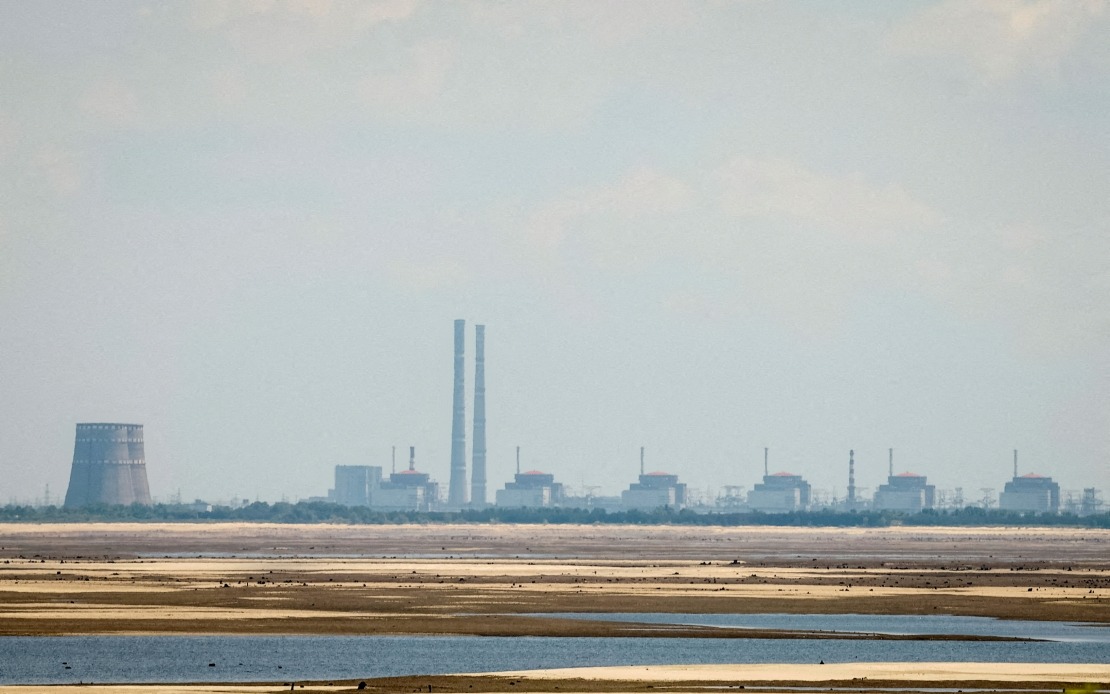
The Zaporizhzhia Nuclear Power Plant has suffered another major setback in its grid connectivity, with the facility losing external power for the 21st occasion since Russia's invasion of Ukraine intensified. The outage on Friday, reported by the International Atomic Energy Agency, disconnected the sprawling nuclear complex from the critical 330 kV Ferosplavna-1 transmission line that supplies it with off-site electrical power—a development that underscores the persistent instability afflicting one of Europe's most strategically important energy infrastructures.
The repeated severing of power connections reflects the deteriorating security situation surrounding the plant's operational environment. According to the IAEA team stationed on-site to monitor the facility, military activity in the vicinity triggered automated electrical protection systems on the transmission network. These safety mechanisms, designed to prevent equipment damage during hostile conditions, essentially shut down the power flow to the plant whenever combat-related electromagnetic disturbances are detected. This creates a vicious cycle in which the very systems meant to protect infrastructure inadvertently amplify instability by forcing the plant to rely on backup systems.
When the facility loses its connection to the national grid, the plant's emergency diesel generators spring into operation within seconds, a failsafe mechanism that has proven essential during the repeated outages. These backup power systems sustain electricity to the reactor cooling mechanisms and other critical safety infrastructure that cannot tolerate even brief interruptions without risking catastrophic failure. However, the reliance on diesel-powered backups introduces additional vulnerabilities—the generators themselves require maintenance, fuel supplies must be continuously replenished in an active conflict zone, and their reliability diminishes over time with repeated cycling.
IAEA Director General Rafael Grossi has issued a stark warning about the implications of this pattern. His statement emphasizing the "extreme fragility" of nuclear safety conditions at the plant reflects growing international concern that the continued occurrence of power losses represents an unsustainable situation. The language used by the agency suggests that each outage brings the facility incrementally closer to a scenario where the emergency systems might fail to activate or insufficient redundancy remains to manage a genuine nuclear emergency. For observers in Southeast Asia, particularly those nations considering or expanding nuclear energy programs, the Zaporizhzhia situation serves as a sobering case study in how geopolitical conflict can rapidly transform a functioning energy facility into a potential humanitarian catastrophe.
The frequency of these incidents—21 separate occasions in less than 18 months—demonstrates that the problem is not isolated or anomalous but rather systemic and deepening. Each power loss requires the plant's operators to perform diagnostics, verify that all safety systems functioned correctly, and assess potential damage to electrical infrastructure. The cumulative stress on equipment and personnel involved in managing these repeated emergencies cannot be underestimated. Plant workers must maintain constant vigilance knowing that the next military operation in the region could trigger another outage, potentially during a moment when backup systems are undergoing routine maintenance or when operator fatigue levels are highest.
Grossi's explicit call for "maximum military restraint" signals the IAEA's frustration with the inability to guarantee safe nuclear operations under current conditions. The agency's role is fundamentally compromised when it can only monitor and report on safety violations rather than enforce compliance with international nuclear safety standards. The fragmentation of authority over the plant—with Russian and Ukrainian forces asserting competing claims over the facility and its surroundings—creates a governance vacuum that makes coordinated safety protocols nearly impossible to maintain. For Malaysia and other ASEAN nations that depend on stable global energy supplies and have security interests in maintaining international norms around critical infrastructure, the Zaporizhzhia situation illustrates how regional conflicts spill over to affect energy security far beyond the immediate area of fighting.
The existence of 21 power loss events also raises questions about the adequacy of current international mechanisms for protecting nuclear facilities during armed conflict. The 1977 Environmental Modification Convention and various protocols theoretically restrict military targeting of energy infrastructure, yet the practical enforcement of these agreements has proven insufficient. The Zaporizhzhia plant demonstrates that even when technically civilian facilities, their location in contested territory makes them vulnerable to accidental damage through collateral effects of military operations. This scenario becomes increasingly relevant for the Indo-Pacific region, where maritime disputes and territorial tensions could similarly threaten nuclear installations during future conflicts.
The backup diesel generators, while crucial, represent only a temporary solution to what is fundamentally a transmission grid problem. These systems typically operate for periods ranging from hours to days on stored fuel supplies, sufficient for routine maintenance shutdowns but inadequate for extended grid failures lasting weeks or months. If a major conflict event were to destroy multiple transmission lines simultaneously or sever supply routes for diesel fuel, the plant could face a genuine emergency where cooling systems begin to fail. The margin between safe operation and catastrophe narrows with each repeated cycle of power loss and restoration, as equipment degradation accumulates and operator response times potentially lengthen.
The international community's limited leverage in responding to these incidents reflects broader tensions over how nuclear safety can be maintained when great power politics intrude into technical domains. The IAEA possesses expertise and impartial authority but lacks enforcement mechanisms independent of the Security Council, where Russia holds veto power. This structural weakness means that warnings, however dire, may prove insufficient to alter military behavior. For smaller nations like Malaysia that lack nuclear weapons and participate in the non-proliferation regime, the situation raises uncomfortable questions about the reliability of international institutions to protect even critical civilian infrastructure when major powers are in conflict.
Looking ahead, the pattern of repeated outages suggests that stabilizing the Zaporizhzhia situation requires either a genuine ceasefire in the surrounding region or a negotiated agreement between Ukrainian and Russian forces to establish a demilitarized zone around the facility. Without such a political settlement, the technical capacity of the plant's operators to maintain safety margins will continue to erode. The IAEA's warnings, while justified, implicitly acknowledge that the agency itself cannot resolve problems rooted in geopolitical conflict. For the broader international community, particularly energy-dependent nations in Asia, the Zaporizhzhia crisis underscores the imperative of resolving regional military conflicts before they metastasize into transnational nuclear emergencies that could affect global energy systems and public health.

