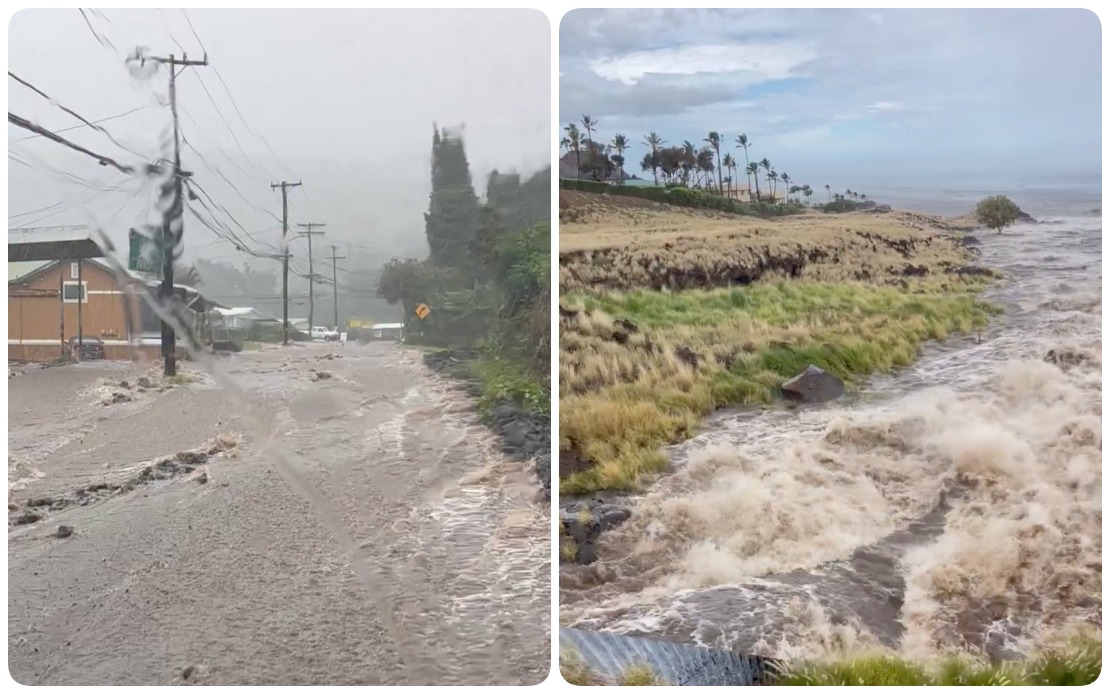
Hurricane Lala dealt a significant blow to Hawaii's infrastructure on Saturday, August 15, as the storm system tracked just south of Hawaii Island whilst unleashing powerful winds and torrential downpours across the state. The natural disaster left more than 88,000 residents and businesses without electricity, underscoring the vulnerability of island communities to tropical weather systems and the cascading effects such storms have on essential services. The widespread power disruptions highlighted challenges that extend beyond immediate storm response to encompass broader questions about infrastructure resilience in Pacific island states increasingly exposed to extreme weather patterns.
Governor Josh Green reported that wind speeds were reaching their peak intensity across Hawaii Island, with some locations recording rainfall exceeding 13 inches as conditions deteriorated simultaneously across the county areas of Maui, Oahu, and Kauai. The spatial distribution of the hurricane's impact demonstrated how tropical cyclones affect larger geographic areas than their direct track alone, with secondary and tertiary effects radiating across the island chain. The governor's assessment indicated that the situation was fluid and potentially worsening, requiring close monitoring and adaptive response measures as the system progressed through the archipelago.
The Hawaii Emergency Management Agency documented multiple categories of damage occurring in tandem across Hawaii Island, including flooding incidents, tree fall events, electrical service interruptions, and hazardous wind conditions. This combination of simultaneous impacts creates compounding challenges for emergency responders and utility operators attempting to manage restoration efforts. When flooding, structural failures, and power outages occur together, the complexity of coordinated response increases substantially, particularly when dangerous atmospheric conditions prevent crews from safely accessing affected areas.
Electrical utility Hawaiian Electric reported that customers distributed across Hawaii Island, Maui County, and Oahu experienced service disruptions of varying scales. The utility documented approximately 63,270 outages concentrated on Hawaii Island, where the storm's primary impact occurred, whilst Maui County experienced roughly 15,260 disconnections and Oahu sustained approximately 9,500 outages. This geographic distribution of outages reflected the storm's track and intensity gradient, with the most severely affected areas representing both the highest population density and the most exposed infrastructure.
Video documentation released by Hawaii's Department of Transportation captured the scale of hydrological impacts, showing watercourses overflowing their channels and roadways inundated by floodwaters. The transportation agency implemented comprehensive road closure protocols across Hawaii Island, Maui, and Oahu whilst simultaneously instructing residents to shelter in their current locations or relocate to designated emergency facilities. These directives reflected the assessment that outdoor exposure during the hurricane presented unacceptable risks to public safety.
Local law enforcement agencies reported extensive disruption to normal commercial and residential activity across Hawaii Island, with specific incidents including water inundation blocking Kahikopele Street in the Mountain View area and compromising access along Pauahi Street. The Mamalahoa Highway experienced hazards from downed vegetation and debris accumulation, requiring closure or restriction of traffic flow. Additionally, damaged electrical transmission infrastructure forced the closure of Plumeria Street, demonstrating how utility system failures can themselves necessitate traffic control measures independent of direct storm damage.
Hawaiian Electric documented wind gusts attaining speeds approaching 90 miles per hour in portions of Hawaii Island, creating forces sufficient to uproot established vegetation and compromise structural stability of utility transmission infrastructure. Fallen trees in the Hamakua coastal district brought down multiple utility poles and support structures distributed across a 42-mile transmission corridor. The linear extent of infrastructure damage indicated that the storm's impacts were not localized but rather widespread throughout the affected region, necessitating coordinated restoration efforts across considerable distances.
The utility company advised that customers who had already lost electrical service prior to the evening assessment would likely remain without power throughout the overnight hours, as ongoing dangerous atmospheric conditions prevented technicians from safely accessing affected equipment and infrastructure. This projection acknowledged the practical limitations inherent in emergency restoration work, where operational safety considerations may constrain response velocity regardless of urgency. The decision to defer restoration work until conditions permitted safe operations reflected professional judgment that attempting to work during the hurricane would expose personnel to unacceptable hazards.
For Malaysian readers and regional observers, the Hawaii situation illustrates vulnerabilities that extend beyond the United States to affect comparable island and coastal communities throughout Southeast Asia and the Indo-Pacific region. Malaysia's own coastal infrastructure, including electrical networks serving Peninsular Malaysia and the East Malaysian states of Sabah and Sarawak, faces similar exposures to tropical cyclones and severe weather systems. The coordination challenges demonstrated in Hawaii's response, spanning multiple jurisdictions, utility operators, and emergency management agencies, parallel those that would emerge in comparable Malaysian scenarios, particularly given the complexity of managing power restoration across densely populated urban areas such as Klang Valley or Johor Bahru when major transmission infrastructure sustains damage from extreme weather.

