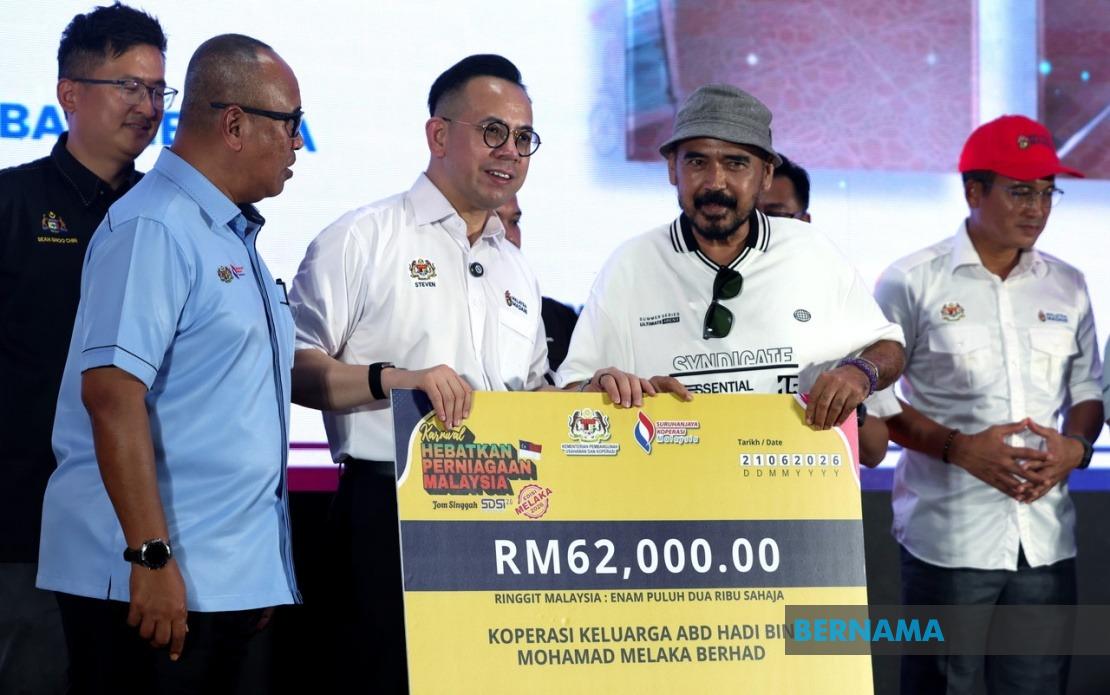
The Empowering Malaysian Businesses Carnival (HPM 2026) concluded a successful three-day run in Melaka this week, demonstrating the robust appetite among Malaysian entrepreneurs for networking and growth opportunities. Organised by the Ministry of Entrepreneur Development and Cooperatives (KUSKOP), the event from June 19 to 21 delivered tangible results that underscore the ministry's commitment to strengthening the local business ecosystem through structured interaction and financial facilitation.
The headline achievement came through a combined RM8.45 million in business matching value and potential financing, a figure that reflects genuine commercial intent rather than mere aspiration. This substantial total comprises two distinct components: RM6.4 million in verified business matching generated through 72 dedicated sessions that brought together 25 prospective entrepreneurs with established partners and investors. The structured matchmaking approach suggests organisers invested considerable effort in pre-event vetting and pairing, moving beyond the typical carnival model of passive networking into active deal facilitation.
Complementing the business matching results was a RM2.05 million financing potential pool that emerged from dedicated sessions with 55 micro, small and medium enterprises (MSMEs). This figure carries particular significance for Malaysia's entrepreneurial landscape, where access to capital remains a persistent challenge despite numerous government initiatives. The fact that financial institutions participated directly in these sessions indicates growing institutional confidence in the quality of ventures being showcased and the seriousness with which KUSKOP curates participant selection.
Beyond the headline figures, the carnival attracted 70,000 visitors across its three-day duration, representing substantial foot traffic for a regional event. More significantly, direct product sales by participating entrepreneurs totalled RM532,802.77, demonstrating that attendees came prepared to transact rather than merely browse. This conversion of foot traffic into immediate sales revenue suggests the carnival succeeded in reaching consumers genuinely interested in supporting local businesses, a factor that strengthens the case for expanding this initiative across other Malaysian states.
The HPM 2026 Carnival represents the third instalment in a series designed under the broader Hebatkan Perniagaan Malaysia agenda championed by KUSKOP Minister Steven Sim Chee Keong. This agenda operationalises the ABCD framework—Accelerating Productivity, Bureaucracy Reduction, Capital Accessibility and Developing Market Access—which serves as the conceptual foundation for the ministry's strategic direction. By anchoring the carnival within this established policy framework, KUSKOP signals that the event is not merely a promotional exercise but rather a tactical implementation mechanism for government economic strategy.
The emphasis on capital accessibility proves especially relevant for Southeast Asian entrepreneurs operating within the Malaysian context, where traditional banking channels often impose stringent collateral requirements that disadvantage asset-light businesses. By creating formal channels through which lenders can encounter MSMEs directly and assess their viability through curated presentations, the carnival addresses a structural gap in Malaysia's financial intermediation system. The RM2.05 million in identified financing potential suggests these interactions transcended superficial networking to reach substantive discussion of lending terms and conditions.
The carnival model also serves a secondary but important function in building ecosystems of mutual awareness among entrepreneurs, service providers, and support organisations. The 72 business matching sessions facilitated encounters not only between entrepreneurs and capital providers but also among complementary businesses seeking partnership arrangements. Such horizontal networking often produces longer-term value than direct financing, as entrepreneurs frequently report that business partnerships and referral networks prove more durable than one-time capital injections.
Looking ahead, the momentum established in Melaka extends to Penang, where the next carnival in the series is scheduled for July 17 to 19 at the Penang Waterfront Convention Centre (PWCC). The Penang event represents an opportunity to test whether the Melaka formula proves replicable across different regional contexts and business ecosystems. Penang's distinct profile as a manufacturing and technology hub means participant demographics and sectoral composition will likely differ significantly from Melaka, offering valuable comparative insights into how the carnival format adapts to varying entrepreneurial landscapes.
The progression from Melaka to Penang also reflects a deliberate geographic strategy to distribute economic stimulus benefits across Malaysia's major regions. By establishing a circuit of carnivals across different states, KUSKOP maximises the reach of its initiatives beyond the Klang Valley, where governmental programmes often concentrate disproportionately. This geographic dispersal carries implications for political economy as well, signalling commitment to inclusive development that resonates with state-level stakeholders beyond the federal capital.
For Malaysian entrepreneurs and MSMEs, the carnival results validate a fundamental insight: demand exists among financial institutions and established businesses to engage with innovative ventures, provided sufficient structure and credibility assurance surrounds the introduction. The challenge for participants lies in preparing adequately for such encounters, presenting cohesive business narratives, and demonstrating not merely ideas but operational readiness. The RM8.45 million opportunity pool generated in Melaka represents capital and partnerships searching for worthy recipients, making subsequent carnival iterations essential touch-points in Malaysia's entrepreneurial calendar.