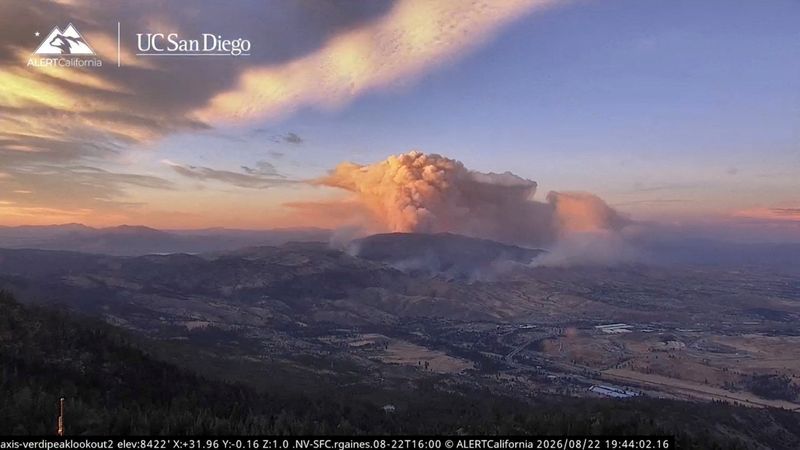
The explosion of smartphones and social media has fundamentally altered how news breaks across the globe. Citizens are now frontline witnesses to events, capturing everything from natural disasters to political upheaval on their mobile devices and sharing instantly online. Yet this democratization of news gathering has created an unexpected vulnerability: the same platforms flooded with authentic eyewitness footage are increasingly contaminated with artificial intelligence-generated content that looks disturbingly real. Reuters, as the world's largest news agency, stands at the frontline of a growing battle to distinguish genuine evidence from sophisticated fabrications, deploying specialized teams dedicated to visual verification as a bulwark against misinformation.
The challenge has become urgent precisely because artificial intelligence has evolved beyond the obvious tells that once exposed fakes. A few years ago, AI-generated images were riddled with telltale signs—people with impossible numbers of fingers, garbled text in backgrounds, or faces that didn't quite cohere upon close inspection. Modern generative models have leapt past these crude markers. Today's AI systems can produce photographs and video footage that appear entirely credible to the human eye, especially when viewed quickly on social media feeds where most people consume news. This technological leap has created a verification crisis that threatens the integrity of global news reporting, particularly in regions like Southeast Asia where misinformation campaigns frequently exploit visual media to sway public opinion or inflame tensions.
What makes the current moment especially treacherous is that bad actors can now feed real data into AI systems to create altered versions of genuine events. In January, following reports of Venezuelan President Nicolás Maduro's capture, social media users circulated AI-generated images purporting to show him in handcuffs—a false depiction of a real event that blurred the line between fact and fabrication. Similarly, Reuters has documented how AI-generated advertisements are being weaponized in advance of the 2026 U.S. midterm elections to spread misleading information about candidates. Even without AI manipulation, individuals deliberately mislabel existing footage, taking genuine protest videos from one location and time period and falsely attributing them to recent events elsewhere, a tactic that has proven particularly effective in spreading regional disinformation.
Reuters cannot deploy reporters to every corner of the Earth where news erupts unexpectedly. The news agency operates approximately 2,600 journalists across roughly 200 locations globally—a substantial presence, yet fundamentally limited against the vastness of world events. This geographic reality makes public submissions invaluable. Verified images sourced from ordinary people who happen to witness history have become indispensable to Reuters' global coverage. This reliance on citizen journalism aligns with Reuters' foundational Trust Principles, established in the aftermath of World War Two, which mandate that the agency provide unbiased and reliable news while continuously enhancing its services. The philosophy recognizes that authenticity emerges not from institutional access alone, but from transparent engagement with multiple sources, including the public.
The visual verification process Reuters employs is methodical, almost forensic in its approach. When journalists encounter images on social media purporting to document breaking news, they initiate a systematic investigation beginning with locating and interviewing the person who captured the footage. Confirming the source's identity and hearing their firsthand account provides crucial context and helps establish authenticity. Many digital images contain embedded metadata—information recorded by cameras and smartphones about when and where a photo was taken, what device created it—and this technical layer serves as an objective verification tool that can either support or contradict claims about when and where footage originated.
Beyond source interviews and metadata analysis, Reuters visual verification journalists conduct comparative research against multiple authoritative sources. They consult weather reports to determine whether atmospheric conditions in a photograph match what actually occurred on the claimed date. Satellite imagery and historical street-view photographs allow them to verify geographic locations with precision. The direction and length of shadows captured in photographs can precisely indicate the time of day a photo was taken, helping confirm temporal accuracy. Official statements from governments, media reports from other news organizations, and corroborating images from other eyewitnesses who filmed the same scene from different angles all contribute to a comprehensive picture. Building this complete evidentiary foundation requires patience—Reuters processes hundreds of submissions daily but validates and publishes perhaps a dozen, reflecting the rigor demanded by responsible journalism.
In recent years, Reuters has equipped its verification teams with artificial intelligence detection tools specifically trained to identify signs of digital manipulation or entirely AI-generated content. These software systems can sometimes detect traces of artificial generation that remain invisible to human eyes, examining patterns in pixels and mathematical signatures that betray algorithmic creation. However, these tools remain imperfect. The arms race between AI generation and AI detection intensifies constantly, with generative systems becoming more sophisticated even as detection technology attempts to keep pace. On many occasions, the Reuters verification team cannot draw definitive conclusions from algorithmic analysis alone, forcing journalists to rely on the broader investigative toolkit of source interviews, metadata examination, and comparative analysis.
The stakes of visual verification extend far beyond maintaining Reuters' institutional credibility, though that matters significantly. Across Southeast Asia and the developing world, where internet penetration has expanded rapidly but media literacy remains uneven, false images spread with alarming speed and carry real consequences. Doctored photographs have triggered ethnic violence, undermined election integrity, and destabilized communities. When Reuters validates and publishes imagery, it provides authoritative documentation that can counter competing false narratives. Conversely, when the organization declines to publish unverified material, it protects audiences from becoming unwitting vectors for disinformation. This gatekeeping function has become more consequential as deepfakes proliferate.
The journalists who perform visual verification describe their work as assembling an enormous puzzle, one where each individual piece of evidence—metadata, shadows, sources, satellite imagery—must align coherently before the picture becomes publishable. This metaphor captures both the intellectual challenge and the inherent uncertainty of the work. Unlike traditional reporting where journalists witness events directly or interview sources in person, visual verification operates at a distance, reconstructing reality from fragmentary digital clues. The complexity intensifies daily as AI generation becomes more convincing and bad actors grow more creative in their deception tactics. For Malaysian and Southeast Asian news consumers, understanding how outlets like Reuters navigate this landscape offers reassurance that not all images and videos encountered online merit equal credence, and that responsible journalism requires more than rapid publication—it demands rigorous, painstaking verification before images reach audiences.

