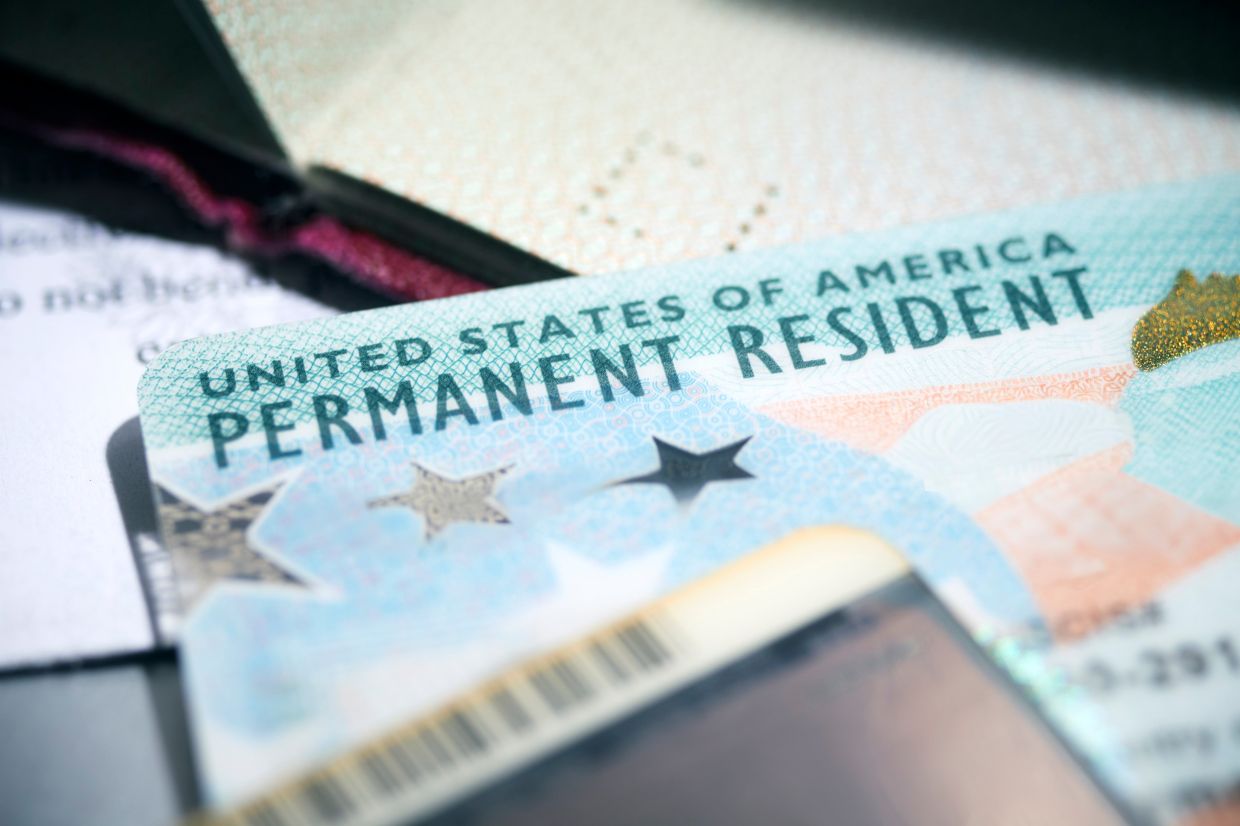
The United States is recalibrating its approach to immigration screening, with significant consequences for Southeast Asian nationals seeking permanent residency. Across American embassies and consulates worldwide, authorities have postponed immigrant visa interviews to retrain personnel on applying a more rigorous "public charge" evaluation—a determination of whether applicants are likely to depend on government assistance. The move follows a federal court's rejection of a separate visa ban affecting 75 countries, yet operates on the same restrictive principle. This recalibration represents a substantial shift in how Washington assesses immigrant suitability, one with profound implications for millions in the application pipeline, particularly family-sponsored migrants and diversity visa holders from the Asia-Pacific region.
The State Department mandates that visa officers conduct these assessments with heightened consistency and comprehensiveness. While the underlying evaluation criteria—age, health, family composition, financial resources, educational attainment, occupational skills, and employment prospects—have existed for decades, the administration has fundamentally altered how aggressively these factors are weighted. Officers now possess explicit instruction to apply the test more stringently, including issuing public charge bonds in selected cases. Sarah Pierce, director of social policy at the Washington-based think tank Third Way and a former US Citizenship and Immigration Services analyst, characterised the Trump administration's approach as "the most disruptive possible way" to implement such a policy. This compressed timeline for retraining and the absence of granular guidance has created operational confusion that directly disadvantages applicants already invested in the process.
For immigration practitioners working with Asian clients, the implications are stark. Charles Kuck, an Atlanta-based immigration attorney who represented over 100 individuals against administration policies last year, observed that officers are being systematically trained "on how to deny cases under public charge rules." The change will disproportionately affect family-based applicants, a category that encompasses substantial numbers of Southeast Asian spousal and dependent visa seekers. Diversity visa applicants—a programme historically important for countries with smaller US employment networks—face amplified scrutiny as well. The policy's practical effect is to narrow pathways that have, until now, represented realistic routes to American permanent residency for Asian nationals without specialised employment credentials.
A critical distinction exists between interview cancellation and petition revocation. The State Department has deferred interviews but has not announced wholesale rescission of previously approved petitions or priority dates. According to Pierce, "the real harm is delay," particularly for individuals who have already undertaken substantial life commitments: booking international flights, liquidating property holdings, or completing medical examinations required by US immigration authorities. The uncertainty surrounding when normal scheduling will resume creates cascading personal and financial consequences. Diversity visa holders operate under particular time pressure; these visas must be issued by September 30, the US government's fiscal year-end, or they are forfeited. For these applicants, delays translate not merely into postponement but potential permanent loss of opportunity.
The freeze does not affect other visa categories currently, though the legal foundation for extending public charge analysis to temporary visa holders exists. H-1B workers, international students, and tourist visa applicants remain outside the immediate suspension. However, Kuck cautioned that public charge provisions could theoretically apply to non-immigrant statuses as well, even if current application remains limited to green card seekers. The distinction matters significantly for Southeast Asian professionals in the US on work visas, who constitute a growing proportion of the H-1B workforce. While the administration has proposed increasing the H-1B minimum wage to $103,000 and restructuring the visa lottery, these measures have not yet taken effect. For individuals already selected in the lottery, immediate impact is limited, though the broader policy trajectory suggests mounting barriers.
Applicants most immediately vulnerable are those requiring visa stamps processed outside the United States. This category encompasses the substantial majority of family-sponsored and diversity visa petitioners globally. The consular officer's review encompasses not only current circumstances but historical patterns: age, health status, dependent numbers, liquid assets, educational credentials, occupational qualifications, and occasionally prior benefit receipt. Traditionally, a properly completed I-864 Affidavit of Support—a sponsor's legally binding commitment to financial support—sufficed in family-based cases unless "unusually significant concerns" emerged. The emerging standard, however, appears to function more stringently, creating what Pierce termed the risk of aggressive enforcement that "begins functioning like" a blanket ban for particular populations. The absence of statutory guidance governing officer discretion amplifies this risk; Kuck warned that the interpretive vacuum "allows for a great deal of mischief."
Seasoned immigration counsel offer specific guidance to affected applicants awaiting rescheduled interviews. Unless an applicant already possesses a work visa enabling return and continued employment, remaining in the home country until interview rescheduling is prudent. International travel without lawful US status or with pending visa petitions presents heightened risk; no individual should depart without a compelling emergency, given that re-entry depends on visa adjudication under the new, more stringent framework. Those with approved status must carefully consider whether international travel—even for brief periods—justifies the risk of entry complications upon return. An approved petition does not guarantee seamless re-admission if the traveller's circumstances have changed or if consular officers identify discrepancies during re-inspection.
The appellate relationship between consular officers and USCIS provides limited protection. While consular officers cannot unilaterally override USCIS approval decisions, they retain authority to escalate files if they identify fraud, material factual change, or clear administrative error. USCIS subsequently determines whether reapproval is warranted. Employment-based petitions face disproportionately rigorous second-guessing, with returning files subsequently experiencing lengthy reapproval processes. Family cases, by contrast, prove difficult to unwind because marital status constitutes a binary determination. Applicants should therefore maintain comprehensive knowledge of all documentation filed in their names and avoid speculative responses during officer questioning—a simple answer acknowledging lack of knowledge substantially outperforms a guessed response later contradicted by filed records.
For those already holding lawful US status, the risk calculus has shifted considerably. Enhanced enforcement volume and aggression throughout the immigration apparatus amplifies consequences of bureaucratic mistakes or documentation gaps. Workers travelling internationally should carry original status documents—green cards or Form I-94 plus I-797 or employer letters—along with duplicates accessible to family members remaining in the United States. International arrivals now face abbreviated duration-of-status grants; new admissions receive fixed periods generally capped at four years, with a 30-day grace period following departure, down from the previously standard 60-day window. This compressed timeline creates additional vulnerability for those requiring visa revalidation abroad.
Southeast Asian nationals contemplating US immigration should reassess timelines and resource allocations in light of this fundamentally altered landscape. Family reunification, once a reliably accessible pathway for applicants with sponsoring relatives, now requires sustained financial documentation and considerably heightened officer satisfaction. The diversity visa pathway, historically crucial for nationals from countries with limited US employment networks, faces substantially enhanced scrutiny applied inconsistently across the global consular network. Professionals pursuing H-1B sponsorship encounter rising financial thresholds and lottery restructuring, though those already in the pipeline may experience delayed rather than fundamental barrier changes. The cumulative effect is not a categorical immigration closure but rather a tightening that will substantially extend processing timelines, increase denial rates, and redirect migration flows toward applicants possessing exceptional financial or educational credentials—precisely those Southeast Asia can least afford to lose.

