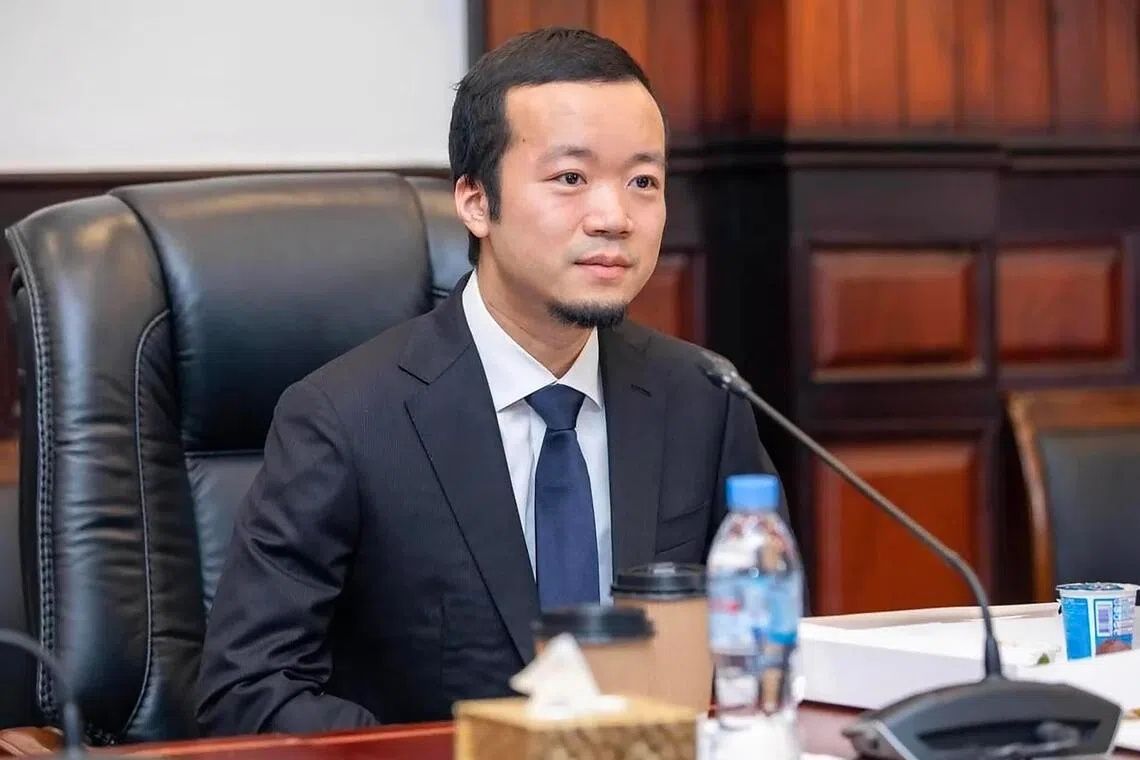
A six-month investigation by The Straits Times and the Organised Crime and Corruption Reporting Project has unmasked Chen Sokly, a key operative within the Prince Group crime syndicate, revealing how he orchestrated a vast network of shell companies and laundered billions of dollars obtained through forced labour scams across Southeast Asia. Originally named Chen Xing and born in Shanghai in 1986, Sokly obtained Cambodian citizenship in late 2017 and later added Cypriot nationality to his portfolio of identities, establishing himself as an elusive figure operating across multiple jurisdictions with different names and corporate fronts. The criminal indictment filed in New York on October 8, 2025, identified him as a co-conspirator of syndicate boss Chen Zhi, marking the culmination of investigative work that pieced together corporate records, property documentation, and official government archives spanning three continents.
Sokly's assignment within the Prince Group hierarchy placed him at the nerve centre of its risk management operations, tasked with anticipating and neutralising threats from law enforcement agencies worldwide. Court documents reveal that his primary function extended beyond conventional corporate governance to encompassing bribery networks, diplomatic interference, and even coordinating with corrupt officials in China to shield the syndicate from investigation and prosecution. The indictment alleges that in May 2023, Sokly engaged with a Chinese government official who claimed ability to extricate Prince Group associates from legal jeopardy, with Sokly offering unspecified assistance concerning the official's family member in return. His confidence in these political connections ran so deep that he publicly dismissed concerns about Cambodian crackdowns on illegal scam compounds, assuring associates that the syndicate possessed sufficient political insurance to weather any storm.
The extent of Sokly's corruption network became apparent through documentation seized by US authorities, including a ledger maintained by Chen Zhi listing bribery payments. Records indicated that Sokly purchased a yacht valued at more than US$3 million in 2019 as a gift for a foreign government official, while simultaneously maintaining detailed knowledge of which officials across multiple countries were in his network's employ. Conversations between Chen Zhi and Sokly documented in the indictment reveal extensive discussion about the depth of official penetration they had achieved, suggesting a sophisticated understanding of vulnerability points within foreign governmental structures. Beyond diplomatic corruption, Sokly functioned as an enforcer within the syndicate, tasked with maintaining discipline among operators and managing internal disputes through intimidation and violence when necessary.
During 2023 and 2024, Sokly boasted to associates that the Prince Group's global criminal apparatus was generating US$30 million daily through various illicit schemes, predominantly the forced labour scam operations concentrated in Cambodia that generated victims' funds destined for laundering through the syndicate's legitimate-appearing business structure. This figure underscores the enormous scale of financial flows that Sokly was tasked with managing, processing, and obscuring through an international network of corporate vehicles and financial institutions. The sophistication of the operation reflected years of accumulated experience and relationships, with Sokly building upon foundations established by predecessor criminal networks including the Knight Attack Group, a Chinese cybercriminal organisation from which he acquired initial assets and contacts.
Sokly's Singapore footprint demonstrates how he leveraged the city-state's financial infrastructure and discretion to establish himself as a wealthy businessman operating under the alias Martin Chen in certain circles. In 2017, he announced his arrival with the purchase of an S$11 million luxury apartment at 10 Leedon Heights spanning 5,694 square feet, establishing a residential base that would serve as a personal sanctuary and entertainment venue for his associates. Shortly thereafter, he incorporated M Capital Global Holdings, investing just over S$5 million alongside his wife, with both remaining shareholders in the company through the present day despite his later distancing from public corporate registration. Over the subsequent two years, Sokly registered as director of at least sixteen Singapore-based companies, most of which shared a registered address on Shenton Way that investigators visited and found associated with only two unrelated corporate entities occupying an office space.
The pattern of Sokly's directorship registrations—with his name removed from most firms between 2020 and 2023—suggests deliberate efforts to obscure his operational connections and reduce visibility to regulatory authorities. Former employees who agreed to speak anonymously reported that Sokly maintained a deliberately intermittent presence in Singapore, typically spending only two to three months annually in the jurisdiction while maintaining an active social life centred on evening entertainments with associates including Chen Zhi himself. His lifestyle in Singapore reflected substantial accumulated wealth, with records indicating ownership of a fleet of luxury vehicles including a Bentley and a seven-seater luxury vehicle, all maintained at his Leedon Heights residence. This pattern of behaviour—high visibility in luxury markets combined with opacity in corporate structures—created the public persona of a prosperous international businessman while concealing the criminal infrastructure generating his wealth.
Sokly's property transactions in California provide additional insight into his financial accumulation and strategic asset repositioning, particularly following the imposition of comprehensive sanctions by the US Office of Foreign Assets Control (OFAC) against the Prince Group. In 2019, Sokly purchased a residential property in California from Fang Zhizhen, a member of the Knight Attack Group cybercriminal syndicate, establishing a foothold in US real estate markets. He subsequently disposed of this asset in 2024 for approximately US$4.5 million, realising substantial appreciation during his tenure of ownership. Notably, in November 2025—merely weeks after the sweeping OFAC sanctions designation was announced—Sokly executed a transfer of a separate US$4 million property to his wife, with the asset subsequently placed into a trust structure operated by his wife in December 2025, suggesting attempted asset protection strategies in anticipation of potential enforcement action.
The criminal indictment triggering the October 2025 US action resulted in forfeiture of 127,271 bitcoins then valued at approximately US$15 billion, representing one of the largest cryptocurrency seizures and financial fraud takedowns in recorded history. Paradoxically, the US government rescinded its sanctions designation against Chen Zhi and the Prince Group merely six days after the indictment's filing, creating an unusual legal situation wherein criminal charges remained active while sanctions-based restrictions were lifted. Sokly's current whereabouts are believed to be within the United States, though his precise location remains unconfirmed, placing him nominally within US jurisdiction at a moment when the Department of Justice maintains active criminal charges against him. This jurisdictional situation highlights the enforcement challenges confronting international law enforcement when criminal defendants with substantial financial resources and political connections possess mobility across multiple nations with differing legal frameworks.
The investigation's methodological approach—combining wire story analysis with property records, corporate filings, and official government gazettes across multiple jurisdictions—demonstrates the investigative techniques increasingly necessary to penetrate deliberately obscured financial and operational structures erected by transnational crime syndicates. By cross-referencing Sokly's acquired citizenships, corporate history timing, and residential transitions, investigators constructed a comprehensive narrative of deliberate identity construction and geographic opportunism. The case illustrates how Southeast Asia, particularly Singapore, functions within broader global crime ecosystem both as a financial hub enabling money laundering and as a sanctuary jurisdictions enabling criminals to maintain low-profile operations while accumulating conspicuous wealth. For Malaysian observers, the case underscores the vulnerability of the region's financial infrastructure to exploitation by sophisticated international criminal networks and the corresponding necessity for enhanced inter-agency coordination and information-sharing among regional authorities to disrupt such schemes at their operational nodes.

