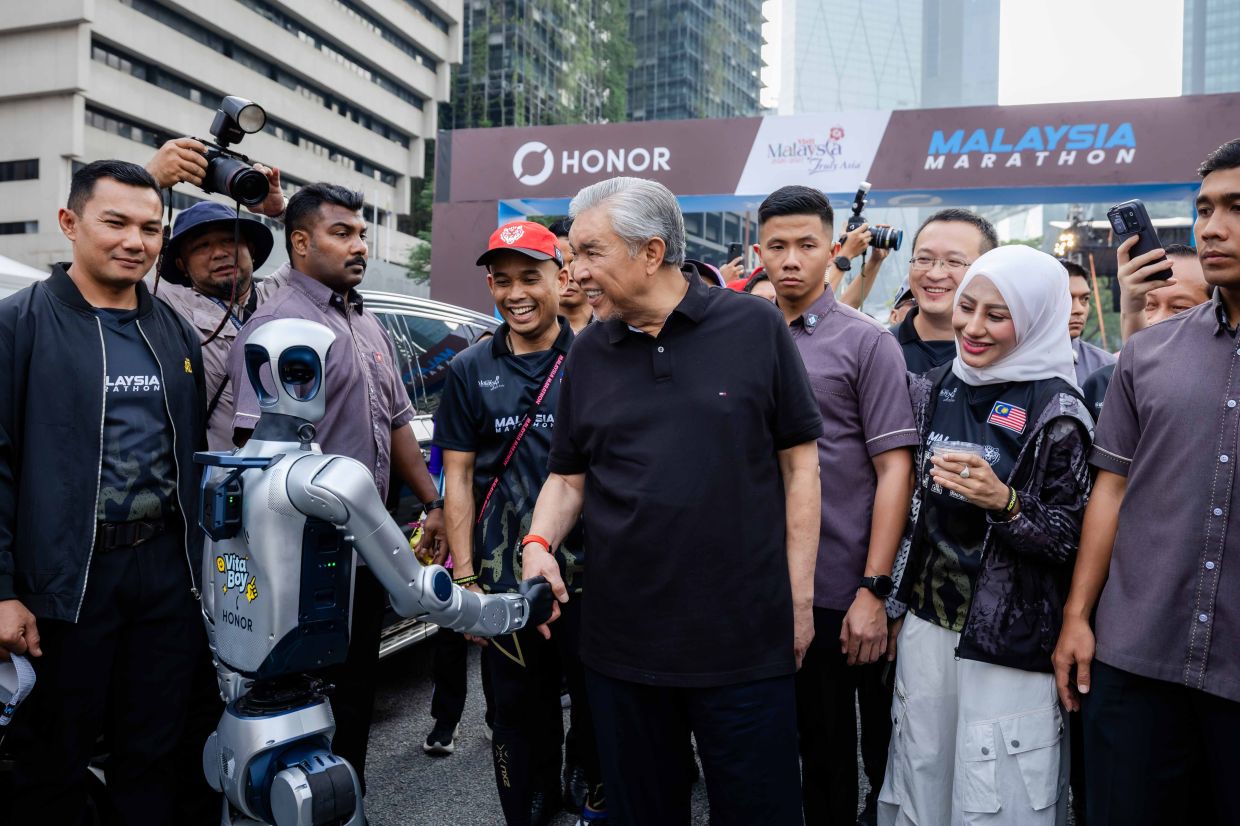
HONOR has taken a significant technological step by deploying its advanced humanoid robots in Malaysia for the first time, moving beyond domestic markets and into real-world international competition. The company's flagship D1 model participated in the 10-kilometre category at Malaysia Marathon 2026 held in Kuala Lumpur, while a second-generation A1 unit tackled the 5-kilometre route. This marks a pivotal moment for the Chinese technology firm, transforming its robotics programme from laboratory achievements into public-facing demonstrations across Southeast Asia.
The D1 model carries an impressive pedigree from its previous competition in China. At the Beijing Yizhuang Humanoid Robot Half Marathon, the robot established a record-breaking performance by completing the half-marathon distance in 50 minutes and 26 seconds, achieving peak speeds of 14.5 metres per second. These technical specifications underscored HONOR's capabilities in robotics engineering, but the Malaysia Marathon represented a fundamentally different test—one conducted in genuinely challenging environmental conditions rather than controlled domestic settings.
The Malaysian climate presented engineering challenges that transcended simple distance coverage. The country's consistently high temperatures and humidity levels demanded sustained battery performance from the robots while maintaining movement stability across extended periods. These conditions offered a comprehensive assessment of whether laboratory-proven technology could withstand real-world deployment in tropical environments. For Southeast Asian consumers and investors evaluating robotics adoption, such practical demonstrations provide crucial validation beyond theoretical specifications.
Deputy Prime Minister Datuk Seri Dr Ahmad Zahid Hamidi flagged off the 5-kilometre category featuring the A1 model, lending official government endorsement to the initiative. The presence of multiple cabinet ministers, entertainment figures, and ordinary participants created a public spectacle that transcended typical technology announcements. This carefully orchestrated event signalled Malaysia's receptiveness to advanced robotics integration and positioned the country as an important testing ground for emerging technologies in the region.
The symbolic integration of humanoid robots with a display of Malaysia's National Day celebrations underscored HONOR's messaging strategy. The company coordinated the robot deployment with a thousand local students carrying what organisers described as the nation's longest ever Jalur Gemilang, blending technological innovation with patriotic symbolism. This approach appealed to Malaysian audiences by framing robotics not as foreign intrusion but as complementary to national pride and human achievement.
HONOR's strategic positioning emphasises the philosophical dimension of robotics development, moving beyond raw technological capability to explore how machines can operate in harmony with human endeavour. The company articulated a vision where robots transition from merely serving human needs toward walking alongside people as collaborative partners. This framing addresses public anxieties about automation and displacement by suggesting technology designed to enhance rather than replace human potential.
The company's commercial performance in Malaysia provides context for this investment in high-profile demonstrations. HONOR reported achieving number-one market share among smartphone and device manufacturers in the first quarter of 2026, according to market research firm Counterpoint Research. This dominant position in consumer electronics translates into brand recognition and distribution networks that support robotics market entry. The Malaysia Marathon deployment leveraged existing consumer goodwill to establish HONOR as a forward-looking technology leader across multiple product categories.
From a regional perspective, HONOR's Malaysia deployment reflects broader competitive dynamics in Southeast Asian technology markets. Chinese manufacturers increasingly view the region as essential to growth strategies, particularly as saturated domestic markets limit expansion opportunities. Malaysia's relatively developed infrastructure, English-speaking population, and strategic location between major Asian economies make it an logical testing ground for emerging technologies before broader regional rollout. The success or challenges encountered here will likely inform HONOR's approach to subsequent deployments in Thailand, Singapore, Vietnam, and Indonesia.
The humanoid robot competition adds another dimension to Malaysia's technology positioning. The country has positioned itself as a Southeast Asian technology hub, hosting regional headquarters for numerous global tech companies and developing local innovation ecosystems. Public demonstrations of advanced robotics contribute to this narrative, attracting engineering talent and investor interest while building consumer familiarity with transformative technologies. Each such event incrementally shifts public perception of what future technologies are achievable and desirable.
HONOR's stated commitment to bringing "warmer, more human-centred technology" to Malaysian users suggests the company recognises that technological advancement alone insufficient for market success. Consumer acceptance of robotics requires emotional and cultural alignment, not merely engineering excellence. By emphasising human-centred design philosophy, HONOR attempts to distinguish itself from competitors by acknowledging that technology integration succeeds only when aligned with local values and social contexts.
The marathon format itself provided optimal visibility for robotics demonstrations compared to laboratory or convention settings. Real-world performance across varied terrain, weather conditions, and public visibility offered audiences tangible assessment of technological maturity. Spectators witnessed robots operating under authentic stresses that matter to eventual commercial deployment in delivery services, elderly care, manufacturing, and security applications increasingly discussed in Malaysian policy circles.
Looking ahead, this Malaysia Marathon participation functions as both technological validation and market signal. Successful completion establishes engineering credibility necessary for regulatory approval and consumer confidence in subsequent commercial applications. For Malaysian policymakers considering robotics integration in healthcare, manufacturing, and urban planning, such demonstrations provide concrete evidence that foreign technologies can adapt to local environmental and operational requirements. The event simultaneously advanced HONOR's commercial interests while contributing to Malaysia's position as a sophisticated technology market that manufactures and consumers expect to include in their global deployment strategies.

