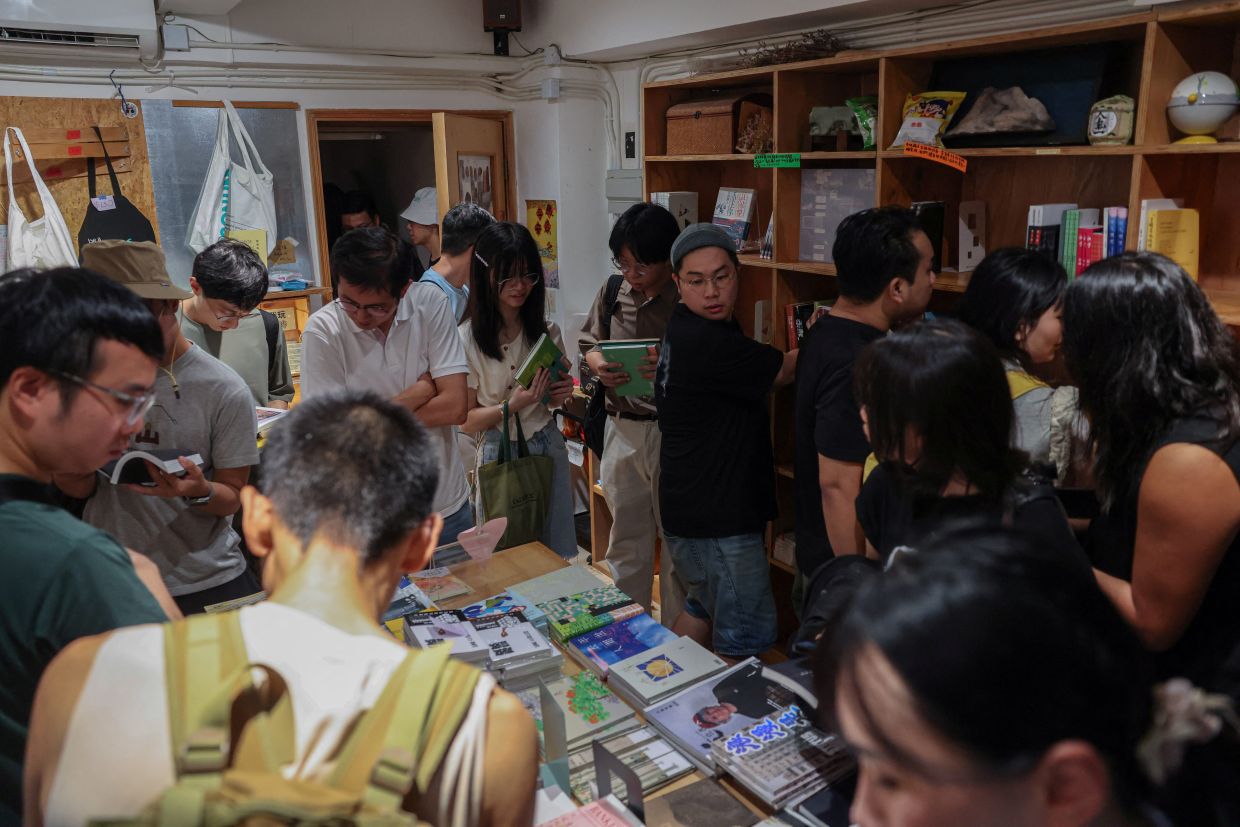
The refuge that Fleming Cheng discovered in Hong Kong's Greenfield Book Store last year offered something unavailable to him on the mainland: physical access to books critical of Beijing's official narrative. After navigating China's internet censorship with a VPN to glimpse titles online, Cheng could finally hold volumes presenting interpretations of history and politics that diverged sharply from state-sanctioned accounts. That experience exemplifies why Hong Kong's network of independent bookstores, often located inconspicuously in building corridors rather than street-facing locations, has long functioned as an intellectual lifeline for mainland readers hungry for suppressed viewpoints.
Yet this sanctuary is rapidly disintegrating. A cascade of police operations targeting booksellers under sedition charges within a 2024 national security law has forced multiple stores to shutter their doors. Greenfield itself announced closure at the end of its lease in July following owner arrests, while Have A Nice Stay—established by former journalists—closed on August 30 after booksellers there were arrested on the same day as their Greenfield counterparts. Four bookstores were raided within four months, signalling an escalating enforcement campaign that authorities justify as essential to stability but which critics identify as part of a broader suppression of dissent spanning back to Beijing's imposition of a separate security law in 2020.
The erosion of Hong Kong's publishing freedoms represents a profound shift for a former British colony that returned to Chinese sovereignty in 1997 with protections for expression and publication. A watershed moment arrived in 2015 when bookseller Lam Wing-kee and four associates connected to Causeway Bay Books disappeared, later revealing they had been detained by mainland authorities. This incident precipitated a sharp contraction in politically sensitive titles on Hong Kong shelves and foreshadowed the institutional repression that would follow the 2020 security law's implementation.
Following 2020, the trajectory accelerated markedly. Leading pro-democracy activists faced arrest, civil society organizations disbanded, and libraries purged shelves of volumes addressing the 1989 Tiananmen crackdown and works by opposition figures. The annual book fair saw smaller independent publishers excluded from exhibition spaces, while state-aligned media labelled alternative book fairs expressions of "soft resistance." Despite these mounting pressures and intensified government inspections, many bookstores persisted, continuing to curate their collections and organize community activities. The recent arrests—targeting Book Punch in March, Hunter Bookstore in June, and Greenfield and Have A Nice Stay in July—suggest this tolerance has evaporated entirely.
Authorities allege that these establishments distributed seditious publications, defining seditious intent as statements intended to incite hatred or overthrow of Chinese and Hong Kong governments. Yet this operational definition remains murky. Secretary for Security Chris Tang has declined to specify which particular titles constitute sedition, instead comparing the requirement to food sellers ensuring products are not poisonous—a formulation that offers booksellers no concrete guidance for compliance. The government's insistence that no official banned book list exists only compounds the uncertainty, compelling booksellers to make educated guesses about permissible content while facing potential criminal liability.
This ambiguity creates a chilling effect. Anonymous booksellers confess to heightened caution regarding works addressing contemporary Chinese politics, even as they struggle to articulate which volumes cross invisible red lines. Property owners add another layer of enforcement: landlords harassed by authorities have begun questioning whether continuing to lease space to booksellers justifies ongoing scrutiny. The cumulative pressure has transformed bookstores from spaces of intellectual inquiry into environments of calculated self-censorship, where commercial survival depends on anticipating government preferences.
For mainland readers like Fleming Cheng, the stakes extend beyond the loss of a convenient shopping destination. Cheng articulates what many intellectually curious citizens across the strait recognize: if Hong Kong's distinctive freedoms collapse entirely into alignment with mainland institutional controls, the consequences will be felt across the Chinese-speaking world. The bookstores represented more than retail operations; they symbolized the possibility of intellectual autonomy within the broader Chinese ecosystem, offering tangible evidence that alternative thinking remained accessible somewhere within territory under Beijing's sovereignty.
Other mainland visitors, including university student Iris Wang from Guangdong, valued these spaces for precisely this character. Wang appreciated how independent bookstores encouraged critical reflection rather than mere transaction—a quality absent from mainland retail counterparts. Even readers drawn by non-political factors, seeking niche publications or simply seeking quiet contemplation, recognized these establishments as repositories of a particular ethos. For Hong Kong residents like Brian Leung, who found companionship within bookstore communities, each venue possessed distinctive personality and character. The arrests felt like erasure of something cherished and fundamental to Hong Kong's identity.
The geographic and institutional consequences are already materializing. Taiwan has emerged as an alternative publishing hub for Chinese-language books addressing topics increasingly dangerous to distribute in Hong Kong. Between 2020 and 2024, Taiwanese publishers released six times as many volumes about Hong Kong as they had in the preceding five years, according to sociology professor Cheng Tsu-Bang at Tunghai University. This publishing surge reflects not commercial opportunity but rather an implicit alliance—Taiwan's publishing industry absorbing the expressive functions that Hong Kong institutions can no longer safely perform. Books have become, in Cheng Tsu-Bang's formulation, "a very important medium of communication between Taiwan and Hong Kong, or a medium of mutual support."
Yet even this transregional solution faces precarity. A Taiwan-based logistics firm suspended accepting orders to ship books from Taiwan to bookstores under police investigation, while demanding comprehensive book inventories before servicing other Hong Kong retailers. These operational obstacles threaten to sever the supply chains connecting Taiwan's publishers to Hong Kong's remaining readers. Hong Kong author Lee, who relocated to Taiwan and now publishes there, characterizes independent bookstores as having functioned as bridges connecting works about Hong Kong's pro-democracy movement to their home audience while maintaining contact with diaspora writers. The institutional collapse resembles, in Lee's metaphor, a boulder rolling downhill—gathering mass and crushing progressively more in its trajectory through Hong Kong's civil society.
Leading observers describe the bookstore closures not as isolated commercial casualties but as symptoms of systematic contraction in spaces permitting autonomous thinking and expression. What remains are diminishing refuges where residents and visitors can "breathe" and attempt to preserve continuity with Hong Kong's distinctive character. For those who have organized and frequented these spaces, the finality resonates acutely. As Lee reflects, the forced closures communicate an unmistakable message: "perhaps this borrowed time is coming to an end." The question facing Hong Kong and Southeast Asian readers is whether alternative intellectual infrastructure can materialize before the accumulated restrictions render such spaces extinct.

