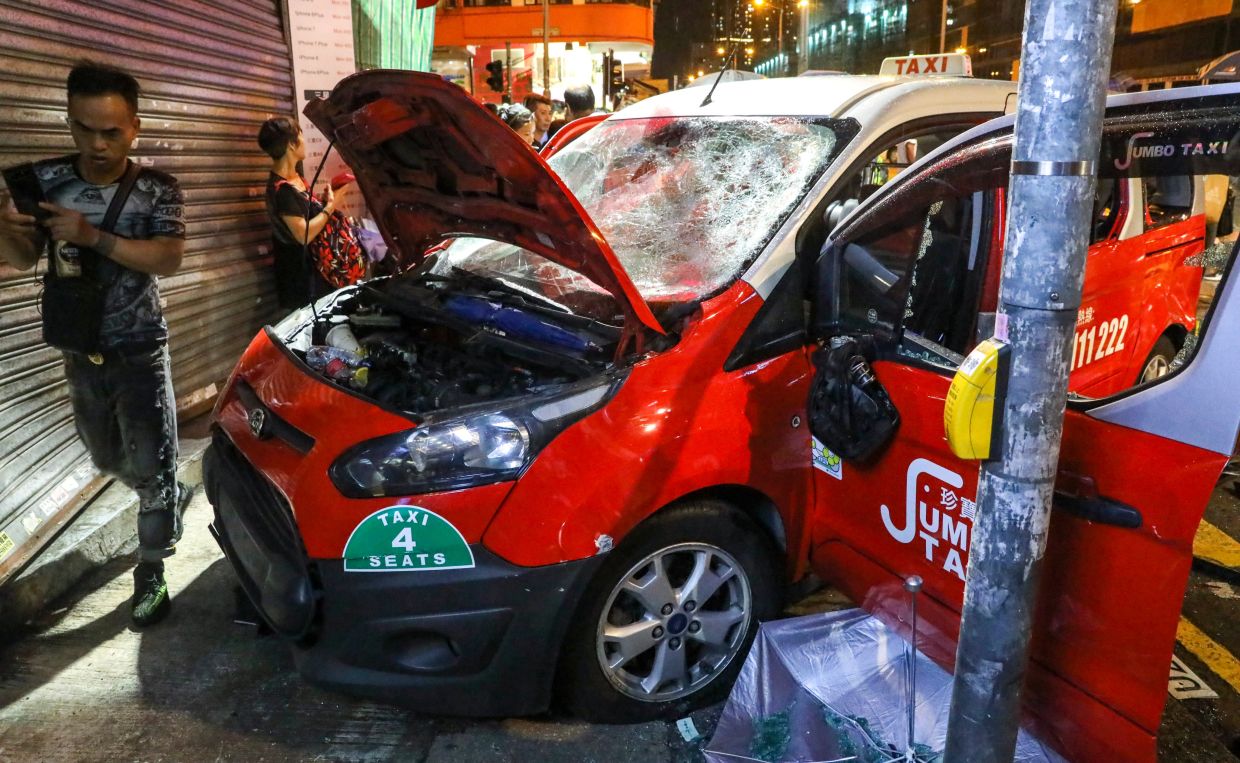
A Hong Kong kindergarten clerk is demanding HK$8.4 million (US$1.07 million) in compensation after a taxi struck her during a demonstration in Sham Shui Po on October 6, 2019, allegations that have placed two ordinary citizens at loggerheads over accountability for injuries sustained amid the chaotic political upheavals that gripped the territory that year.
Park Hoi-lam's legal team presented arguments to the court on Tuesday contending that taxi driver Henry Cheng Kwok-chuen bears full responsibility for mounting the pavement with his vehicle and colliding with Park and another woman on Yen Chow Street. The plaintiff's counsel, Susanna Leong, characterised the accident itself as evidence of negligence, asserting that Cheng failed to exercise reasonable care by neither sounding his horn nor attempting to brake before impact.
The case underscores the human toll of Hong Kong's turbulent political climate during the 2019 protests, which disrupted daily life across the city and led to numerous incidents involving vehicles, pedestrians, and escalating violence. What began as Park's ordinary journey—a simple bus trip towards Tsim Sha Tsui that afternoon—became a life-altering moment when road closures forced her group to disembark in Sham Shui Po. After discovering that railway services had also been suspended, Park and her companions resolved to walk towards Mong Kok, but she became separated from them after walking ahead of the group.
According to her testimony, the area appeared calm until commotion erupted near Cheng's taxi. In those critical seconds, Park turned to flee but was struck by the vehicle travelling at what she described as very high speed. The collision inflicted severe damage to her lower limbs, necessitating seven surgical operations within three months. She was hospitalised until January 18, 2020, and subsequently required ongoing outpatient therapy, marking the beginning of a protracted recovery period that continues to shape her daily existence.
The injuries have fundamentally altered Park's ability to function in conventional ways. Although she now works as a kindergarten clerk near her Tuen Mun residence, she faces persistent limitations that distinguish her current existence from what she describes as her former normal life. Chronic knee pain restricts her mobility to roughly one hour of walking before she must rest. Her work capacity has diminished notably; she cannot lift heavy objects or comfort distressed toddlers through physical contact. Medical professionals have indicated that her condition has plateaued despite two additional post-discharge surgeries, and warned of potential knee replacement surgery in her future. She has also been advised to undergo reconstructive surgery to address scarring on her legs, but lacks the financial resources for such a procedure.
Cheng's defence team has mounted a counterargument centring on victimhood rather than negligence. Defence counsel stressed that the taxi driver himself experienced violence that day, subjected to attacks involving metal rods and hard objects by protesters. The defence argued that irrespective of Park's injury severity, pursuing financial compensation through the courts from a fellow victim of violence fails to deliver justice. This framing attempts to reposition Cheng as an innocent party caught in the crossfire of civil unrest rather than as a motorist whose actions caused harm.
Leong directly challenged this narrative, emphasising that the assault on Cheng by protesters is irrelevant to the mechanics of the collision itself—how and why his vehicle mounted the pavement and struck her client. This distinction matters fundamentally for the legal determination of liability. The presence of violence elsewhere in the vicinity cannot logically exonerate a driver for failing to exercise basic vehicular safety precautions.
The defence mounted an additional challenge by questioning Park's lifestyle through covert surveillance footage obtained by a private detective agency. Defence counsel Ashok Sakhrani suggested that video evidence showing Park shopping and dining after work demonstrated her capacity to lead a normal life without significant difficulty. Park's response revealed the gap between observable activity and genuine functional capacity. She noted that shopping and dining represent only fragments of ordinary existence and do not constitute evidence of a meaningful or unrestricted life. The exchange illustrates how personal injury litigation often hinges on competing interpretations of bodily capacity and quality of life.
Park's legal team also addressed the circumstances surrounding her March 2020 police statement, during which she arrived accompanied by both barrister and lawyer. Sakhrani suggested this choice indicated concern about potential legal consequences or involvement in the protest itself. Park countered that she was exercising reasonable caution to protect her interests during an official enquiry, denying any protest participation or underlying legal worries. Her response underscores the lasting anxiety that events from 2019 continue to generate, even among individuals whose involvement was incidental rather than deliberate.
The case carries broader significance for Hong Kong's relationship with the consequences of political upheaval. Unlike situations in which state actors directly cause injury, this litigation pits two private citizens against each other, both potentially victims of the broader chaos that engulfed Sham Shui Po that autumn. For Malaysian readers, the case offers perspective on how neighbouring jurisdictions grapple with compensating individuals harmed during periods of civil unrest, and whether legal systems can fairly adjudicate between competing claims of victimhood when violence permeates public spaces.
Justice Simon Leung Chun-man is presiding over a trial expected to consume six court days, during which the fundamental question of whether Cheng's operation of his vehicle constituted negligence independent of the surrounding violence will be thoroughly examined. The verdict will determine not only Park's financial future but also establish important precedent regarding driver liability in contested public spaces. For Park, the outcome represents the difference between partial recovery of her interrupted life and permanent economic loss stemming from injuries incurred while simply attempting to navigate her city during a period of extraordinary turbulence.

