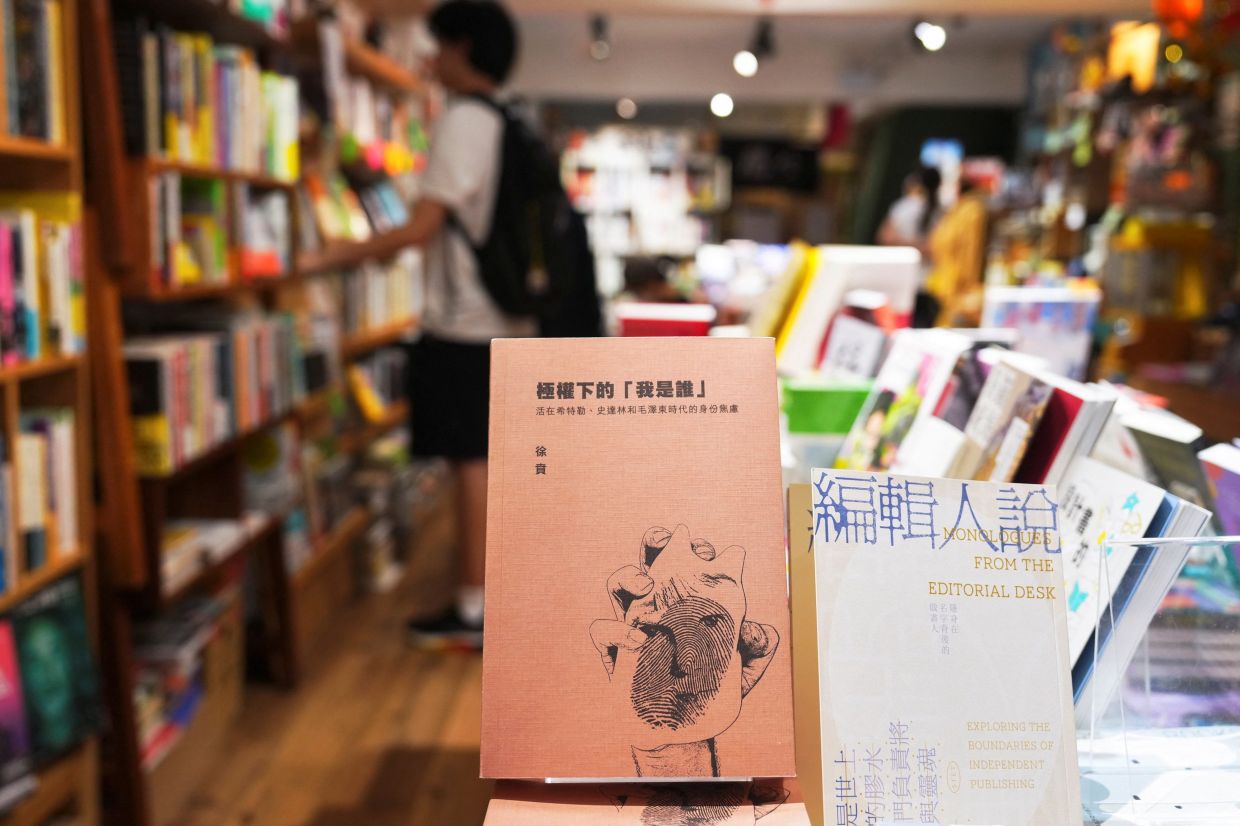
Hong Kong's Secretary for Security Chris Tang has directed booksellers to take responsibility for ensuring that titles they stock do not threaten national security, his remarks coming immediately after law enforcement officers detained five individuals associated with two independent bookstores in the territory. The statement underscores mounting pressure on the city's publishing sector and raises questions about how business operators are expected to navigate an increasingly restrictive regulatory environment with what many consider vague boundaries.
Tang's comments, made to journalists at the legislative building on Thursday, attempted to frame the requirement as straightforward and comparable to other consumer safety obligations. He drew a parallel to food retailers, saying that just as grocers must ensure their products are not harmful or poisonous, booksellers must guarantee their inventory poses no threat to national security. However, this analogy has drawn criticism from observers who note that assessing whether written content threatens national security involves subjective interpretation and political judgment in ways that food safety standards do not.
When asked whether authorities would publish a definitive list of prohibited titles to guide booksellers, Tang rejected the proposal, arguing that doing so would undermine law enforcement efforts against publications with intent to damage the country. This refusal has left operators in a position of substantial uncertainty, as they cannot point to official documentation detailing which works are permissible and which constitute violations. The bookstore sector has repeatedly expressed frustration over what managers describe as an indecipherable red line that shifts depending on enforcement priorities.
The Wednesday police operation targeted Have A Nice Stay, a bookshop established by former journalists, and Greenfield Book Store, a long-established independent publisher. Officers alleged that materials displayed and sold at both locations contained seditious content that stirred public hostility toward Hong Kong's government, judiciary, and law enforcement. Two of the five arrested individuals were released on bail by Friday morning, though charges remain under investigation.
Have A Nice Stay had already announced its closure effective August 30, with management citing both financial hardship and the opacity surrounding regulatory expectations as contributing factors. In a social media statement, the bookstore acknowledged its inability to review every individual volume comprehensively or to make reliable determinations about which titles might be deemed problematic under current enforcement standards. The announcement highlights how uncertainty itself functions as a mechanism of control, forcing operators toward self-censorship or withdrawal from the market.
This latest enforcement action represents the third wave of arrests targeting independent bookstores within a four-month period, a pattern that suggests sustained pressure on the sector. In March, authorities arrested the owner and staff of Book Punch on suspicion of distributing seditious publications, with particular attention to materials including the biography of imprisoned pro-democracy media entrepreneur Jimmy Lai, who received a twenty-year prison sentence in a separate national security case. Additional arrests occurred in June when police detained two booksellers suspected of selling prohibited materials and accepting funding from foreign political organisations.
For Southeast Asian readers and publishers, the situation in Hong Kong carries immediate implications. The territory has long served as a regional publishing hub, and the contraction of independent bookstores signals potential shifts in how written content circulates throughout East and Southeast Asia. Publishers based in Malaysia, Singapore, and other regional centres have watched these developments with concern, as the Hong Kong market has provided distribution channels and cultural influence extending beyond the territory itself.
Taiwan's government has responded with pointed commentary on Hong Kong's media environment. President Lai Ching-te used a Facebook statement to emphasise the importance of independent bookstores in preserving freedom of thought, an implicit contrast to conditions across the Taiwan Strait. Liang Wen-chieh, deputy minister of Taiwan's Mainland Affairs Council, disclosed that some Taiwanese publishers have voluntarily removed titles from their catalogues when preparing for Hong Kong book fairs, suggesting that publishers are engaging in preemptive self-censorship to avoid complications with Hong Kong authorities.
This pattern of voluntary editorial restraint by publishers operating across the Taiwan Strait demonstrates how enforcement uncertainty creates a chilling effect that extends beyond Hong Kong's borders. Taiwanese firms, seeking to maintain access to Hong Kong's market and avoid regulatory friction, are narrowing their own publishing choices. The phenomenon reflects how state pressure on one jurisdiction's bookselling and publishing ecosystems can reshape content availability across an entire region.
For Malaysian publishing professionals and media observers, the Hong Kong developments serve as a cautionary example of how restrictions framed as national security measures can progressively narrow the scope of permissible public discourse. The absence of published lists of prohibited titles, combined with retroactive enforcement, creates conditions where operators cannot reliably distinguish compliance from violation. This regulatory opacity, defended as necessary for protecting national security, effectively grants authorities wide discretion in determining what constitutes acceptable content.
The situation also illustrates tensions between security governance and economic activity in global cities. Hong Kong's position as an international financial and cultural centre has historically depended partly on openness and freedom of information. As these freedoms contract, the territory's attractiveness to international publishers, booksellers, and related industries may diminish, with potential economic consequences extending to copyright holders, distributors, and retailers across the region.
For Malaysian stakeholders in publishing and civil society, the Hong Kong case demonstrates why clear statutory definitions of prohibited content, transparency in enforcement decisions, and judicial review of administrative actions remain important safeguards. The absence of these protections leaves operators vulnerable to shifting interpretations and selective prosecution, conditions that ultimately benefit neither public security nor legitimate commercial activity.

