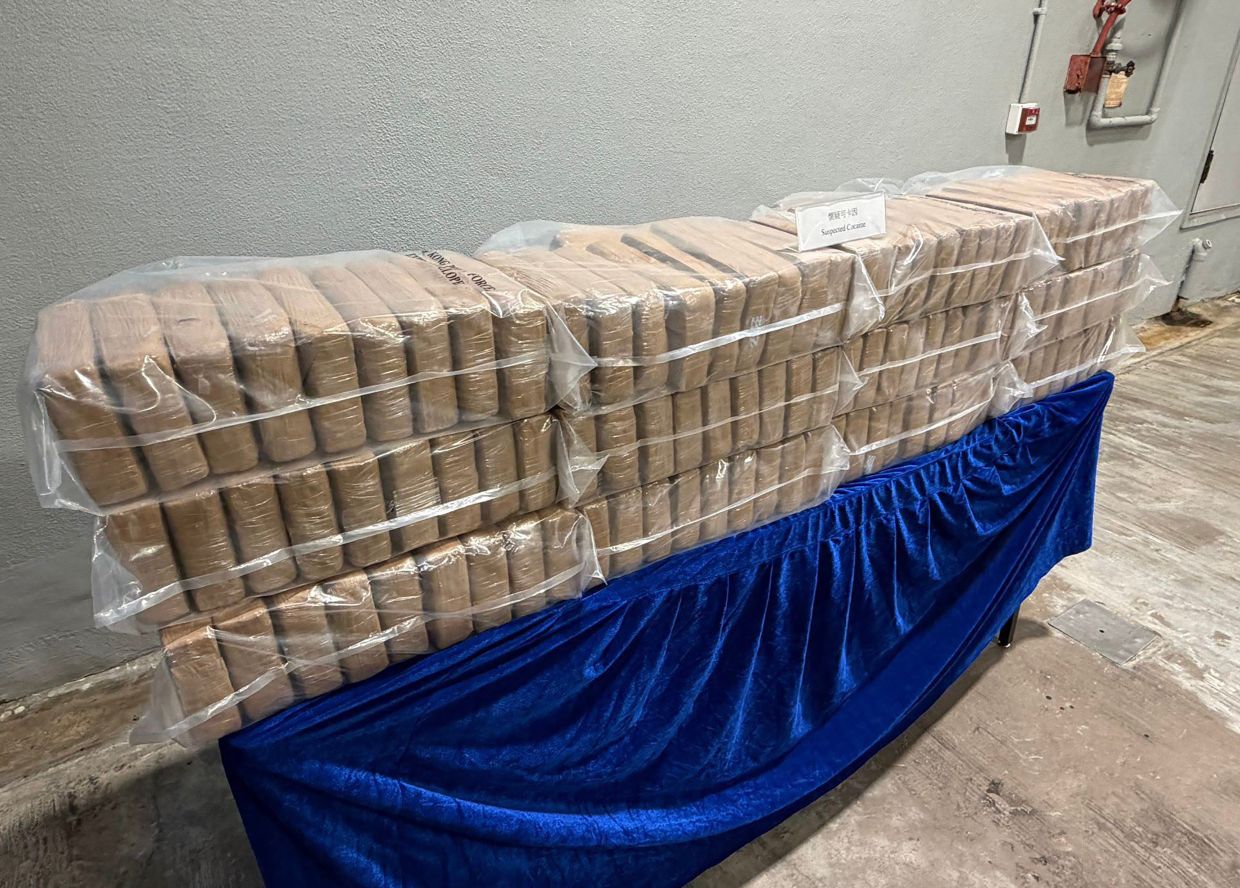
Hong Kong's narcotics enforcement has struck a significant blow against international drug trafficking, uncovering one of the territory's largest cocaine smuggling operations in recent years. A coordinated series of raids on vessels moored in Aberdeen Typhoon Shelter has netted 361 kilograms of the drug across just five days, representing the most substantial cocaine seizure the police force has recorded over the past twelve months and signalling the scale of trafficking activities flowing through the region's waters.
The investigation gained momentum following an initial breakthrough on Friday, when officers raided a yacht anchored in Aberdeen Typhoon Shelter and recovered approximately 241 kilograms of cocaine packed in brick form. The discovery sparked a heightened state of alert among narcotics personnel, who correctly surmised that criminal networks often employ multiple vessels as storage and distribution points to minimize losses from enforcement action. This operational awareness proved vindicated just days later when a second vessel, a six-metre yacht moored in proximity to the original target, yielded an additional 120 kilograms on Sunday, substantially expanding the scope of the bust.
The physical characteristics of both seizures provided crucial investigative leads for police specialists. The packaging methods, brick configurations, and weight distributions observed in the second haul were strikingly consistent with the initial discovery, allowing detectives to conclude with reasonable confidence that both consignments originated from the same larger shipment. This forensic-style analysis suggested that the trafficking syndicate had deliberately dispersed its inventory across multiple hiding places, a common precaution employed by sophisticated smuggling operations seeking to reduce exposure to total loss in the event of law enforcement intervention. The yachts' locations in the same sheltered anchorage indicated that the network was operating with considerable operational security consciousness, using the natural cover provided by Hong Kong's bustling marine environment.
The combined street value of the recovered narcotics reached HK$270 million, a figure that underscores the extraordinary profit margins in international cocaine trafficking and the criminal enterprise's capacity to invest substantially in logistics and operational security. For Malaysian and broader Southeast Asian observers, this seizure illustrates a troubling reality: Hong Kong, despite its status as an advanced financial centre and developed jurisdiction with sophisticated enforcement capabilities, remains a critical transshipment point and distribution hub for narcotics destined for markets throughout the region. The scale and sophistication of this particular operation demonstrates that trafficking networks possess considerable resources and organizational capacity to navigate regional waters and exploit maritime vulnerabilities.
Police investigations rapidly progressed from maritime interdiction to suspect detention. A 45-year-old local woman identified as the registered proprietor of the second yacht was arrested on Monday and held for interrogation. Authorities characterized her as unemployed, raising questions about how an individual without declared income maintained ownership of a vessel, a detail that frequently indicates financial backing from criminal networks or the use of nominal ownership arrangements to obscure true control. This pattern of apparent unemployment among suspects involved in large-scale trafficking is characteristic of organized crime structures, where visible identities are deliberately kept modest to avoid attracting tax or financial scrutiny.
The earlier raid had already yielded the arrest of a suspected syndicate leader and two individuals identified as core operational members of the trafficking network. These three individuals similarly claimed unemployment status or subsistence-level income from fishing activities, a cover story that strains credibility given the organizational sophistication and capital requirements evident in the operation. The consistency of these explanations across multiple detainees suggests either coordinated deception or adherence to a standard operational protocol within the criminal organization, both scenarios indicating a well-established and disciplined network rather than opportunistic smugglers.
This enforcement success carries significant implications for regional drug policy and maritime security. Hong Kong's position as a major international port, coupled with its extensive yacht and fishing vessel populations and the porosity of maritime boundaries in the South China Sea, creates an environment where transnational trafficking organizations can operate with relative impunity. The sophistication demonstrated here—with multiple vessels, careful packaging, distributed storage, and apparent financial resources to acquire assets and maintain personnel—suggests that this represents merely one cell within a larger trafficking infrastructure that likely extends across multiple jurisdictions and supply routes.
For Malaysia and other Southeast Asian nations, the Hong Kong seizure carries a cautionary message about the networks transiting regional waters. Cocaine entering Asia through maritime routes from source countries in South America typically passes through multiple transshipment points before reaching final destination markets. Hong Kong's role in this global supply chain means that disruptions in the territory can create diversions that threaten stability in neighbouring jurisdictions, potentially redirecting trafficking attention toward Malaysian ports or alternative maritime corridors that may currently lack equivalent enforcement pressure.
The bust also underscores the limitations of unilateral enforcement action in addressing trafficking that inherently crosses borders and involves international criminal syndicates. While Hong Kong's narcotics bureau has demonstrated impressive investigative and interdiction capability, the network's dispersed structure and apparent access to resources suggest that the operation represented a component of larger trafficking architecture that extends well beyond Hong Kong's territorial reach. Regional cooperation mechanisms and intelligence-sharing protocols among Southeast Asian law enforcement will prove essential to disrupting the supply chains that make such large-scale smuggling economically viable.

