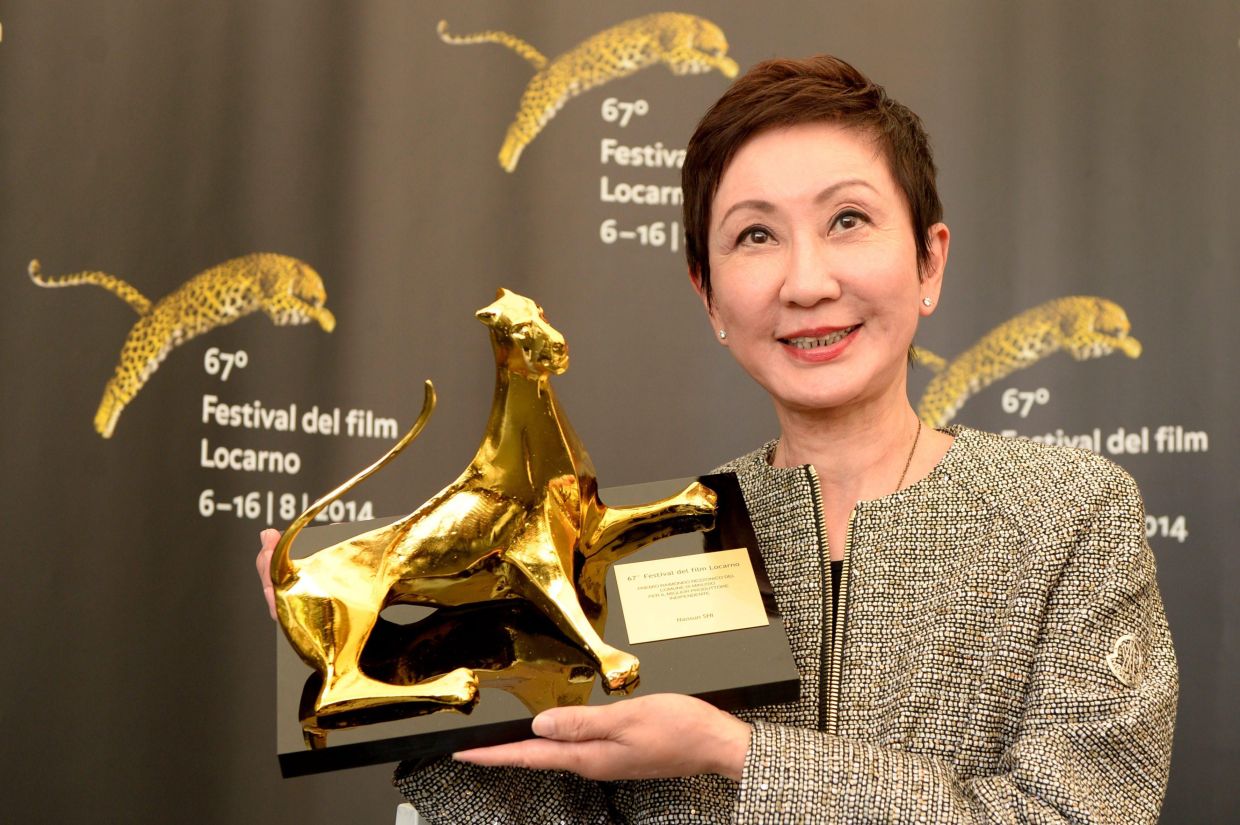
The Hong Kong film world has lost one of its most formative figures with the passing of Shi Nan-sun on Monday evening. The veteran producer, who reshaped how Hong Kong cinema reached international audiences, died aged 75 at Hong Kong Sanatorium & Hospital after complications from a bacterial infection triggered multiple organ failure. Her death marks the end of an era for an industry that she spent four decades professionalizing and internationalizing through shrewd business acumen and an unwavering commitment to artistic excellence.
Shi's decline in health had been gradual. Since 2022, she had struggled with complications linked to her immune system, and her condition deteriorated significantly in recent months as recurrent infections ravaged her body. Those close to her noticed the toll in May when she attended the funeral of fellow producer Linda Kuk Mei-lai, visibly supported by a walking stick. By the time she passed away peacefully on Monday night, surrounded by family and friends, her body had exhausted its reserves. Film Workshop, the production powerhouse she co-founded with acclaimed director Tsui Hark, confirmed that her final hours were calm, a fitting conclusion for someone whose entire career was defined by grace under pressure.
The tributes that poured in from Hong Kong's entertainment elite underscore the profound influence Shi wielded behind the scenes. Jackie Chan, one of Asia's biggest movie stars, posted on Weibo that the film world had "lost another legendary figure," emphasizing that her legacy would endure through the classic films her vision brought to life. Actress Carina Lau, who collaborated with Shi on multiple productions, wrote a deeply personal message acknowledging the countless lessons in character and conduct she had absorbed from the producer. Brigitte Lin Ching-hsia, Donnie Yen Chi-tan, and Shu Qi joined the chorus of recognition, each highlighting different facets of Shi's outsized contribution to cinema.
Perhaps most significantly, Brigitte Lin revealed the depth of Shi's personal devotion to Tsui Hark, quoting legendary novelist Jin Yong's description of her as "the only wife who is completely infatuated with her husband." Although Shi and Tsui married in 1996 and divorced eighteen years later in 2014, their professional partnership outlasted their personal one, a testament to their mutual respect and shared artistic vision. Tsui himself spoke to reporters outside the hospital, describing his ex-wife's "immense resilience" in fighting her illness and her determination to hold on until the very end. The couple's ability to maintain their friendship and collaborative spirit after divorce offers a rare example of maturity in an industry often roiled by acrimony.
Government recognition of Shi's stature was evident in the statement from Rosanna Law Shuk-pui, Hong Kong's Secretary for Culture, Sports and Tourism, who credited the producer with making "significant contributions to the long-term development of the local film industry." Law emphasized that Shi had "dedicated her life to the film and TV industry, leaving behind precious cinematic memories for Hong Kong people." This official acknowledgment reflects how deeply Shi's work had penetrated the cultural consciousness of the territory, transforming not just how films were made and financed, but how an entire generation of Hong Kongers understood their own creative potential.
Shi's ascent in the film business began not in production but in administration. After studying statistics and computing at the Polytechnic of North London, she entered television before pivoting to cinema in 1981 as an executive director at Cinema City. There, she carved out a niche managing the unglamorous but essential aspects of filmmaking: administration, financing, contract negotiations, and international distribution. These operational skills, often overlooked in discussions of cinematic greatness, proved revolutionary. She recognized that Hong Kong films could only achieve sustained international success if they were backed by professional business infrastructure.
This insight led to her co-founding Film Workshop in 1984 alongside Tsui Hark, followed by Distribution Workshop. These entities fundamentally altered the trajectory of Hong Kong cinema. Rather than treating international sales as an afterthought, Shi built distribution networks that made Hong Kong productions competitive in global markets. She understood that a masterpiece locked in a Hong Kong studio had zero cultural impact, but a well-distributed film could influence audiences from Paris to São Paulo. Her work essentially transformed Hong Kong from a regional film center into a globally recognized brand.
Shi's international standing was formalized through numerous honours that accumulated over decades. She became an officer of France's Ordre des Arts et des Lettres, one of that nation's highest cultural recognitions, and won the best independent producer award at the Locarno International Film Festival. Major festivals regularly invited her to serve as a jury member or president, reflecting her reputation as someone with both global vision and sophisticated understanding of market dynamics. This combination of artistic credibility and commercial savvy was rare; most producers excel in one domain or the other, but rarely both.
Just weeks before her death, Shi and Tsui jointly received a lifetime achievement award at the Hong Kong Film Awards, a belated but heartfelt recognition of their transformative impact. For Malaysian readers and Southeast Asian film enthusiasts, Shi's legacy carries particular resonance. The distribution networks and professional practices she pioneered enabled not just Hong Kong films but also regional Asian cinema to circulate more widely. Her work created templates that other Southeast Asian film industries have since adopted, making her influence felt far beyond Hong Kong's borders.
The loss of Shi represents the closing of a chapter in Hong Kong's cultural history at a moment when the territory's creative industries face significant headwinds. Her generation of producers built the infrastructure and international reputation that sustained Hong Kong cinema through decades of competition from larger markets. As younger filmmakers navigate an increasingly fragmented global entertainment landscape, they inherit both the tangible assets Shi created—distribution channels, international relationships, professional standards—and the intangible legacy of her unwavering belief that local cinema could achieve world-class status through careful stewardship and strategic thinking.
The memorial and funeral arrangements for Shi are to be announced by Film Workshop in due course. For now, her colleagues and collaborators are processing the magnitude of her absence. An industry that she helped build from scattered talent into a coordinated, export-oriented creative force faces the challenge of sustaining her vision without her guiding hand. Yet her imprint is indelible. Every Hong Kong film that finds an international audience, every Southeast Asian production that reaches beyond its home market, every young filmmaker who approaches their craft with both artistic integrity and business discipline, carries forward the legacy of Shi Nan-sun.

