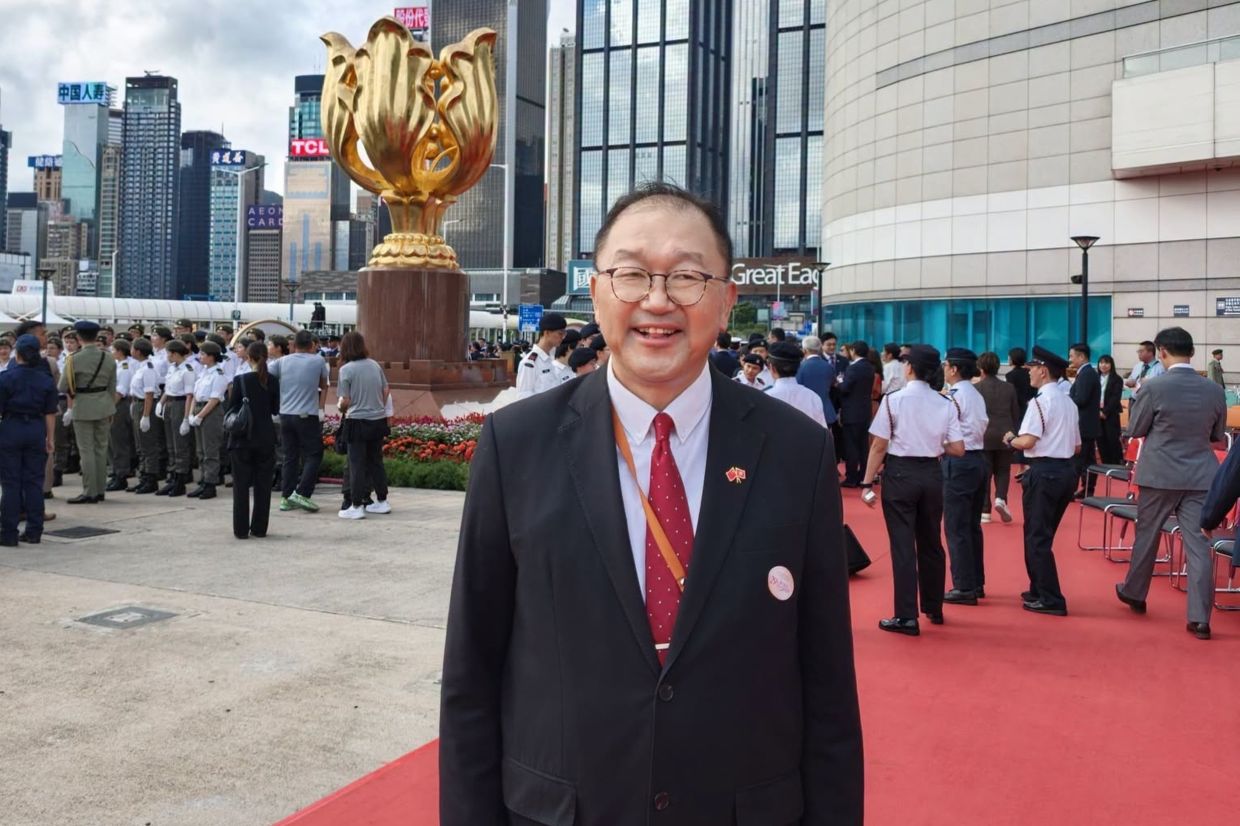
William Wong Kam-fai, a 66-year-old Hong Kong legislator, has stepped down from the Legislative Council, marking the first resignation over a scandal in more than two decades. The announcement came on Friday, just days after Wong's arrest on suspicion of drink-driving and involvement in a hit-and-run incident that damaged two parked vehicles on a university campus. His departure represents a significant moment in Hong Kong's political landscape, where such high-profile resignations under ethical cloud have become increasingly rare.
Wong submitted his resignation letter to Legco President Starry Lee Wai-king on Friday morning. In a brief statement, he acknowledged the gravity of his situation, expressing sincere apologies for the distress caused to both society and the Legislative Council by the traffic incident. Recognising the potential disruption to parliamentary operations, Wong determined that relinquishing his legislative positions immediately was the most appropriate course of action. He declined to elaborate further, citing the ongoing police investigation into the matter.
The incident occurred on Monday evening when Wong lost control of his vehicle near a staff residence on university grounds at approximately 10:46pm. The car collided with a parked vehicle, which was then pushed into a second parked automobile. Wong's arrest followed the crash, leading to questions about his fitness to continue serving in one of Hong Kong's most senior political bodies. The university, where Wong also holds an academic appointment, subsequently suspended him from administrative duties pending the completion of the police investigation.
Wong's decision to resign swiftly has garnered approval from political observers and fellow lawmakers who emphasise the importance of maintaining public confidence in legislative institutions. Lau Siu-kai, a consultant with the Chinese Association of Hong Kong and Macau Studies think tank, characterised the resignation as strategically prudent for all parties involved. According to Lau's analysis, remaining in office risked inflaming perceptions that governance standards had slipped, potentially inviting criticism that the principle of patriots administering Hong Kong was being compromised by tolerated misconduct among senior legislators.
Tam Yiu-chung, Hong Kong's former representative to the National People's Congress Standing Committee, similarly endorsed Wong's decision. He noted that legislators operate under elevated ethical expectations, making the resignation an appropriate response to what amounted to a serious breach of conduct. Tam observed that the legislative body would experience minimal operational disruption given Wong's constituency classification—he represented an Election Committee seat rather than a functional constituency, meaning his departure did not create a vacuum in representing any particular economic or professional sector.
Wong's background extends beyond legislative duties. He serves as a member of the Chinese People's Political Consultative Conference, China's paramount political advisory body, in addition to holding various positions across multiple organisations. His CPPCC membership now faces uncertainty, with analysts predicting he will likely tender a resignation from that role as well. Political observers anticipate that central authorities will accept any such resignation given the severity of the incident, though expulsions of CPPCC members remain uncommon.
The question of whether a by-election will be held to fill Wong's Legislative Council seat remains unresolved. The government retains discretionary authority over whether to call a poll, with no legal requirement to do so. In 2024, then-constitutional affairs minister Erick Tsang Kwok-wai indicated that financial considerations would factor into such decisions. This principle was previously demonstrated when a seat vacated by Stephen Wong Yuen-shan in late 2022—who departed to lead a government think tank—remained empty for approximately three years without a by-election being conducted.
Wong's resignation marks a watershed moment in Hong Kong legislative history. The last legislator to resign over scandal was Gary Cheng Kai-nam in September 2000, shortly after winning his seat. Cheng's case involved more serious legal consequences than Wong currently faces, as it encompassed undisclosed business conflicts, unauthorised disclosure of confidential government information, and an extramarital affair. Cheng subsequently received an 18-month prison sentence after conviction on charges of bribery, misconduct in public office, false accounting, and theft—a stark illustration of the legal jeopardy that can accompany legislative misconduct in Hong Kong.
For Malaysian observers, Wong's case illuminates broader questions about accountability mechanisms within Asian legislative systems and the expectations placed on political representatives. Hong Kong's relatively prompt handling of the matter—with Wong's arrest on Monday and resignation by Friday—reflects institutional maturity in managing political crises. By contrast, many regional democracies grapple with resistance from legislators unwilling to relinquish office despite serious allegations. Wong's decision suggests that in Hong Kong's tightly regulated political environment, the reputational calculus for senior officials often favours swift withdrawal over protracted legal battles or forced removal proceedings.
The incident also raises questions about governance standards and the scrutiny applied to public officials across Asia's developed economies. While Hong Kong maintains strict expectations of legislators, enforcement consistency remains contested territory, particularly given the political sensitivities involved in managing scandals involving officials appointed under the current electoral framework. Wong's resignation may represent either genuine commitment to institutional integrity or a strategic manoeuvre to minimise legal and political exposure—a distinction likely to preoccupy Hong Kong's political analysts in coming weeks as the police investigation proceeds.

