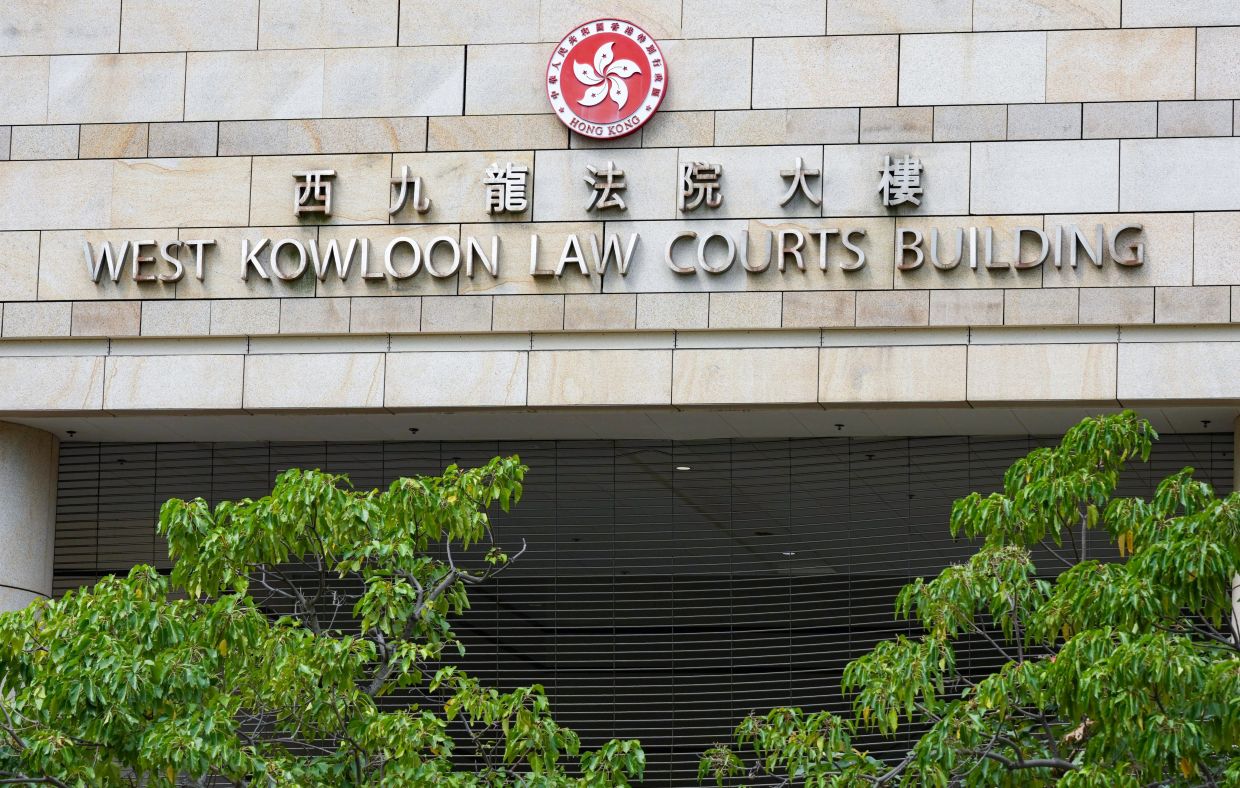
A Hong Kong court has handed down a four-month prison sentence to a 65-year-old repeat sex offender who attacked a Form Three student aboard a crowded bus, an incident that drew public outrage after bystanders filmed and shared the assault on social media. William Wu Yiu-shing, a former hardware salesman, pleaded guilty at West Kowloon Court on Tuesday to indecent assault, having already accumulated three prior convictions for the same type of offence. The case highlighted persistent concerns about public safety on Hong Kong's transport system and the role of social media in exposing criminal behaviour that might otherwise have gone unrecorded.
The offence occurred on the afternoon of June 5 when Wu boarded a Kowloon Motor Bus double-decker vehicle that was stopped at the intersection of Mong Kok Road and Sai Yeung Choi Street South. At approximately 12:10pm, the 17-year-old victim was seated on the upper deck when Wu, positioned in the row directly behind her, extended his left arm and made contact with her chest area. A 37-second video captured by a pedestrian outside the bus showed Wu dressed in a white tank top conducting the assault as the vehicle remained stationary at the traffic lights, then continuing even as the bus resumed movement. Despite verbal warnings from people on the street, Wu appeared indifferent to the intervention and maintained his aggressive behaviour until the bus moved away from view.
The victim's account to police revealed the psychological impact of the attack. She reported feeling her armpit touched for several seconds and witnessed Wu attempting to grab her, but was too frightened to resist or call out. Instead of immediately seeking help or reporting the matter, the girl rushed home, suggesting the traumatic nature of the experience. Her delayed response is typical of many sexual assault survivors, particularly younger victims who may experience shock or fear of further confrontation. The case demonstrates how public transportation environments, despite their frequency and visibility, remain venues where vulnerable commuters face unexpected threats.
The rapid response of law enforcement proved crucial in this case. Police arrested Wu the same day at the Hong Kong-Zhuhai-Macau Bridge border checkpoint as he was returning from Macau, indicating he attempted to flee after the incident or was unaware of the immediate police action. During questioning, Wu admitted he committed the offence to satisfy sexual desires, offering no mitigating explanation beyond this frank acknowledgement. This admission, while not excusing his behaviour, provided prosecutors with a straightforward guilty plea that eliminated the need for a lengthy trial and allowed the victim to avoid giving evidence in court.
Wu's criminal history significantly influenced the sentencing outcome. With three previous convictions for indecent assault already on his record, the defendant presented himself as a persistent predator whose behaviour showed no signs of desistance despite prior legal consequences. The pattern of offending over what appears to be an extended period raises serious questions about the effectiveness of previous sentences in deterring his actions. For Malaysian observers, this pattern reflects challenges shared across the region in managing repeat sexual offenders within the criminal justice system and the ongoing debate about appropriate sentencing levels.
During Tuesday's proceedings, Wu's duty lawyer attempted to present mitigating factors, emphasising the defendant's candid acceptance of responsibility and his willingness to undergo psychological treatment as part of rehabilitation efforts. The lawyer's arguments focused on the defendant's cooperation with authorities and his expressed commitment to addressing underlying issues through professional intervention. However, courts generally view such expressions of willingness to reform with caution, particularly when they come after multiple prior offences, suggesting the offender either failed to apply lessons from previous punishments or lacked genuine motivation to change behaviour until facing court.
The four-month custodial term, while falling well short of the maximum ten-year penalty available to higher courts, represents the magistrate's assessment of appropriate punishment within the confines of the two-year cap applicable at that level. The relative brevity of the sentence—at least from a legal framework perspective—may provoke debate about whether it adequately reflects the violation committed against a minor or serves sufficient deterrent purpose against similar crimes. In comparative terms, different jurisdictions across Southeast Asia handle analogous offences with varying severity, reflecting diverse cultural attitudes toward sexual violence and child protection.
Wu has been held in remand custody since his prosecution commenced on June 8, meaning he has already served approximately two months of his sentence. Prison authorities expect to release him within roughly one month, accounting for time already served and standard remission calculations. This relatively swift return to society raises rehabilitation questions that extend beyond psychological treatment. The case illustrates systemic challenges in managing offenders whose criminal tendencies persist despite previous incarceration.
The incident's viral circulation on social media created an unusual dimension to prosecution and sentencing. Public awareness generated through online video sharing meant the court operated under intense community scrutiny and expectation of accountability. This transparency can serve protective functions by exposing crimes and ensuring officials cannot suppress cases discreetly, yet it also creates pressure on judicial decision-making that must ultimately remain guided by legal principles rather than popular sentiment. The broader implications touch on how technology reshapes the relationship between criminal activity, law enforcement, and public accountability in densely populated urban environments.
For regional observers including Malaysian policymakers and safety advocates, this case underscores the importance of sustained efforts addressing sexual violence in public spaces. Transport authorities across Southeast Asia confront similar challenges managing safety for vulnerable passengers while maintaining functional, accessible public systems. The incident also highlights how social media documentation of crimes can serve victims by generating evidence and public pressure, though it simultaneously raises concerns about victim privacy and the trauma of seeing oneself assaulted replayed across digital platforms. Hong Kong's response, combining swift law enforcement action with court proceedings that acknowledged the offence's severity while operating within established sentencing parameters, reflects one regional approach to balancing accountability, deterrence, and rehabilitation in sexual assault cases.

