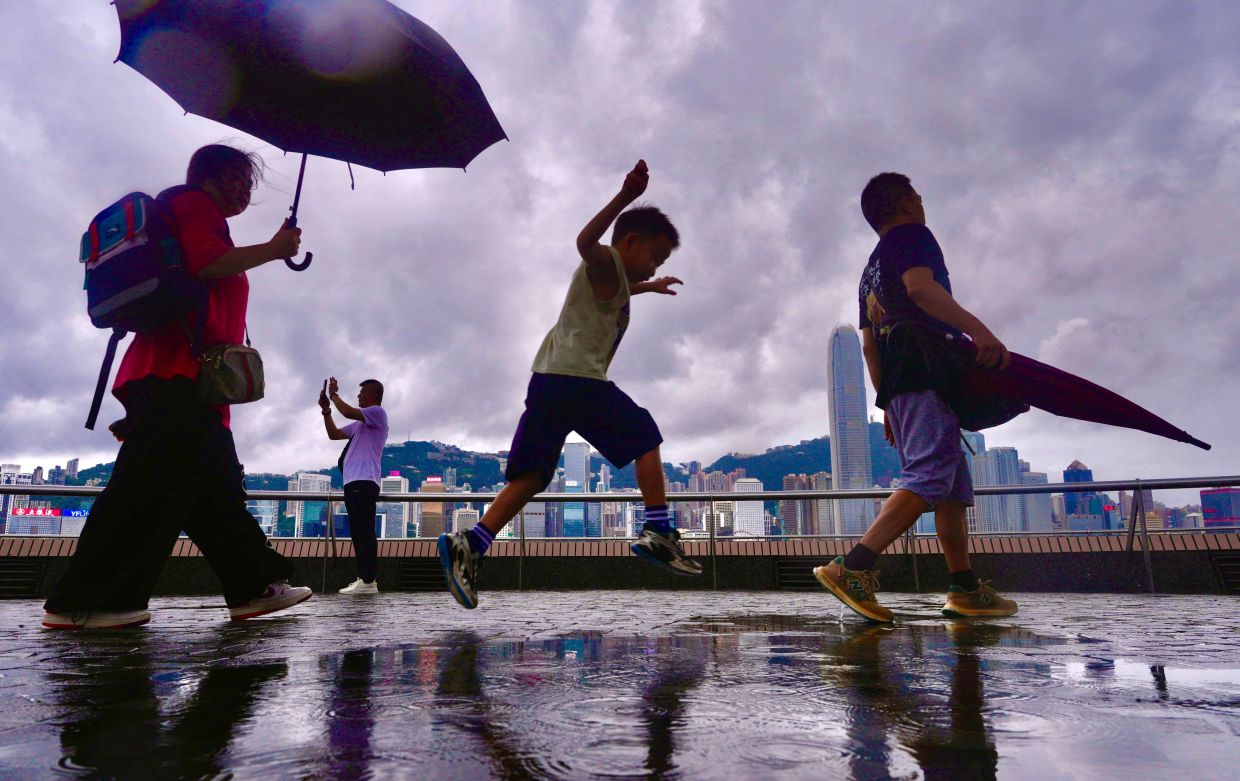
Hong Kong residents finally caught a break from an oppressive heatwave on Friday morning as heavy rainfall swept across the territory, disrupting nine consecutive days of record-breaking heat that has tested the city's resilience and infrastructure. The Hong Kong Observatory issued an amber rainstorm alert at 8:40 am, the lowest tier of the territory's four-level warning system, as the showers and thunderstorms arrived. The alert was lifted within three hours, but meteorologists predicted that showery conditions would persist throughout the day, offering tangible relief after an exhausting week of unrelenting sun.
The meteorological event that brought the downpour stemmed from upper-air disturbances combined with a southwesterly airstream pushing into the region. This combination broke the back of a high-pressure system that had dominated Hong Kong's weather pattern, trapping hot, stagnant air over the densely populated territory. While the August rain is welcome, the broader weather pattern suggests this reprieve will be temporary, with forecasters warning of a return to very hot conditions as early as the following week, though scattered showers may still occur.
The magnitude of Hong Kong's recent heat episode underscores the intensifying climate pressures facing East Asia. During the preceding seven days, temperatures consistently exceeded 34 degrees Celsius across multiple districts, creating dangerous conditions for elderly residents, outdoor workers, and those without adequate air-conditioning. The humidity levels that typically accompany such heat events made the apparent temperature feel even more oppressive, straining electricity grids as demand for cooling surged.
The Observatory recorded a maximum temperature of 33 degrees Celsius or higher for nine consecutive days, a record-breaking streak for August that supersedes all previous August heatwaves in the city's meteorological history. This extended hot spell represents not merely a temporary weather phenomenon but a reflection of broader climate trends affecting the region, where summer temperatures have been climbing steadily over recent decades.
The pinnacle of the heatwave came on Sunday when the Observatory recorded 36.9 degrees Celsius—the highest temperature since systematic weather record-keeping began in Hong Kong in 1884. This milestone represents more than a statistical achievement; it signals the intensity of heat that a modern subtropical city of 7.5 million people must now contend with. Previous all-time highs, set decades ago, have now been comprehensively surpassed, indicating a fundamental shift in what constitutes extreme summer weather for the territory.
For Malaysian readers and Southeast Asian observers, Hong Kong's experience carries immediate relevance. The region shares similar subtropical and tropical climate characteristics, and temperature records tumbling across Hong Kong suggest comparable pressures may intensify throughout Southeast Asia. Cities such as Kuala Lumpur, Bangkok, and Singapore already experience frequent heat stress; the Hong Kong precedent suggests that record-breaking temperatures may become increasingly common rather than exceptional events.
The practical implications of such sustained heat are substantial. Hong Kong's healthcare system reported increased emergency room visits related to heat exhaustion and dehydration during the heatwave period. Public transport systems experienced technical difficulties as infrastructure designed for historical temperature ranges struggled under sustained thermal stress. Air-conditioning failures in homes and public buildings left vulnerable populations at particular risk.
The economic dimensions of extended heatwaves deserve consideration as well. Hong Kong's electricity consumption during the heatwave reached peaks that strained generating capacity, with power companies implementing conservation appeals. For densely populated urban centers throughout Southeast Asia, similar scenarios could have significant implications for energy security and costs, particularly as climate change pushes peak summer temperatures higher.
Weather forecasts for the remainder of August and early September in Hong Kong predict morning thunderstorms on Saturday with sunny intervals during daylight hours, followed by a return to very hot conditions by early week. While additional showers may occur during the forecast period, meteorologists indicate that the dominant pattern will shift back toward heat and humidity. Residents and authorities are unlikely to have sustained relief from the recent extreme conditions until more substantial weather pattern changes occur, possibly when the autumn monsoon season transitions establish themselves more firmly in late September.
The episode highlights the growing adaptation challenges facing Hong Kong and other Asian cities as climate patterns shift. Urban planning, building codes, workplace regulations, and public health systems will increasingly need to accommodate the reality that extreme heat events are no longer rare occurrences but predictable seasonal features. For policymakers across Southeast Asia watching Hong Kong's response to record temperatures, the lesson is clear: infrastructure and social systems built for yesterday's climate may prove inadequate for today's conditions, let alone the further warming anticipated in coming decades.

