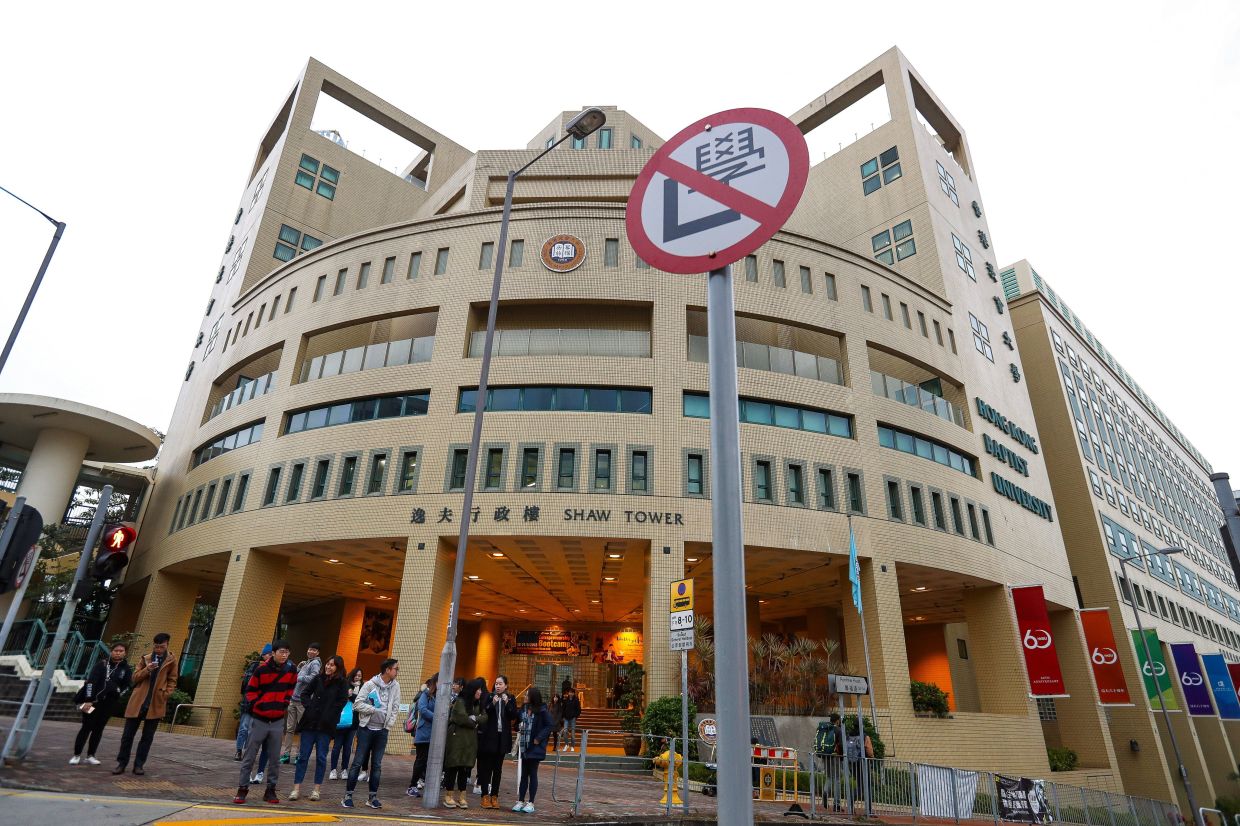
Hong Kong Baptist University is conducting an urgent review of its information technology infrastructure following claims by a sophisticated cybercriminal outfit that it has obtained unauthorised access to the institution's data systems. The allegation surfaced when The Gentlemen, a relatively new but increasingly prolific ransomware operation, announced the supposed breach through online channels. The incident has triggered immediate engagement with local privacy authorities and law enforcement, raising fresh concerns about cybersecurity vulnerabilities across major educational institutions in the region.
According to cybersecurity monitoring platforms tracking the threat landscape, the compromised credentials extend across a substantial portion of the university's digital ecosystem. The affected accounts number approximately 1,900 in total, encompassing roughly 130 staff member accounts, approximately 1,770 other user credentials belonging to students and other university-affiliated individuals, and around 260 third-party employee credentials from contracted service providers. The breadth of the breach underscores the interconnected nature of modern university IT infrastructure and the multiple vectors through which attackers can penetrate institutional networks.
The Gentlemen represents a particularly concerning category of cybercriminal enterprise. Rather than operating as a tightly controlled hacking collective, the group functions as a ransomware-as-a-service platform, essentially renting its extortion software and infrastructure to other cybercriminals on a revenue-sharing basis. This business model, which emerged prominently in the middle of the previous year, has enabled The Gentlemen to expand its operational footprint across global networks at remarkable speed. The franchise approach transforms individual hacking attacks into a scaled criminal operation, multiplying the number of potential victims and making the threat considerably more difficult for law enforcement to contain.
The university's initial response came through a statement released on Tuesday evening, confirming that administrators had identified an online webpage making allegations of illegal system access. The institution acknowledged the seriousness of the claims and indicated that comprehensive security reviews were underway. Officials committed to undertaking appropriate investigative and remedial steps through established institutional mechanisms while maintaining active coordination with relevant Hong Kong regulators and law enforcement agencies. The measured but urgent tone of the statement reflects both the gravity of the situation and the need to avoid panic among the university community.
The local privacy regulator, the Office of the Privacy Commissioner for Personal Data, disclosed that it had not yet received formal breach notification documentation from Baptist University as of the initial public acknowledgement. However, rather than waiting passively, the commissioner's office adopted a proactive stance by independently contacting the institution to gather detailed information about the alleged incident. This approach suggests that Hong Kong's privacy authorities are treating educational institutions with particular scrutiny following previous breaches and are prepared to move swiftly when data protection concerns emerge.
Francis Fong Po-kiu, who holds the position of honorary president of the Hong Kong Information Technology Federation, provided a detailed assessment of the immediate actions the university should undertake. Fong emphasised that the institution must promptly lodge a formal notification with the privacy watchdog, establishing the official record required under Hong Kong's personal data protection legislation. Beyond regulatory compliance, he advocated for the university to commission comprehensive forensic investigations of its systems, coupled with thorough technical audits designed to determine whether the stolen credentials have been weaponised for further network penetration or have resulted in substantial data exfiltration.
Fong's recommendations extended to several critical defensive measures that institutions should implement following such breaches. A mandatory password reset across the entire campus computing infrastructure would render the compromised credentials immediately useless, though such an undertaking requires careful coordination to minimise disruption to academic and administrative operations. The implementation of multi-factor authentication represents another essential protective layer, adding a second or third verification step that makes credential theft substantially less valuable to attackers. These technical safeguards, while fundamental in contemporary cybersecurity practice, remain inconsistently deployed across Hong Kong's educational sector.
The broader implications of the Baptist University incident extend across Southeast Asia's education and research landscape. Universities throughout the region house vast repositories of sensitive personal information, intellectual property, and research data that make them attractive targets for well-resourced cybercriminal organisations. The Gentlemen's apparent success in penetrating a major Hong Kong institution suggests that educational networks may present exploitable weaknesses compared to the more heavily fortified infrastructure of government agencies and large corporations. The incident serves as a stark reminder that institutions across Malaysia, Singapore, Thailand, and elsewhere should re-evaluate their cybersecurity posture and resource allocation.
The transparency dimension of institutional response carries particular importance for maintaining community confidence and preventing secondary attacks. Fong urged the university to communicate openly with staff members and students regarding the investigation's findings and progress, explaining both what occurred and what remedial measures are being implemented. This transparent communication approach serves multiple functions simultaneously: it demonstrates institutional accountability, provides affected individuals with information necessary to protect themselves against identity theft or social engineering attacks, and reduces the likelihood that employees will fall victim to follow-up exploitation attempts that commonly target organisations responding to breaches.
The incident highlights a critical vulnerability in the cybersecurity strategies of knowledge institutions. Universities necessarily prioritise accessibility and collaboration, which can create tensions with security hardening measures. Remote access for faculty, seamless integration with external research partners, and the open exchange of information that characterises academic work all create expanded attack surfaces compared to organisations operating behind more restrictive security perimeters. Baptist University and its peer institutions must navigate this fundamental trade-off, seeking security solutions that protect sensitive data without unnecessarily impeding legitimate academic and administrative functions.
The response from Hong Kong's regulatory and cybersecurity communities suggests that institutional breaches will trigger increasingly scrutinised investigations. The Privacy Commissioner's proactive engagement and the Hong Kong Information Technology Federation's detailed remediation guidance indicate that educational institutions can expect external oversight and best-practice enforcement. For universities across Southeast Asia considering their cybersecurity investments, the Baptist University case demonstrates that regulatory attention and reputational consequences follow major breaches, making robust security investments a strategic imperative rather than merely a technical consideration.

