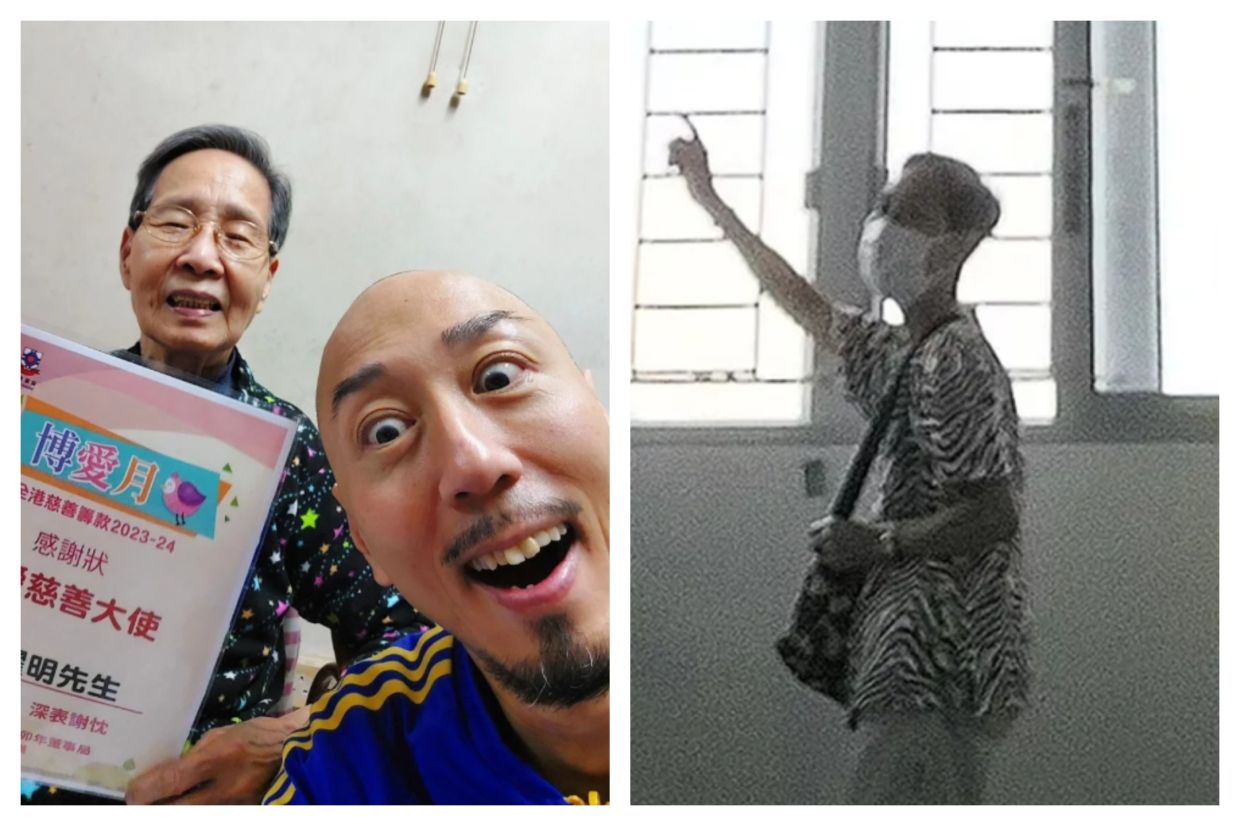
Hong Kong television actor Dai Yiu Ming has achieved a deeply personal milestone by acquiring his first residential property specifically for his elderly mother, capping off years of dedicated work and disciplined saving. The 54-year-old TVB veteran, known for his consistent supporting roles across numerous television dramas, recently announced the purchase through social media, sharing photographs of the residence and its views while acknowledging the substantial financial commitment the acquisition demanded.
Dai's decision to centre his major investment around his mother's wellbeing reflects broader cultural values centring on filial responsibility that resonate throughout East and Southeast Asia. His public acknowledgement of the achievement struck a chord with audiences, as he framed the purchase not merely as a financial transaction but as a long-deferred expression of gratitude toward a woman who endured extraordinary hardship across decades. The actor's transparency about the financial strain—admitting the cost was "very expensive" while emphasizing his lack of regret—underscores the genuine sacrifice embedded in the decision.
The emotional weight of Dai's gesture becomes apparent when considering his mother's life trajectory. Now in her eighties, she spent the majority of her existence inhabiting substandard accommodation, progressing from wartime air-raid shelters where survival depended on foraging for sweet potato leaves, through successive periods in aged public housing units. Dai's tribute to her resilience highlighted a generation whose formative experiences encompassed Japanese occupation, post-war scarcity, and the gradual urban development of Hong Kong. His acquisition of proper housing for her represents, in many respects, the fulfilment of a promise implicit in his entry into entertainment.
Dai's social media caption articulated a philosophy about mortality and obligation that extends beyond typical wealth accumulation narratives. "We only have this lifetime together," he wrote, continuing with the poignant observation that even hypothetical reincarnation offered no guarantee of reunion. This temporal consciousness—the recognition that the window for honouring parents is finite—constitutes a powerful counterweight to the materialism often associated with real estate investment in Asian property markets. Rather than framing the purchase as personal achievement or asset accumulation, Dai deliberately positioned it as an act of intergenerational reciprocity.
The actor's professional journey illuminates the persistence required to achieve such domestic goals within Hong Kong's notoriously expensive property market. Following his 1991 enrolment in ATV's training programme and subsequent 1993 debut, Dai experienced early career disappointment when he departed the broadcaster in 1994, feeling undervalued and unappreciated. Rather than abandoning entertainment entirely, he pursued alternative employment as a computer technician for half a year before securing a TVB contract later that same year. This willingness to accept supplementary work demonstrated the hybrid approach many entertainment figures adopt in Hong Kong's competitive environment.
Since joining TVB, Dai cultivated a reputation as a dependable character actor rather than pursuing leading roles or major stardom. This professional positioning, while offering stability, typically generates more modest compensation than headline-grabbing roles might provide. Yet Dai's career strategy proved sustainable across decades, allowing him to accumulate sufficient resources for his property purchase. The contrast between his steady, unglamorous trajectory and his mother's material deprivation underscores how incremental professional success, sustained over extended periods, eventually enables substantial familial investment.
Dai's brief mainland Chinese venture beginning in 2017 offers additional perspective on his priorities. Recognizing opportunities in the larger entertainment industry, he relocated to explore expanded commercial possibilities. However, his emotional connection to his mother—and presumed sense of filial obligation—proved stronger than professional ambition. His return to Hong Kong relatively quickly after departing demonstrates that economic advancement held secondary importance to proximity and caregiving capacity. This decision reflects traditional Confucian values emphasizing familial bonds over individual career maximization, values that remain influential across the region despite modernization.
The social media response to Dai's announcement reveals how audiences in Hong Kong and beyond continue to valorize filial piety despite rapidly changing family structures and economic priorities. Commenters celebrated his "sense of filial piety and responsibility," suggesting that his actions resonated with viewers' own familial aspirations and anxieties. In a region where rapid urbanization, property price inflation, and shifting household economics have complicated intergenerational living arrangements, Dai's successful home purchase for an elderly parent struck many as exemplary rather than ordinary.
For Malaysian and broader Southeast Asian audiences, Dai's narrative carries particular resonance. Comparable challenges surrounding property accessibility, elderly parent support, and the tension between career advancement and family obligations characterize the region's middle class experience. The actor's willingness to remain modest and thrifty—his own description—rather than seeking celebrity-style wealth accumulation offers an alternative model to the fame-focused narratives typically dominating entertainment media. His gradual, disciplined approach to achieving a multigenerational housing objective demonstrates that substantial goals remain attainable through consistent effort, even within systems structurally biased toward established wealth and inherited advantage.
Dai's public sharing of this personal achievement also reflects evolving attitudes toward transparency in Hong Kong celebrity culture. Rather than performing modesty through silence or appearing detached from material concerns, he openly discussed the financial magnitude of the transaction while emphasizing emotional rather than monetary value. This honesty—acknowledging simultaneous pride and humility—offers a counternarrative to both the ostentatious wealth displays common in Asian entertainment and the false modesty that sometimes masks privilege.
The purchase itself, while celebrated, represents merely one chapter in Dai's ongoing relationship with his mother. His explicit encouragement to spend additional time with her, embedded in his caption, suggests awareness that property ownership alone cannot substitute for presence and attention. This recognition that material provision requires accompanying emotional investment distinguishes his approach from purely transactional interpretations of filial responsibility, positioning the home as facilitating deeper connection rather than discharging obligation.
As Hong Kong navigates economic pressures, demographic aging, and evolving social structures, stories like Dai's acquire broader significance. His success in acquiring property specifically designated for his mother's welfare demonstrates that within highly pressurized systems, individual perseverance combined with clear priorities can still achieve outcomes once considered increasingly unrealistic for ordinary workers. Yet the narrative simultaneously highlights how exceptional his achievement remains—that a successful actor's decades of work were required to accomplish what previous generations might have expected as standard progression. This tension between celebration and structural critique frames contemporary discussions about housing accessibility and intergenerational support throughout East and Southeast Asia.

