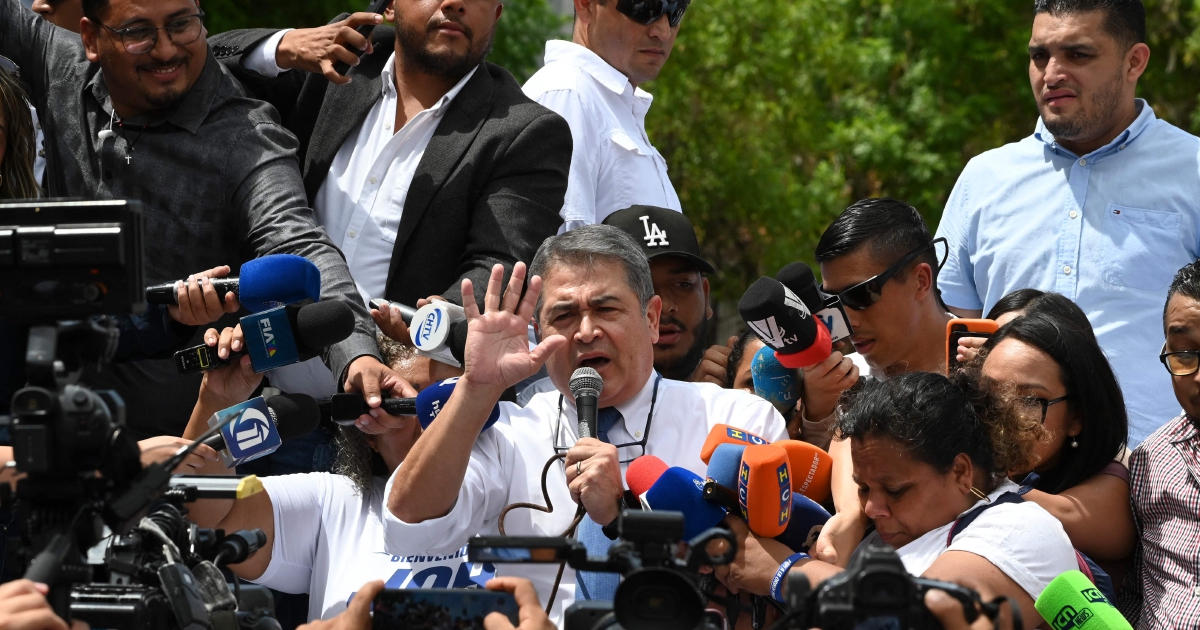
In a significant development for Honduras' judicial system, a judge in Tegucigalpa delivered a ruling on Monday permitting former president Juan Orlando Hernandez to stay free whilst navigating corruption proceedings in his home country. This decision comes roughly a year after President Donald Trump granted Hernandez a presidential pardon that absolved him of drug trafficking convictions in the United States, a move that stirred considerable controversy both internationally and within Honduras itself.
The court's decision to allow Hernandez liberty during the trial process reflects the independence of Honduras' domestic judicial framework, which remains distinct from the American legal system where he faced charges. While Trump's pardon shielded Hernandez from serving time in United States custody, it carries no jurisdictional weight in Honduras, where local authorities have pursued their own investigations into allegations spanning financial crimes and corruption.
Hernandez served as Honduras' president from 2014 to 2022, a period marked by growing accusations of links to organized crime and narcotics trafficking networks. His tenure witnessed significant deterioration in public confidence regarding governmental transparency and institutional integrity. The former leader repeatedly denied involvement in drug-related activities whilst in office, maintaining that investigations against him formed part of politically motivated campaigns by his opponents.
The trajectory of Hernandez's legal troubles illustrates the complex relationship between Honduran and American justice systems. Initially arrested in Honduras in 2023, he was extradited to the United States where federal prosecutors presented evidence suggesting connections to international drug smuggling operations. The case gained prominence as part of broader American efforts to combat transnational narcotics trafficking originating from Central America. However, Trump's decision to pardon him last year fundamentally altered his American legal predicament.
Trump's pardon generated substantial pushback from anti-corruption advocates and transparency organizations, who argued that it contradicted commitments to combat drug-related criminality in the Western Hemisphere. The move also strained diplomatic relations, with various international bodies expressing concern about signals it might send regarding accountability for powerful figures accused of serious crimes. For many Central Americans grappling with drug violence and institutional weakness, the pardon seemed to exemplify how political connections could override criminal justice processes.
Within Honduras, however, domestic corruption investigations have proceeded independently of American proceedings. Honduran prosecutors have compiled separate allegations against Hernandez touching on money laundering, asset misappropriation, and involvement in schemes benefiting criminal organizations. These charges represent institutional attempts by Honduras to address governance failures and rebuild public trust after years of concerns about executive-level corruption and organized crime infiltration of state institutions.
The court's decision to maintain Hernandez's freedom pending trial outcomes suggests confidence that he will remain available for proceedings, though conditions may apply. This approach balances presumptions of innocence with maintaining trial integrity, a standard practice across many judicial systems when defendants lack compelling reasons for detention. Honduras has reformed aspects of its criminal procedures in recent years, attempting to strengthen due process protections and judicial independence following decades of institutional fragility.
Hernandez's case resonates throughout Central America as a test of whether national judicial systems can effectively investigate and prosecute powerful political figures, especially when international pressure exists. El Salvador, Guatemala, and Nicaragua have all experienced comparable struggles between demands for accountability and resistance from entrenched power structures. The Honduras proceedings will likely influence perceptions of regional governance quality among international investors, development partners, and neighbouring governments.
For Malaysian and Southeast Asian observers, Hernandez's trajectory offers instructive parallels regarding challenges faced by developing democracies combating elite corruption and organized crime. The phenomenon of former leaders evading domestic accountability through international flight or political networks mirrors patterns seen elsewhere in Asia and the Global South. The interplay between national courts asserting independence and international pressure—whether through American prosecution or pardons—demonstrates how transnational dynamics shape anti-corruption efforts globally.
The corruption trial proceeding in Honduras occurs amid broader regional conversations about institutional reform and governance legitimacy. International observers have noted that Central American countries increasingly seek to establish credible anti-corruption frameworks, partly responding to American pressure and partly driven by domestic constituencies demanding accountability. However, competing interests—including political loyalties, organized crime infiltration, and resource constraints—frequently impede effective prosecutions of high-level figures.
Hernandez's detention status matters considerably for Honduras' broader governance narrative. Should the domestic courts successfully prosecute him on corruption charges, it would signal institutional capacity to hold powerful individuals accountable regardless of international pardons or political connections. Conversely, acquittals or case dismissals would reinforce perceptions that Honduras lacks genuine mechanisms for elite accountability. The Monday ruling maintaining his freedom represents an intermediate position preserving trial proceeding integrity whilst avoiding pre-trial detention controversies.
As the corruption trial advances, international observers will monitor developments closely, particularly regarding evidence presentation, judicial impartiality, and sentencing outcomes should convictions emerge. The case will likely shape Honduras' international reputation regarding governance quality, institutional independence, and commitment to combating corruption within state structures. For regional Central American actors and their international partners, Hernandez's trial outcome may influence confidence in Honduras' ability to execute domestic reforms and strengthen institutional legitimacy.

