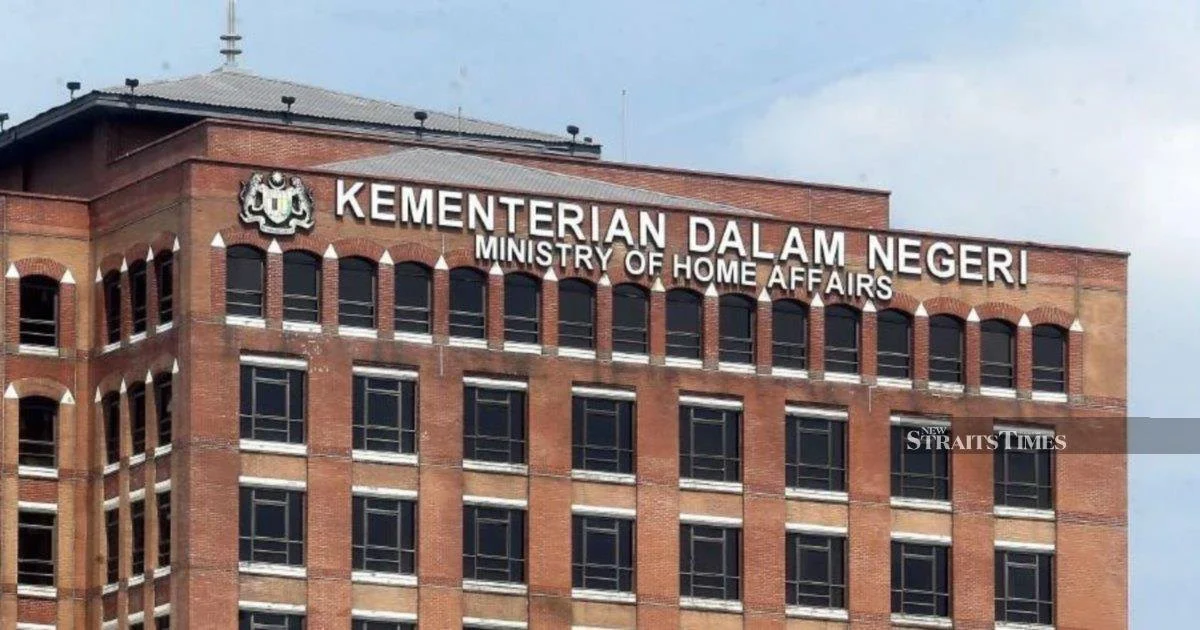
The Home Ministry has launched a formal investigation targeting Network School, an educational institution operating within the Forest City development zone in Johor. The decision to open an inquiry signals mounting official scrutiny of the school's operational practices and institutional governance, reflecting broader government concerns about educational standards and compliance within the expanding mixed-use development project.
Forest City, the sprawling real estate development located in the Medini district of Iskandar Puteri, has emerged as a significant commercial and residential hub in southern Johor. The integrated development encompasses residential towers, commercial spaces, and supporting facilities including educational institutions. Network School operates as one of several private educational providers within this ecosystem, serving both resident families and the wider Iskandar Puteri population.
The investigation initiative underscores the Home Ministry's expanded mandate to oversee institutional conduct beyond traditional security concerns. In recent years, Malaysian authorities have intensified scrutiny of operational transparency and regulatory compliance across educational establishments, particularly those operating within gated or semi-autonomous communities like Forest City. This reflects governmental commitment to ensuring consistency in institutional standards across the country's diverse educational landscape.
The specific grounds prompting the investigation remain subject to official clarification, though such inquiries typically examine compliance with educational regulations, student welfare protocols, financial transparency, and administrative procedures. The Home Ministry's involvement suggests that concerns may transcend ordinary educational administration and touch upon matters of broader institutional integrity or governance frameworks.
Network School's position within Forest City carries particular significance given the development's unique character as a large-scale integrated project with its own security infrastructure and administrative systems. Private schools operating within such developments often navigate complex regulatory environments, balancing investor interests with national educational standards and community expectations. The investigation provides an opportunity to establish clear benchmarks for institutional accountability in these hybrid environments.
For Malaysian parents and stakeholders in education, such official investigations typically trigger questions about institutional transparency and regulatory oversight of private schools generally. The emphasis on investigating Forest City's Network School may prompt broader conversations about how authorities monitor educational quality and ethical operations across Malaysia's diverse school sector, from traditional public institutions to private and international facilities.
The inquiry also reflects evolving expectations regarding institutional governance in major development projects. As Forest City continues expanding its commercial and residential footprint, authorities appear determined to ensure that service providers—including educational institutions—maintain standards commensurate with Malaysia's regulatory framework and public expectations. This positioning strengthens the government's oversight capacity across complex development zones.
From an administrative perspective, the investigation demonstrates the Home Ministry's capacity to coordinate fact-finding efforts across institutional boundaries. Educational institutions, while typically overseen by the Ministry of Education, may involve Home Ministry inquiries when operational concerns implicate broader governance, security, or institutional integrity questions. This inter-agency approach has become increasingly common as Malaysian governance structures adapt to managing complex, multi-faceted institutional ecosystems.
The timing of this investigation occurs within a broader context of heightened public discourse surrounding educational standards, private school regulation, and institutional accountability. Parents and educators across Malaysia have increasingly advocated for transparent oversight mechanisms and clear pathways for addressing institutional concerns. Official investigations like this one respond to such expectations while demonstrating governmental responsiveness to institutional governance issues.
For Johor specifically, the inquiry carries implications for the state's positioning as an educational destination. Johor hosts numerous private schools serving both domestic families and expatriate communities, particularly within major development zones. The Home Ministry's investigation into Forest City's Network School contributes to establishing clear standards for institutional conduct across the state's educational landscape, potentially enhancing the reputation and credibility of Johor's broader educational sector.
Stakeholders in the Forest City development, including residents, investors, and business operators, will likely monitor the investigation's progress closely. The outcome may influence confidence in the development's ancillary services and institutional quality, with potential implications for future resident enrollment at Network School and perceptions of Forest City's operational oversight generally.
As the investigation proceeds, transparency regarding findings and any corrective measures will prove essential for rebuilding institutional confidence. The Home Ministry's willingness to conduct such inquiries demonstrates official commitment to maintaining institutional standards across Malaysia's complex, multi-layered educational ecosystem, from traditional public schools to private facilities operating within specialized development zones like Forest City.

