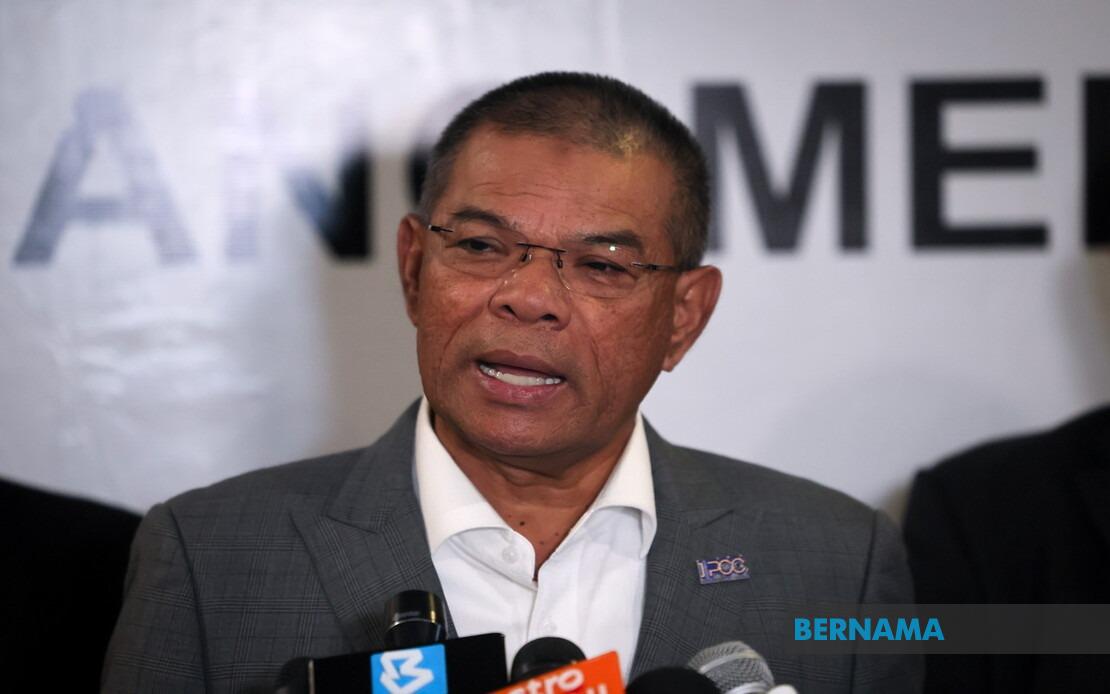
Home Minister Datuk Seri Saifuddin Nasution Ismail has issued a direct order for the Malaysian Immigration Department to render complete cooperation with investigating authorities in a fatal traffic collision that claimed three lives in the early hours of August 19. The minister's intervention signals the seriousness with which the government is treating the incident, which has drawn public scrutiny over road safety practices involving government vehicles and the circumstances surrounding the crash.
In a Facebook statement, Saifuddin Nasution underscored that any findings of negligence, misconduct, or legal violations must result in stringent action against responsible parties. His conditional language—demanding consequences if wrongdoing is uncovered—suggests recognition that public accountability hinges on a thorough, impartial investigation. The statement reflects growing political pressure to demonstrate that government agencies are not shielded from scrutiny when their operations result in civilian casualties.
The tragedy unfolded along Jalan Sultan Ismail around 1 am when a Malaysian Immigration Black Maria lorry, travelling without detainees, collided with civilian vehicles. Three pedestrians from the same family were fatally struck, while a fourth person sustained serious injuries. The incident also involved a Proton Saga, which was struck after failing to avoid the lorry, and an Inokom Matrix multi-purpose vehicle. The scale of the collision—affecting multiple vehicles and pedestrians—underscores the destructive force unleashed when large government transport vehicles lose control in urban settings.
Circumstances surrounding the crash have raised critical questions about operational protocols and traffic law compliance. The Immigration Department lorry reportedly proceeded through a red traffic light at the Maju Junction intersection while its beacon lights and siren were activated. Simultaneously, the Proton Saga was lawfully traversing the intersection on a green signal. The resulting collision sent the Immigration lorry into an uncontrolled skid across the roadway, with its massive frame striking multiple pedestrians before coming to rest against civilian vehicles.
The incident has exposed potential gaps in how government agencies manage high-speed emergency responses within densely populated urban areas. The fact that the lorry was en route to Chow Kit for a raid targeting undocumented migrants adds another dimension—enforcement operations, however legitimate their underlying purpose, cannot justify endangering civilian lives through reckless driving practices. This tension between operational urgency and public safety has emerged as a central concern in the investigation.
The Royal Malaysian Police have initiated proceedings under Section 41(1) of the Road Transport Act 1987, which governs traffic violations and vehicle-related offences. This statutory framework provides the legal mechanism for determining culpability, whether at the individual driver level or potentially at an institutional level regarding departmental oversight and training standards. The choice of statute suggests investigators are examining whether the collision resulted from personal driver error, inadequate vehicle maintenance, or systemic failures in operational guidance.
Saifuddin Nasution's expression of condolences extended not only to the bereaved family but encompassed the entire Ministry of Home Affairs and the Immigration Department itself. This formulation attempts to balance official sorrow with institutional responsibility, though observers may interpret the department's collective grief as somewhat beside the point when institutional failures may have contributed to preventable deaths. The symbolic gesture of prayer for the victims' family underscores the gravity officials attach to the incident.
The involvement of multiple vehicles and pedestrians makes this crash particularly significant for Malaysian road safety discourse. Urban intersections already present complex traffic management challenges, and the presence of emergency vehicles operating under special privileges creates additional hazards when those privileges are exercised negligently. This incident may prompt broader discussions about whether beacon light and siren activation should automatically grant right-of-way or whether drivers retain responsibility to ensure safe passage regardless of emergency status.
For Southeast Asian observers, the case illustrates how government accountability operates in Malaysia's institutional framework. The swift ministerial directive demanding cooperation signals that even security agencies face pressure to submit to transparent investigation when public safety is compromised. However, the actual execution of this order—whether investigations genuinely hold decision-makers accountable or conclude with minimal consequences—will reveal whether such declarations translate into substantive reform.
The families affected by this tragedy face not only profound personal loss but also the uncertain process of seeking justice through an investigation into a government agency. The three deaths represent not merely a traffic statistic but the irreversible severing of family bonds and community connections. Their loss demands that investigators move beyond procedural compliance toward genuine accountability and systemic improvements preventing such collisions in future.
As the investigation proceeds, critical questions remain unresolved: Was the driver adequately trained in emergency response driving? Did vehicle maintenance standards meet requirements? Were departmental protocols followed regarding siren and beacon activation in urban areas? Answers to these questions will determine whether this tragedy results from individual human error or systemic failures requiring institutional reform. Saifuddin Nasution's order for full cooperation provides the framework; genuine accountability depends on how thoroughly that order is executed.

