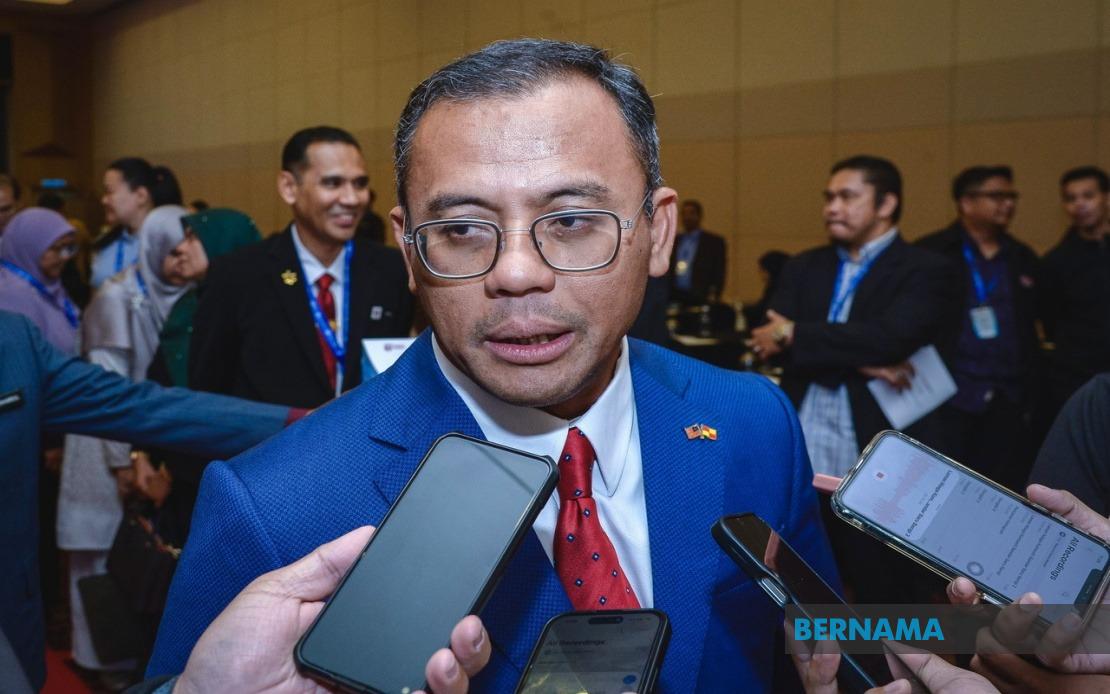
Speaking at the Human Ecology International Conference II 2026 in Bangi, Selangor Menteri Besar Datuk Seri Amirudin Shari has delivered a pointed critique of siloed policymaking, urging the government to recognise that citizens do not experience life's challenges in isolation. Rather than treating healthcare, childcare, transport, employment and affordability as separate policy domains, Amirudin argued that these elements form an interconnected web that shapes whether families can genuinely flourish or merely survive.
The menteri besar emphasised that modern governance requires a fundamental shift in mindset. Policymakers must transition from creating isolated interventions—programmes designed to address single problems without considering their broader context—towards building connected environments that acknowledge how different challenges interact. This reframing moves the focus from institutional metrics and bureaucratic success to tangible improvements in how people actually live their lives. The distinction matters profoundly for Malaysian citizens, who increasingly face compounding pressures that no single ministry can adequately address.
Amirudin highlighted the mounting structural pressures confronting Malaysian families in 2026. Rising living costs have eroded purchasing power, while lengthy commutes consume both time and money. Caregiving demands—whether for children, elderly parents or disabled relatives—place enormous strain on household logistics and finances. Simultaneously, the nature of work itself has transformed, with gig economy arrangements and remote work creating unpredictable schedules. Housing constraints continue to push affordable accommodation further from urban employment centres, and rapid technological change creates additional pressures on worker retraining and family adaptation. These challenges do not operate independently; rather, they compound one another in ways that conventional departmental policy responses fail to capture.
The crucial reframing Amirudin offered centres on a single question that should guide government action: whether the surrounding environment merely allows families to cope, or actively enables them to thrive. This distinction reflects a philosophical shift from deficit-focused to capability-focused policymaking. Under a coping framework, government success means families stay afloat despite systemic pressures. Under a thriving framework, government actively removes barriers and creates conditions where families can pursue meaningful lives. This distinction carries significant implications for how Malaysia allocates resources and evaluates policy effectiveness.
Amirudin also advocated for deeper integration between academic institutions and policymakers throughout the entire policy cycle. Universities should not function merely as evaluators of completed government programmes, nor should they remain isolated in theoretical debates. Instead, they must become genuine partners in problem definition, intervention design, implementation, and rigorous evaluation of what actually produces results. This collaborative approach could help Malaysian policymakers move beyond ideology-driven interventions toward evidence-based strategies grounded in real-world outcomes.
The conference witnessed significant regional developments reinforcing this integrated approach. A Memorandum of Understanding was signed between Universiti Putra Malaysia and the University of the Philippines Los Baños, formalising collaborative research and academic exchange. More substantially, the announcement of the ASEAN Human Ecology Consortium creates a regional platform for joint research, faculty and student mobility, shared publications, policy dialogue, and community engagement among institutions across Southeast Asia focusing on human ecology and well-being.
This consortium represents more than bureaucratic cooperation. For Malaysia and the broader ASEAN region, it offers mechanisms to tackle shared challenges with comparative advantages. Different nations have experimented with different policy approaches to address affordability, transport integration, childcare availability, and work-life balance. A functioning regional consortium can systematically learn from these experiments, avoid costly mistakes, and accelerate adoption of proven interventions. The platform also enables researchers across ASEAN to identify common patterns in how globalisation, urbanisation, and technological change affect citizen well-being, potentially driving collective advocacy for regional or national policy changes.
The conference theme, "Sustaining Human Well-being," frames contemporary policy challenges as fundamentally about maintaining and enhancing the conditions where people can lead dignified, meaningful lives. This positioning carries particular resonance in Southeast Asia, where rapid development has generated both prosperity and dislocation. Malaysia specifically faces the challenge of sustaining well-being across diverse populations experiencing different development trajectories, from rural areas still building basic infrastructure to urban centres grappling with congestion and affordability crises.
Amirudin's intervention at HEIC II 2026 also reflects growing recognition within Malaysian leadership that traditional hierarchical, sectoral policy approaches have reached their limits. Healthcare outcomes depend partly on transport access and employment stability. Educational achievement reflects family stability and nutrition, which connect to parental employment and housing quality. Environmental sustainability links to transport patterns, which connect to urban design, employment location, and housing policy. The interconnections are so profound that addressing any single challenge while ignoring others produces suboptimal results and wastes resources.
The gathering of academics, researchers, practitioners, policymakers, institutional leaders, students and community representatives from Malaysia, Indonesia, the Philippines and beyond signals recognition that human well-being challenges transcend disciplinary and national boundaries. Community representatives' inclusion, notably, suggests growing acceptance that effective policy requires input from those experiencing these interconnected challenges directly, not merely expert analysis from above.
For Malaysian stakeholders, the implications are substantial. State and federal governments increasingly must think systemically about how their various interventions interact. The cost-of-living crisis cannot be addressed through subsidy schemes alone without considering employment, education, childcare, transport and housing simultaneously. Transport policy cannot be designed in isolation from employment patterns and housing distribution. The ASEAN Human Ecology Consortium and similar regional collaborations provide tools for Malaysian policymakers to learn how peer nations are tackling these integrated challenges, potentially accelerating the transition from fragmented to connected governance approaches that truly serve citizen well-being.

