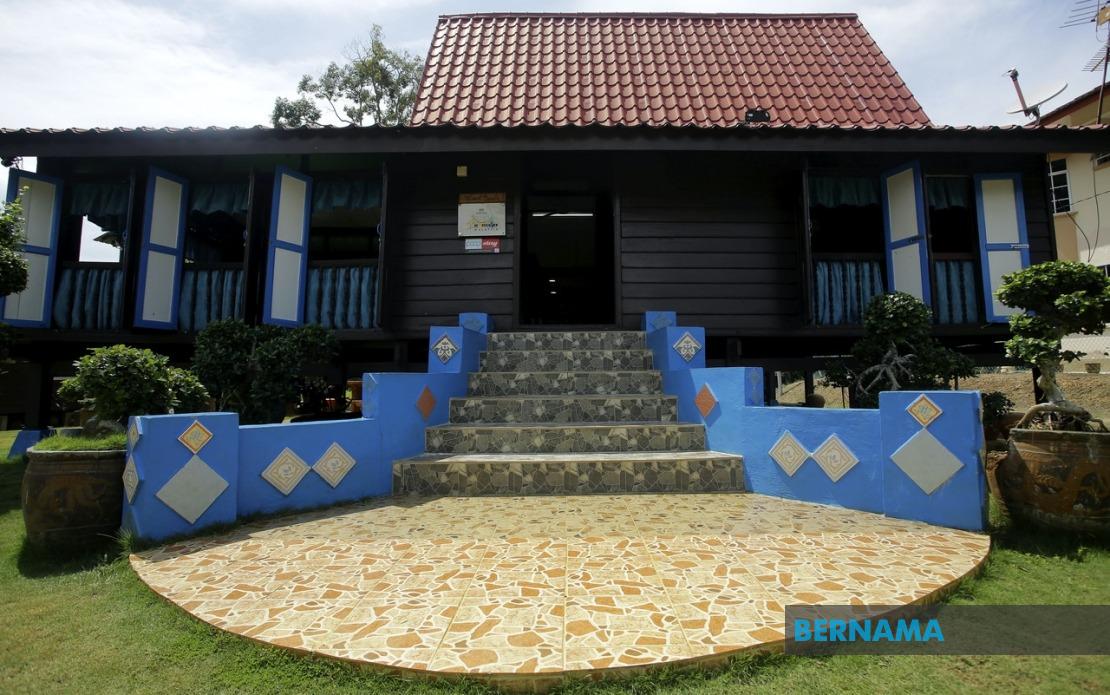
The holiday homes industry has solidified its position as a significant contributor to Malaysia's tourism and services economy, with newly released statistics revealing that 71,101 units operated throughout the country during 2025, collectively generating RM2.2 billion in revenue. The Department of Statistics Malaysia released this data through its Holiday Homes Statistics Bulletin: Economic Census 2026, providing the first comprehensive national breakdown of the sector by state and district.
Chief Statistician Datuk Seri Dr Mohd Uzir Mahidin highlighted the sector's expanding role within Malaysia's broader economic landscape, noting that the industry's growth reflects a fundamental shift in how travellers seek accommodation and experiences. The emergence of holiday homes as a preferred alternative to traditional hotels underscores changing consumer preferences toward flexibility, authenticity and personalised stays. This evolution carries particular significance for Malaysia's tourism strategy, as it diversifies the accommodation landscape beyond conventional hospitality infrastructure and taps into the growing global appetite for experiential travel.
The economic multiplier effects of the holiday homes industry extend considerably beyond direct rental revenues. As Dr Mohd Uzir explained, the sector generates substantial indirect demand across multiple service categories, including ground transportation, dining establishments, retail shopping and entertainment venues. When tourists book holiday homes, they typically require airport transfers, dine at local restaurants rather than hotel facilities, shop for provisions and supplies, and seek recreational activities throughout their destinations. This dispersed spending pattern distributes tourism benefits more widely across regional economies compared to traditional tourism models, where spending concentrates within large hotel chains.
The geographical distribution of holiday homes reveals pronounced clustering in Malaysia's most economically developed and tourism-intensive regions. Selangor dominates the sector with 19,095 units, representing more than one-quarter of the national inventory. This concentration reflects the state's dual advantages as both a major residential market and a transit hub for leisure travellers exploring the Klang Valley and surrounding attractions. Kuala Lumpur follows with 8,207 units, capitalising on its status as the national capital and primary international gateway, while Johor contributes 7,274 units, drawing visitors to attractions ranging from Johor Bahru's urban offerings to the popular beach destinations of Desaru and emerging regional tourism sites.
These three states collectively account for approximately 45 percent of Malaysia's holiday homes inventory, a concentration pattern that reflects well-developed tourism infrastructure, accessibility via comprehensive transport networks and proximity to established tourist destinations. The concentration also indicates that developing regions face barriers to participating in this expanding sector, suggesting potential policy opportunities for encouraging more balanced geographical distribution of holiday home development and investment.
The statistics represent a watershed moment for Malaysia's tourism data infrastructure. This inaugural publication marks the first occasion that the government has systematically gathered and published official statistics on holiday homes broken down by state and district, filling a significant gap in Malaysia's tourism intelligence framework. Previously, policymakers and industry planners operated with incomplete information regarding this growing segment's size, distribution and economic significance. The availability of comprehensive baseline data enables more sophisticated understanding of how the sector functions and where future growth opportunities exist.
Dr Mohd Uzir underscored the implications of this improved data infrastructure for strategic decision-making across government and the private sector. Evidence-based policymaking requires robust statistics that accurately reflect economic realities, and the holiday homes data now provides tourism planners, local authorities and entrepreneurs with concrete information about market dynamics. This foundation supports more targeted incentives for holiday home development in underserved regions, helps identify infrastructure gaps where investment could unlock growth potential, and enables comparative analysis of performance across different geographical markets.
The holiday homes sector's contribution to MSME development and rural economic participation represents another dimension of its broader significance. Unlike large hotel chains that concentrate management, employment and revenue capture within corporate structures, holiday homes are typically owned and operated by individual entrepreneurs, families and small businesses. These operators hire local staff, source supplies from nearby providers and reinvest proceeds into their communities. The RM2.2 billion in aggregate revenue therefore translates into direct income for tens of thousands of Malaysian proprietors and indirect employment for countless service providers throughout the supply chain.
Regional development implications of the sector's growth pattern merit consideration for Malaysian policymakers crafting balanced development strategies. The heavy concentration in Selangor, Kuala Lumpur and Johor mirrors broader patterns of economic geography in Malaysia, where coastal regions and major urban centres attract disproportionate investment and tourism flows. However, the relative accessibility of holiday home entrepreneurship, requiring lower capital investment than hotel development, suggests potential for broader participation if supporting infrastructure and marketing reach improve in secondary destinations. States including Pahang, Sabah and Sarawak possess significant tourism assets and potential market demand but lag in holiday homes development, indicating untapped opportunities for regional tourism growth.
The sustainability dimensions of holiday homes merit attention alongside their economic benefits. The sector's distributed nature can support more environmentally compatible tourism development compared to concentrated resort complexes, particularly when holiday home operators adopt green practices and respect community carrying capacities. However, rapid expansion without planning controls risks environmental degradation and community disruption, particularly in ecologically sensitive or culturally significant areas. The availability of comprehensive statistics now enables authorities to monitor expansion patterns and implement protective measures where necessary.
Looking forward, the publication of official statistics signals government recognition of holiday homes as a legitimate, important component of Malaysia's tourism ecosystem deserving support and strategic attention. Future policy priorities might include exploring mechanisms to extend holiday home development into underrepresented regions, establishing quality and sustainability standards for the sector, facilitating digital marketing infrastructure enabling smaller operators to reach international markets, and addressing regulatory frameworks that may inadvertently disadvantage small proprietors. The sector's trajectory will significantly influence whether Malaysia successfully diversifies its tourism economy and distributes development benefits more equitably across regions and demographic groups.

