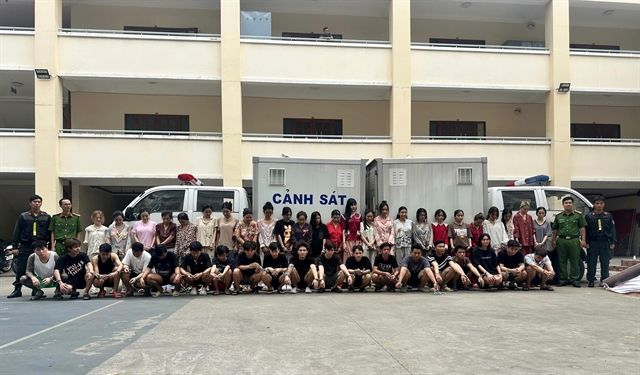
Ho Chi Minh City's police force has rolled up a sophisticated network distributing electronic cigarettes laced with etomidate, a controlled pharmaceutical anaesthetic, resulting in the arrest of 49 individuals across multiple supply chains. The operation concluded with authorities confiscating more than 1,670 contaminated vape pods alongside hundreds of grams of ketamine and methamphetamine, marking a significant victory against organised drug trafficking in Vietnam's largest metropolitan area.
Etomidate represents an emerging threat within Southeast Asia's drug landscape. The substance, a short-acting sedative normally reserved for surgical anaesthesia administered under strict medical supervision, was added to Vietnam's controlled substances list in January, elevating its distribution and sale to criminal status. The substance's inclusion on the banned register reflects growing concern among health authorities about its misuse potential and the innovative methods traffickers employ to disguise illicit drugs within consumer products targeting young demographics.
The criminal operation displayed considerable sophistication in product marketing and distribution channels. Traffickers mixed etomidate into vape pod sweeteners and distributed them under deceptive commercial names including "chill pod," "relaxation pod," "sleep-well pod," and "fly pod," each label carefully crafted to appeal to recreational users seeking novel experiences. These products commanded premium prices and were strategically funnelled into venues popular with younger crowds—nightclubs, karaoke establishments, rental apartments, and entertainment districts where regular oversight remains limited.
The investigation originated from intelligence regarding a street-level dealer operating on An Duong Vuong Street in An Lac Ward. Police identified the suspect as Nguyen Huu Huan, 28, from Dong Thap province in the Mekong Delta, known locally by the nickname Ba Giá. Huan and his wife, Ngo Thi Kim Chi, 30, were detained on June 25 after they reportedly sold etomidate-contaminated vapes to Tran Phuc, a Ho Chi Minh City resident. This initial arrest proved instrumental in unravelling a complex network spanning multiple operational tiers.
Investigators identified two distinct supply organisations feeding products to Huan's retail operation. The first network operated under the direction of Huynh Ngoc Thuy Nhu, 26, and her associate Hua Tuong Vy, 20, both residing in Ho Chi Minh City. The second, more geographically dispersed operation was controlled by Le Quoc Duy, 40, based in An Giang province along Vietnam's southwestern frontier with Cambodia. Duy's role proved particularly significant—he orchestrated cross-border smuggling operations through remote checkpoints, acquiring supplies from Cambodia and transporting them northward to the capital city. Police recovered 37 vape pods from Duy's location alongside 200 grams each of ketamine and methamphetamine, indicating his involvement in polysubstance trafficking.
A third criminal faction targeting expatriate communities emerged during investigation. Led by Han Kiat, a Cambodian national, this group collaborated with three additional foreign nationals to supply contaminated vapes specifically to international residents within Ho Chi Minh City. The multinational composition of this segment highlights how drug trafficking organisations increasingly structure operations along ethnic and geographic networks, with different teams targeting distinct consumer demographics and venues to minimise detection risk and maximise market penetration.
Among the 49 arrested, four individuals held foreign nationality. Two were identified as South Korean nationals, while the remaining two represented Chinese and Cambodian citizenship respectively. The presence of regional players within the network underscores Southeast Asia's emergence as both a manufacturing and distribution hub for novel psychoactive substances. The involvement of transnational personnel suggests these operations benefit from cross-border mobility and established smuggling infrastructure spanning the Mekong Delta corridor.
Etomidate poses particularly severe health risks when inhaled through vaping mechanisms rather than administered through conventional medical channels. The substance bypasses normal filtration systems by passing directly from the lungs into the bloodstream, reaching the brain within seconds and producing rapid intoxication. Initial sensations include vertigo and mild hallucinatory experiences, but progression to severe consequences is swift—users may encounter acute neurotoxicity, profound drowsiness, involuntary muscle contractions, and complete loss of consciousness. Critically, high-dose consumption or concurrent use with alcohol or other sedative compounds can precipitate sudden respiratory failure and death.
The deceptive marketing surrounding these products exploits youth unfamiliarity with pharmacological risks and the appealing aesthetics of vaping culture. Traffickers deliberately promote etomidate-laced vapes as "undetectable" or "100 per cent negative" on rapid screening tests, a claim grounded in pharmacochemical reality. Standard street-level drug detection kits commercially available to law enforcement and harm reduction workers identify conventional substances like heroin, cannabis, and methamphetamine through their distinctive chemical signatures. Etomidate's distinct molecular structure renders these basic tests ineffective, requiring sophisticated laboratory analysis systems maintained only by police forensic divisions and specialised agencies.
The Ho Chi Minh City operation carries implications extending beyond Vietnam's borders. Similar etomidate-laced vape networks likely operate throughout Southeast Asia, with production and smuggling routes potentially connecting Thailand, Laos, and Cambodia to major urban markets. The prominence of South Korean, Chinese, and Cambodian nationals within this particular conspiracy suggests organised crime groups based across the region have established reliable supply chains and distribution partners. Malaysian authorities should consider enhanced monitoring of vape retailers and entertainment venues, particularly in Kuala Lumpur and George Town, given the regional scope of these trafficking networks.
Vietnamese law enforcement has issued public advisories cautioning citizens, particularly young people, against consuming electronic cigarettes from unverified sources and cautioning against believing promotional claims regarding substance safety. The advisory explicitly warns against involvement in any stage of the supply chain—purchasing, selling, possessing, or transporting these products constitutes criminal activity under Vietnamese law. For the broader Southeast Asian region, this case exemplifies how traffickers continuously innovate delivery mechanisms and target products to evade detection by exploiting regulatory gaps and youth consumer preferences. The rapid evolution of drug-laced vaping as a mass distribution mechanism demands coordinated regional responses combining laboratory detection capacity, public health education, and border interdiction protocols.

