The Ministry of Higher Education (KPT) is moving swiftly to implement directives from Prime Minister Datuk Seri Anwar Ibrahim regarding how universities handle student disciplinary matters, marking a significant shift in the governance of campus conduct and student freedoms across Malaysian higher education institutions. The push follows mounting concerns about restrictions on student activism and political expression that have characterised Malaysian universities for decades under existing legislation.
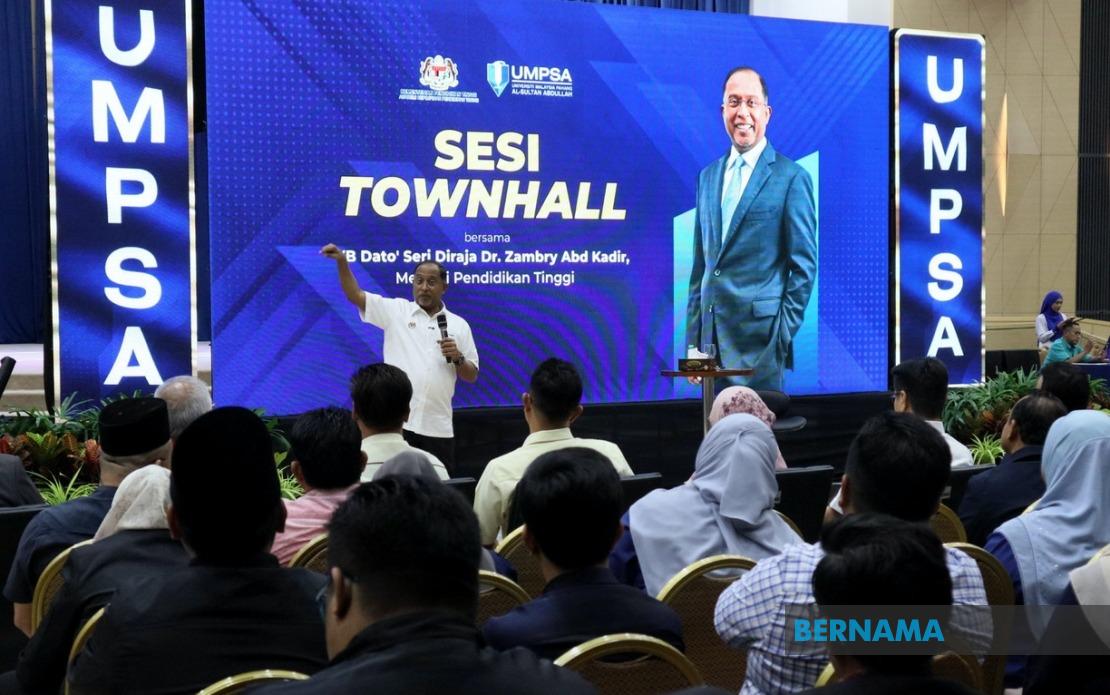
Minister Datuk Seri Dr. Zambry Abd Kadir confirmed that the ministry has initiated comprehensive follow-up actions to align disciplinary procedures with the Prime Minister's vision for greater student liberalisation. Speaking at Universiti Malaysia Pahang Al-Sultan Abdullah during the Kembara KARISMA Pemimpin Muda MADANI programme, which convened over 500 young academics and administrators from eastern Malaysian higher education institutions, Zambry outlined that the directive encompasses multiple dimensions of student conduct governance. The measures acknowledge both statutory constraints and university regulations, with particular emphasis on protecting legitimate student freedoms whilst maintaining institutional order.
Crucially, the implementation framework addresses wrongdoing identified at the Student Affairs Department level, suggesting that individual cases will be reviewed for potential reconsideration or dismissal. The ministry has scheduled immediate coordination between all university vice-chancellors and the director-general of Higher Education, with an official statement expected to clarify the new approach. This administrative mobilisation reflects the urgency with which the government views the matter, recognising that institutional inertia could undermine the stated policy shift if not actively countered.
The directive carries particular significance because it specifically targets students who have faced punishment for criticising the Prime Minister and government policies. Under previous interpretations of the Universities and University Colleges Act (AUKU) 1971, such political expression has triggered disciplinary procedures ranging from warnings to expulsion. Anwar's instruction to absolve these students represents a deliberate rollback of what reformers view as authoritarian campus management, though the government has carefully ringfenced the exemption from criminal law matters investigated by the Royal Malaysia Police, ensuring that behaviour crossing into illegal conduct remains prosecutable through the ordinary justice system.
The timing of this initiative reflects broader momentum toward institutional reform. The Prime Minister has previously announced plans to repeal AUKU 1971 entirely, legislation that grants universities expansive disciplinary powers over student political activities. However, recognising that legislative amendment requires parliamentary time and procedural processes that may extend months, the government has instructed that immediate administrative remedies be pursued. This pragmatic sequencing allows tangible relief for affected students whilst longer-term legal reform proceeds through parliament, addressing accumulated grievances and signalling genuine commitment to change rather than hollow rhetoric.
A complicating factor emerges regarding private higher education institutions. The KPT operates within a fragmented regulatory landscape where private colleges and universities function under the Private Higher Educational Institutions Act 1996, creating legal asymmetry in how disciplinary frameworks operate. Dr. Zambry acknowledged that the ministry cannot unilaterally impose changes on private providers, though he expressed hope that state-linked or state-owned private institutions would voluntarily adopt equivalent measures. This represents a potential vulnerability in the reform programme, as private institutions enrolling increasing proportions of Malaysian students could maintain older disciplinary regimes, creating inconsistent student protections across the sector.
The practical implications for Malaysian campuses are substantial. Universities will need to review historical disciplinary cases involving political expression, potentially reinstating students and expunging records. Faculty and administrative staff accustomed to restrictive interpretations of conduct codes must recalibrate their approach to student activism, requiring training and cultural adjustment. Student organisations that have operated under tight constraints may venture into more robust political engagement, testing institutional tolerance and potentially generating friction with university management during this transitional period.
The backdrop to this shift reflects evolving regional attitudes toward campus governance. Compared to some Southeast Asian peers where student movements face severe restrictions, Malaysia has experienced periodic waves of campus activism despite AUKU constraints. Recent youth activism around climate, education costs, and political accountability has generated pressure on the government to align its rhetoric about democratic renewal with concrete policy changes. The Higher Education Ministry's mobilisation on this issue suggests that campus liberalisation has become politically salient enough to warrant executive prioritisation.
International higher education bodies have long criticised AUKU as incompatible with academic freedom norms, noting that restrictions on student political expression damage institutional autonomy and intellectual vitality. Malaysian universities' limited performance in global rankings has been partially attributed to constrained intellectual culture. By moving toward greater student freedoms, the government signals receptiveness to modernising Malaysia's knowledge economy, though sceptics note that proclamations frequently outpace implementation in Malaysian administration.
The reform also carries implications beyond higher education. Student movements have historically catalysed broader democratic transitions in Southeast Asia, including in Malaysia itself. Empowering campus activism potentially cultivates citizen engagement and political participation amongst Malaysia's most educated cohort, with implications for civic culture extending well beyond graduation. Conversely, institutions may struggle to maintain order if disciplinary tools are withdrawn without corresponding investment in constructive student participation mechanisms and dialogue channels.
Universities now face the task of operationalising these changes whilst managing competing institutional interests. Campus leadership must balance enabling student freedoms with maintaining environments conducive to teaching and learning, a balance that requires sophisticated judgment rather than blanket permissiveness. The forthcoming statement from vice-chancellors will likely attempt to define boundaries of acceptable activism, potentially generating dispute about whether new frameworks genuinely represent liberalisation or merely constitute cosmetic adjustment.
The path forward remains uncertain regarding implementation consistency across Malaysia's diverse higher education landscape. Federal universities, state universities, and private institutions operate with varying degrees of autonomy and governance culture. Translating centralised directives into campus-level practice requires sustained administrative attention and cultural commitment from institutional leaders. The success of this reform initiative will ultimately depend on whether universities genuinely embrace student freedoms or merely perform compliance whilst maintaining restrictive interpretations through alternative mechanisms.

