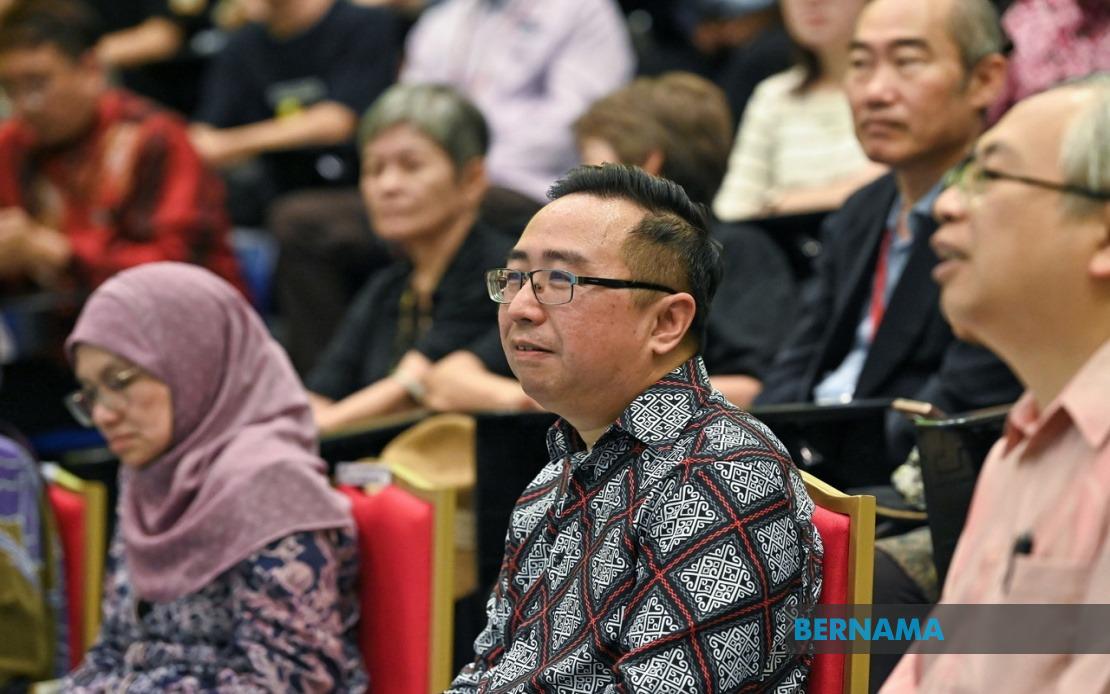
Science and technology graduates entering Malaysia's job market need not harbour concerns about employment prospects, as accelerating high-tech investments flowing into the country are driving substantial demand for skilled professionals in the sector. This reassurance came from Science, Technology and Innovation Minister Datuk Chang Lih Kang during his address at the 20th Malaysia Festival of the Minds at Universiti Tunku Abdul Rahman (UTAR) Kampar Campus this week. The minister emphasised that the current employment landscape presents not merely adequate opportunities but an abundance of positions waiting to be filled by qualified candidates with appropriate qualifications and expertise.
The fundamental challenge facing Malaysia's technology sector is a significant skills gap, with industry demand for science and technology professionals substantially outpacing the number of available graduates and experienced workers capable of filling vacant positions. This supply-demand imbalance reflects the rapid expansion of the high-tech industry without a corresponding increase in the pipeline of talent entering the workforce. The government recognises this disparity as a critical constraint on sectoral growth, prompting targeted initiatives to attract students towards science and technology disciplines at secondary and tertiary education levels.
Datak Chang's remarks at the festival reflect a deliberate communication strategy designed to address widespread student anxieties about their career trajectories following graduation. Beyond merely announcing job availability, the ministry has positioned the festival as an educational outreach programme aimed at correcting widespread misconceptions about technology's role in the labour market. Specifically, the minister sought to counter the prevailing narrative that artificial intelligence and automation will systematically eliminate human employment opportunities, a fear that has gained traction among students and the broader public in recent years.
The government's approach involves direct engagement with students rather than allowing concerns to fester unchallenged. By hosting forums such as the Malaysia Festival of the Minds, the Ministry of Science, Technology and Innovation has created a platform to present its perspective on technological advancement and the employment implications of AI adoption. This proactive communication strategy acknowledges that misinformation and speculative anxieties can deter talented individuals from pursuing technical disciplines, ultimately undermining national competitiveness in an increasingly technology-dependent global economy.
Recognising that university education systems alone cannot generate sufficient talent to meet industry demands, the government has established collaborative frameworks involving academic institutions and private sector employers. These partnerships aim to align curriculum development with actual labour market requirements, ensuring that graduates possess skills directly applicable to positions available in expanding technology companies. Such coordination helps bridge the gap between theoretical knowledge acquired in classrooms and practical competencies demanded by employers seeking to maintain competitive advantage in rapidly evolving sectors.
Datak Chang underscored the tangible reality underlying these workforce projections by citing the substantial capital influx already transforming Malaysia's high-tech landscape. The influx of high-value investments represents not speculative predictions but concrete evidence of sectoral expansion and emerging employment capacity. Companies investing in Malaysian operations require skilled workforces immediately, making the timing of talent development initiatives particularly critical for capturing opportunities that may otherwise migrate to competing regional economies capable of supplying necessary expertise.
The government has simultaneously launched an ambitious initiative to strengthen Malaysia's advanced packaging technology capabilities, a sector integral to semiconductor manufacturing and the broader electronics industry. Through a co-investment framework, the government has committed RM92 million from the Malaysia Science Endowment, while five industry partners have contributed an additional RM93 million, generating a total investment pool of RM185 million directed towards capability development over the coming two years. This matching-fund approach demonstrates the government's commitment to shared responsibility, ensuring that strategic technology development relies on contributions from both public resources and private enterprise.
The advanced packaging initiative exemplifies the government's philosophy that industry stakeholders must share responsibility for developing strategic technological capabilities rather than depending entirely on government financial support. By requiring private sector partners to match government contributions on a near-equal basis, the financing structure aligns commercial interests with national technology objectives, creating mutual investment in capability development. This collaborative funding model also signals to international technology companies that Malaysia offers not merely labour cost advantages but genuine commitment to building indigenous technological capacity and supporting their operational needs.
The initiative, which was formally launched several months before the festival announcement, targets substantial improvements to Malaysia's advanced packaging technology capabilities by 2028. Advanced packaging represents a critical segment of the semiconductor industry's value chain, encompassing techniques for assembling and protecting semiconductor components before delivery to customers. Strengthening domestic capabilities in this domain would reduce Malaysia's dependence on external providers and position the country as a more integrated participant in regional semiconductor manufacturing ecosystems, particularly important as global supply chains undergo geographic restructuring and diversification.
Implementation of this two-year development roadmap faces identifiable challenges, particularly regarding sustained funding and the technical complexity inherent in developing sophisticated manufacturing capabilities. The minister acknowledged these obstacles candidly, yet expressed confidence that the established targets remain achievable within the stipulated timeframe. Such optimism reflects not merely aspirational thinking but grounding in concrete assessment of Malaysia's existing technological base, institutional capabilities, and the availability of international expertise that can be attracted through well-designed investment frameworks.
For Malaysian students contemplating their educational trajectories, the government's messaging carries significant implications. The combination of strong employment demand, substantial capital investments flowing into high-tech sectors, and collaborative government-industry initiatives creates a compelling case for pursuing science and technology disciplines. Beyond immediate employment prospects, these students will enter a labour market characterised by specialised skills commanding premium compensation, opportunities for professional advancement, and participation in sectors positioning Malaysia advantageously within emerging regional technology ecosystems increasingly central to Southeast Asian economic development.

