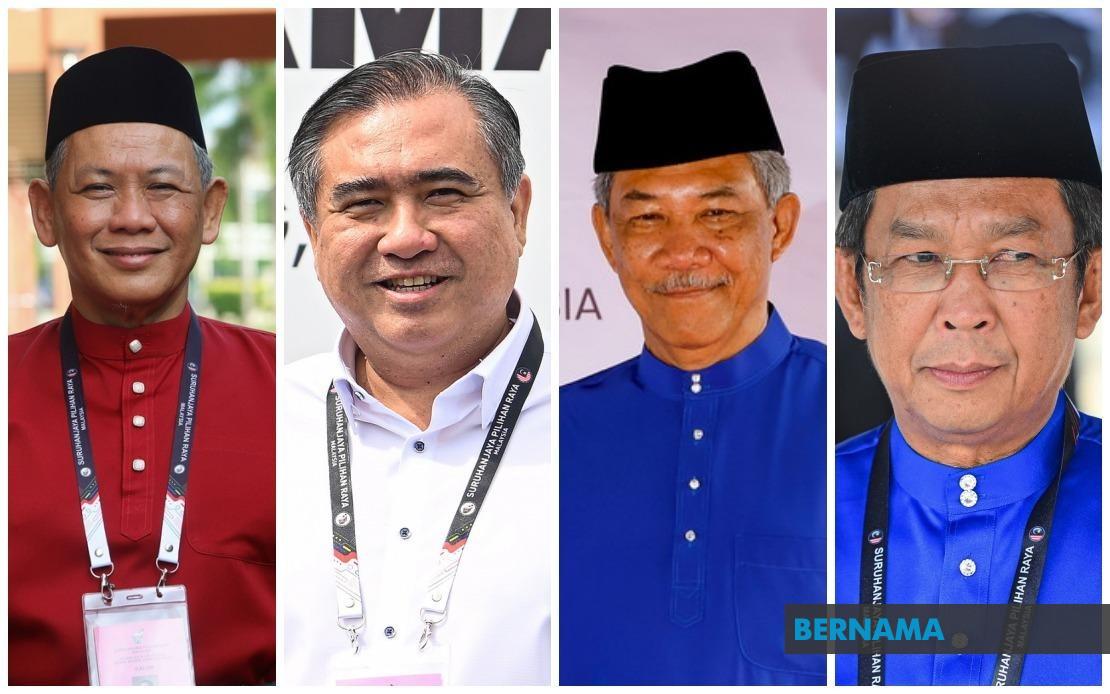
The 16th Negeri Sembilan state election has emerged as a genuinely competitive affair, with several heavyweight politicians across the political spectrum facing unexpectedly strong opposition in contests that could reshape the state's political landscape. Unlike previous elections where dominant incumbents sailed through, this poll features genuinely contested races that carry implications for both state and national political dynamics in a crucial electoral year for Malaysia.
Pakatan Harapan's caretaker Menteri Besar Datuk Seri Aminuddin Harun, who also serves as PKR vice-president and coalition chairman in Negeri Sembilan, finds himself in a three-cornered contest for the Linggi seat. His challengers include incumbent Datuk Mohd Faizal Ramli from Barisan Nasional and Bersatu's Datuk Zamri Md Said, a configuration that fragments the vote and creates genuine uncertainty about retaining the seat. The emergence of a significant Bersatu challenge reflects ongoing fissures in the opposition camp that benefit neither coalition substantially.
In Chennah, a DAP-held stronghold since 2013, Transport Minister Anthony Loke faces his sternest test defending the constituency. Barisan Nasional has fielded Negeri Sembilan MCA Youth chief Siow Kong Choon, signalling the coalition's determination to penetrate what has been impregnable opposition territory. Loke's national prominence as secretary-general of DAP and his ministerial portfolio offer him advantages, yet losing an established seat would prove politically damaging regardless of national circumstances.
Rantau presents perhaps the most symbolically significant contest, pitting 70-year-old Foreign Minister and UMNO deputy president Datuk Seri Mohamad Hasan, locally known as Tok Mat, against Pakatan Harapan's Dr Azizul Hakim Mahdi in a generational straight fight. Mohamad's two-decade grip on the seat since 2004 reflects deep local roots and organisational strength, yet the demographic contrast between the candidates invites questions about political succession and voter appetite for renewal. A loss here would carry profound implications for Mohamad's national standing within Barisan Nasional leadership.
The Pertang three-cornered battle between incumbent Jalaluddin Alias of Barisan Nasional, PH's Mohd Umry Abdul Khois, and Bersatu's Mohd Faizal Fadli Mohd Idrus demonstrates how fragmentation affects even established politicians. Jalaluddin's position as Negeri Sembilan UMNO chief should confer organisational advantages, yet the divided opposition vote creates unpredictability. This pattern of three-cornered contests appears across multiple constituencies, suggesting that the traditional two-coalition framework has genuinely fractured in this particular state context.
Nilai presents exceptional electoral complexity as a five-cornered contest featuring DAP national deputy chairman and sitting representative J. Arul Kumar alongside Barisan Nasional's Datuk Lai Chien Kong, Bersatu's Datuk V. Saravana Kumar, Berjasa's Zamani Ibrahim, and independent Omar Mohd Isa. This fragmentation creates profound uncertainty; in such contests, relatively small vote swings determine outcomes unpredictably, potentially favouring disciplined ground operations over national prominence. Arul Kumar's national standing and experience offer limited protection in such scenarios.
Sri Tanjung similarly features a five-cornered clash involving PH incumbent Dr G. Rajassekaran, Barisan Nasional's A. Achutan, Bersatu newcomer Leevineshwaraan Murugan aged just 23 as the election's youngest candidate, independents Saravanan Arumugam and Islah Wahyudi Zainudin. The youth factor introduced by Murugan's candidacy, while attracting media attention, illustrates how Bersatu continues recruiting fresh political voices to distinguish itself from established coalitions.
The broader electoral architecture reveals 103 candidates contesting 36 seats across multiple parties. Pakatan Harapan fields the maximum 36 candidates, Barisan Nasional 25, Bersatu 24, and Perikatan Nasional 11, supplemented by individual candidates from Berjasa, ASLI, PSM, and independents. This distribution suggests genuine three-way competition rather than traditional two-coalition dynamics, fundamentally altering electoral mathematics.
The campaign period of fourteen days from nomination conclusion through July 31 provides a concentrated timeframe for parties to mobilise supporters and shape narratives. Early voting occurs July 28 with polling August 1, creating an accelerated election cycle that advantages well-organised machinery over last-minute momentum. For observers tracking Malaysian political fragmentation and coalition realignment, Negeri Sembilan represents a crucial test case of how Bersatu's expanded positioning affects electoral viability and whether traditional party machinery retains decisive advantage.
These contested races in Negeri Sembilan carry significance extending beyond the state. Outcomes will signal whether opposition fragmentation genuinely threatens Pakatan Harapan's consolidation, whether Bersatu's coalition positioning translates into electoral gains, and whether established politicians retain sufficient local roots to overcome structural challenges. For regional observers, the state election foreshadows broader national political recalibration and tests assumptions about Malaysian electoral competitiveness in an increasingly fluid political environment.

