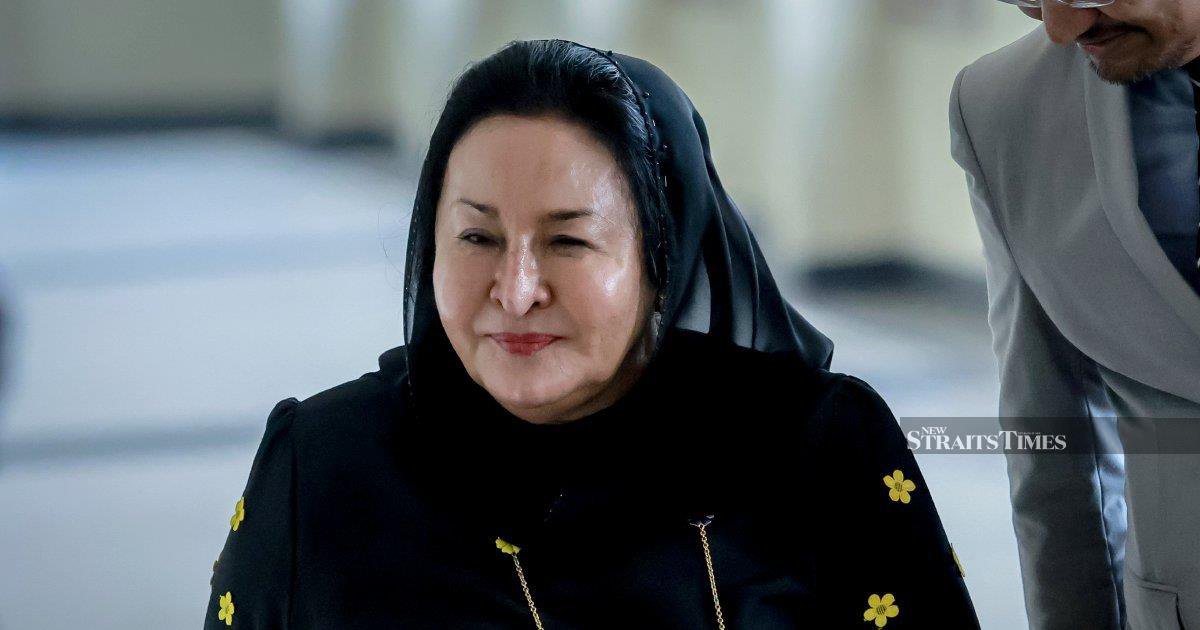
The High Court in Kuala Lumpur has earmarked August 12 for a crucial hearing that will determine whether Datin Seri Rosmah Mansor can secure a deferment on a substantial RM67.5 million financial obligation to Global Royalty Trading SAL, a Lebanese jewellery company.
This case represents a significant moment in the ongoing legal matters surrounding Rosmah Mansor, the wife of former Prime Minister Najib Razak. The jewellery debt has become the subject of formal court proceedings, with the decision on deferment carrying potential implications for how the payment obligation is structured and managed going forward. The specific date set by the court indicates that both parties have agreed to proceed with arguments and submissions on this particular matter at that time.
Global Royalty Trading SAL has filed to recover the outstanding sum, establishing a formal claim against Rosmah Mansor. The Lebanese company's pursuit of the debt through Malaysian courts underscores the international dimension of the case, requiring Malaysia's judicial system to evaluate the merits of a foreign firm's claims against a local individual. The involvement of a foreign jewellery business in litigation within Malaysia also highlights how high-value transactions involving prominent individuals can cross borders and trigger complex legal proceedings.
The request to defer payment suggests that Rosmah Mansor's legal team is seeking relief from the immediate settlement obligation, possibly citing financial constraints or circumstances that make immediate payment impractical. Such deferment applications are typically decided based on the applicant's demonstrated financial capacity, the creditor's interests, and broader considerations about what arrangement would constitute a just resolution. The High Court will need to weigh these competing interests when the case comes before the bench in mid-August.
For Malaysian observers and those following high-profile legal cases in the country, this matter carries significance beyond the immediate parties involved. The outcome could establish precedent for how Malaysian courts handle substantial financial claims against prominent individuals and may influence how similar disputes are managed in future proceedings. Additionally, the case reflects the wider financial implications that have emerged from the investigations and legal actions connected to the 1Malaysia Development Berhad (1MDB) scandal, which has resulted in numerous civil and criminal cases over the past several years.
The timing of this hearing also places it within a broader context of legal accountability efforts that have characterised Malaysian governance in recent years. Since 2018, multiple legal challenges involving political figures and their families have progressed through the country's courts, with civil claims for recovery of assets and funds forming an important component of these efforts. The RM67.5 million jewellery debt case exemplifies how civil litigation has become a mechanism through which various financial obligations and transactions are being scrutinised and resolved.
Rosmah Mansor has faced multiple legal challenges on several fronts, including criminal charges related to money laundering and tax evasion, as well as civil claims seeking to recover assets and funds. The jewellery debt case sits alongside these other matters, creating a complex legal landscape for her to navigate. The outcome of the August 12 hearing will determine an important component of her financial obligations, potentially affecting her overall legal and financial position.
The involvement of a foreign creditor adds another dimension to the proceedings. International creditors pursuing claims through Malaysian courts must establish their legal standing and demonstrate the legitimacy of their claims according to Malaysian law and procedure. For Global Royalty Trading SAL, pursuing a debt of this magnitude requires navigating Malaysia's legal system and ensuring that all procedural requirements are properly met. The High Court's handling of the case will also reflect Malaysia's commitment to enforcing contractual obligations and protecting the rights of foreign businesses operating or conducting transactions within its jurisdiction.
The deferment question itself raises important considerations about financial remedies and fair treatment within the legal system. Courts must balance the creditor's right to recover legitimate debts against the debtor's financial circumstances and capacity to pay. If the court grants a deferment, it would establish a modified payment timeline that accommodates Rosmah Mansor's circumstances while still requiring her to honour the obligation. Conversely, a rejection of the deferment request would mean the full amount becomes payable within a timeframe the court considers appropriate.
As the August 12 date approaches, both parties will likely prepare detailed submissions and evidence to support their respective positions. Rosmah Mansor's legal team will need to present compelling arguments regarding her financial situation and why deferment serves justice, while Global Royalty Trading SAL's representatives will argue for the importance of enforcing the original obligation without extended delay. The High Court judge will ultimately synthesise these arguments and apply relevant legal principles to reach a decision that balances all relevant considerations and serves the interests of justice.

