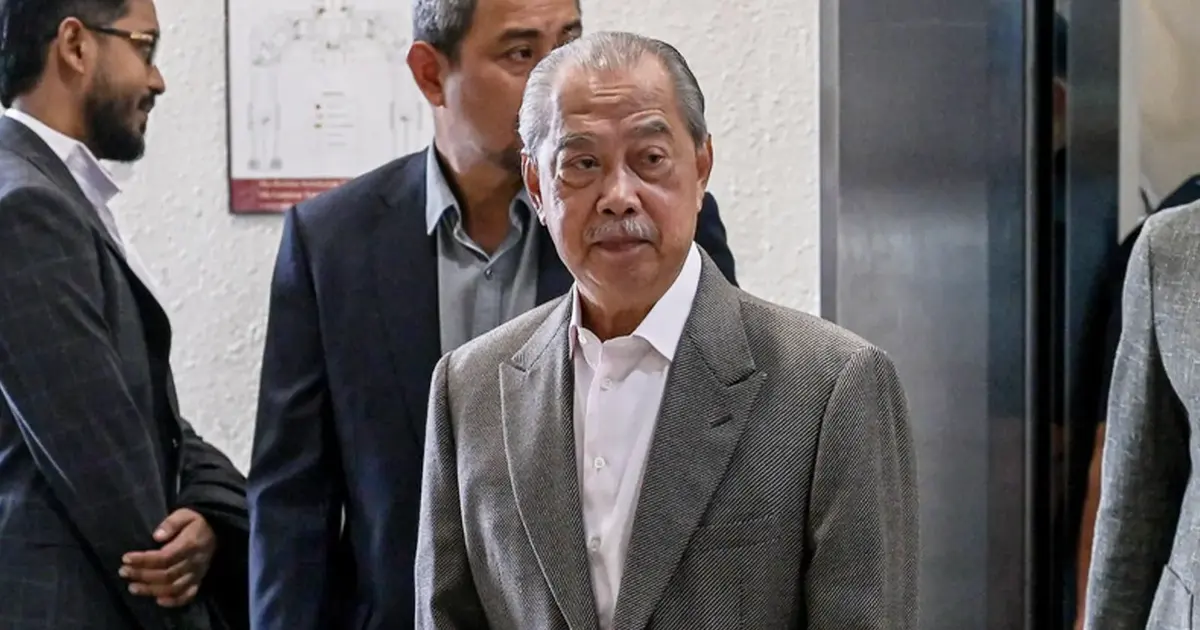
A senior Bersatu official has disputed suggestions that the party's former leadership operated under a centralised financial control system, telling the High Court that financial decisions involved multiple stakeholders rather than resting with a single person. Zulhelmi Zaulkafly, who served as the party's financial officer, provided this testimony during proceedings that touch on fundamental questions about governance and accountability within Malaysia's political structures.
The testimony addresses an underlying question about the nature of decision-making authority within Bersatu, one of Malaysia's significant political formations in recent years. Zulhelmi's insistence that financial affairs were managed collectively rather than through exclusive individual authority suggests the party operated with distributed responsibility across its hierarchy, a model that contrasts sharply with perceptions of personalised control that sometimes characterise Malaysian political parties.
This court proceeding reflects broader questions about internal party governance that resonate across Malaysia's political landscape. As the nation navigates its complex coalition politics, the mechanisms by which major parties make financial and strategic decisions carry implications for transparency and democratic accountability within political organisations. The Bersatu case therefore offers a window into how senior parties structure internal authority and resource allocation.
Zulhelmi's testimony becomes particularly significant given the composition of Bersatu's leadership during the period in question. The party, which has played a pivotal role in Malaysian politics since its formation, has seen various leadership configurations that have shaped both its internal dynamics and its external political influence. Understanding how financial control was actually exercised within this structure illuminates the real mechanisms of power within the organisation.
The High Court proceedings suggest that a party figure faced questions about their level of influence over financial matters, with the implication being that they may have functioned primarily as a formal authority rather than an active decision-maker. This raises uncomfortable questions about whether prominent party leaders sometimes serve primarily ceremonial or validating roles while actual control rests elsewhere within the party apparatus. Such dynamics, if they exist, would represent a significant departure from the principles of transparent and accountable leadership.
For Malaysian voters and political observers, testimony like Zulhelmi's carries practical importance. Citizens depend on accurate understanding of how their chosen parties actually function, particularly regarding financial stewardship and resource allocation. When party structures obscure actual loci of decision-making authority, voters cannot properly assess who truly directs their party's strategic direction and resource spending. This opacity undermines the democratic principle that party members should comprehend and ultimately control their organisation's governance.
The financial officer's assertion that multiple parties wielded influence over financial decisions also raises questions about internal checks and balances within Bersatu. Whether this distributed authority genuinely protected party finances from misuse, or whether it instead created ambiguity about accountability, remains unclear from the testimony alone. Either scenario carries implications for how investors, donors, and members should view the party's financial governance.
Bersatu's particular position within Malaysian politics adds weight to this proceeding. As a party that has provided prime ministerial leadership and served as a coalition member multiple times in recent years, its internal governance practices carry consequences extending beyond the party itself. Voters supporting coalition partners deserve confidence that their partner parties operate with transparent and properly distributed authority rather than personalised control or ceremonial leadership.
The High Court examination of party financial structures represents an increasingly important aspect of Malaysian judicial oversight. Courts have gradually expanded their willingness to examine internal party functioning, particularly regarding financial matters, recognising that political parties exercise significant influence over national governance and therefore merit scrutiny regarding their internal accountability. This evolution in judicial approach reflects growing recognition that political parties, while private associations, operate within a public trust framework.
Zulhelmi's testimony that no individual possessed exclusive financial control theoretically aligns with best practices in organisational governance. However, the courtroom context—where such testimony becomes necessary—suggests that questions about actual versus formal authority structures persist within Malaysian political organisations. Whether Bersatu's multi-party financial oversight actually functions as intended or operates primarily as a post-hoc validation mechanism remains a question the broader factual record of the case will help illuminate.
For Southeast Asian observers, Malaysia's willingness to subject major political parties to judicial examination of their internal governance represents a noteworthy precedent. Across the region, questions about party accountability and transparent financial management remain politically sensitive, and Malaysia's High Court approach offers one model for how judicial systems can engage with these issues while respecting parties' association rights. The Bersatu case therefore carries relevance beyond Malaysia's borders.
The implications extend to how Malaysian political parties structure themselves going forward. If courts increasingly examine whether internal governance matches stated authority structures, parties may face pressure to either genuinely distribute financial decision-making or reorganise their formal structures to align with actual practice. Such pressure could ultimately strengthen internal party accountability, though implementation would depend on factors beyond any single court judgment.

