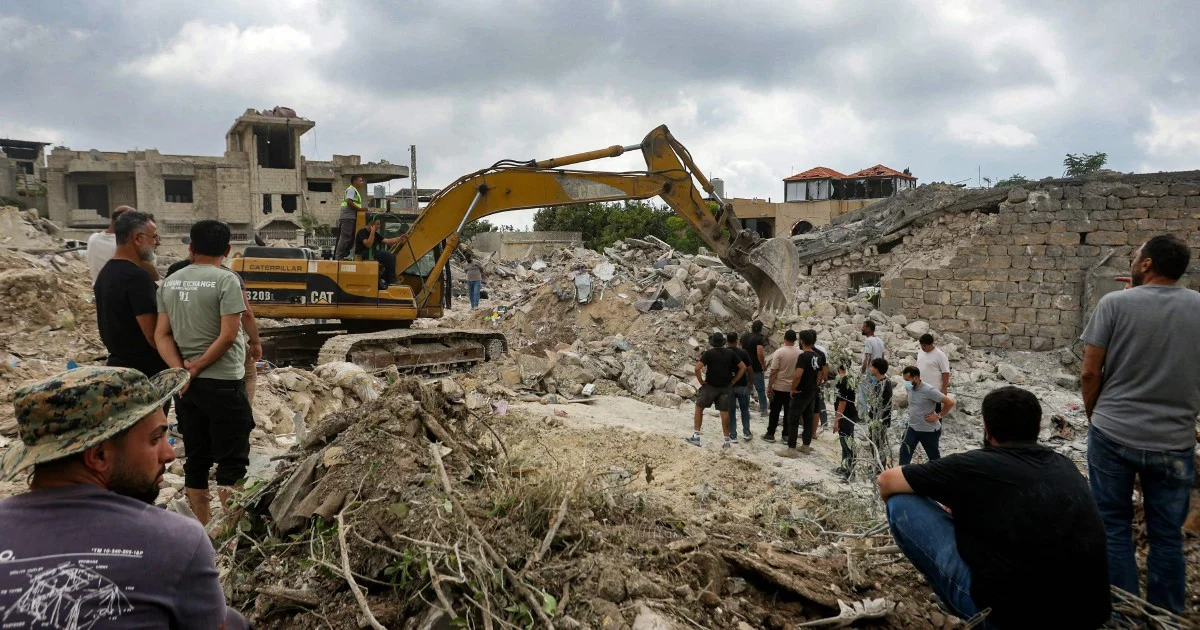
Hezbollah's political and spiritual leader Naim Qassem has flatly rejected proposals for an Israeli security zone in southern Lebanon, intensifying a standoff between the Shia militant group and Israel over territorial control and regional security arrangements. Qassem's categorical refusal came as Israeli Prime Minister Benjamin Netanyahu doubled down on his government's commitment to maintaining military forces in Lebanon's southern region for as long as deemed necessary for Israeli security purposes.
The clash of positions represents a fundamental disagreement over post-conflict arrangements in Lebanon, where Israeli military operations have intensified following cross-border tensions with Hezbollah. Netanyahu's insistence on an open-ended military presence reflects Israeli security concerns about cross-border threats, while Hezbollah's rejection signals the group's determination to maintain sovereignty over Lebanese territory and its capacity to resist what it views as foreign military occupation.
The dispute underscores the complexity of establishing durable ceasefire arrangements in the region without a clear international framework. Previous conflicts between Israel and Hezbollah have repeatedly ended with agreements allowing temporary Israeli military deployments, ostensibly to maintain buffer zones and verify compliance with peace terms. However, these arrangements have frequently become entrenched, with Israeli forces remaining far longer than initially stated, creating enduring friction between the neighbouring states.
For Malaysian policymakers and regional observers, this standoff carries broader implications for Middle Eastern stability and the potential for escalation. Southeast Asian nations, including Malaysia, maintain diverse economic and diplomatic interests throughout the Middle East, and protracted Israeli-Lebanese tensions could destabilise trade routes, disrupt energy supplies, and create humanitarian crises affecting regional security dynamics.
Hezbollah's stance reflects broader Lebanese nationalist sentiment regarding foreign military presence on Lebanese soil. The group, despite its designation as a terrorist organisation by several Western nations, commands significant political influence within Lebanon and maintains substantial popular support among certain segments of the Lebanese population. Its rejection of Israeli security arrangements therefore carries weight not merely as a militant position but as a reflection of Lebanese political opinion.
Netanyahu's commitment to maintaining troops indefinitely suggests Israel views the military occupation of southern Lebanese territory as integral to its long-term security architecture rather than a temporary measure. This approach contrasts sharply with international law and established norms regarding military occupation, which generally contemplate transitional arrangements rather than permanent deployments. The divergence between Israeli intentions and international expectations complicates diplomatic efforts to broker lasting peace.
Historical precedent offers limited encouragement regarding the viability of Israeli security zones in Lebanon. Previous arrangements have consistently expanded beyond their original scope and duration, breeding resentment among Lebanese populations and providing recruitment opportunities for groups opposed to Israeli presence. The current dispute suggests a repetition of this pattern, with fundamental disagreement over whether any Israeli forces should remain at all.
Hezbollah's categorical rejection also reflects the group's ideological commitment to armed resistance against Israeli presence. For Hezbollah, accepting formalised Israeli security zones would constitute a significant political defeat and undermine its foundational narrative of resistance. Such acceptance could weaken its standing within Lebanese society and among its regional allies, particularly Iran, which views Hezbollah as a crucial strategic asset in its own confrontation with Israel.
The international community, including the United Nations, maintains peacekeeping forces in southern Lebanon under various mandates, yet these arrangements have proved insufficient to prevent escalation. The inability of existing mechanisms to prevent renewed tensions suggests that unilateral Israeli security measures, even if implemented, may fail to achieve stated security objectives while simultaneously generating instability that threatens broader regional interests.
For Malaysia and other Southeast Asian nations engaged with Middle Eastern partners, this dispute highlights the risks of entanglement in Israeli-Palestinian and Israeli-Lebanese conflicts. While Malaysian foreign policy traditionally supports Palestinian rights and opposes Israeli occupation policies, the country's economic partnerships throughout the region require navigation of these tensions without direct involvement in military conflicts that could jeopardise regional stability or Malaysian interests.
The fundamental impasse between Hezbollah and Israel reflects deeper questions about the legitimacy of military occupation, the rights of states to establish security buffers within neighbouring territories, and the role of non-state actors in determining their nation's security arrangements. These questions remain unresolved despite decades of conflict, suggesting that military solutions alone cannot produce sustainable peace or acceptable security arrangements for all parties involved.
Moving forward, diplomatic initiatives would need to address not merely the technical question of Israeli troop presence but the underlying security anxieties that motivate both Israeli military deployment and Hezbollah's insistence on Lebanese sovereignty. Without such comprehensive engagement, the region faces continued cycles of escalation, ceasefire, and renewed conflict that destabilise the broader Middle East and create humanitarian costs affecting vulnerable populations throughout the region.
%22%2F%3E%3C%2Fpattern%3E%3C%2Fdefs%3E%3Crect%20width%3D%22100%25%22%20height%3D%22100%25%22%20fill%3D%22url(%23ph35ytfg)%22%2F%3E%3Crect%20width%3D%22100%25%22%20height%3D%22100%25%22%20fill%3D%22url(%23ph35ytfp)%22%2F%3E%3Ctext%20x%3D%2250%25%22%20y%3D%2250%25%22%20text-anchor%3D%22middle%22%20dominant-baseline%3D%22central%22%20fill%3D%22rgba(255%2C255%2C255%2C0.95)%22%20font-family%3D%22Georgia%2C%20'Times%20New%20Roman'%2C%20serif%22%20font-weight%3D%22700%22%20font-size%3D%22320%22%20letter-spacing%3D%22-0.02em%22%3EMuda%3C%2Ftext%3E%3C%2Fsvg%3E)