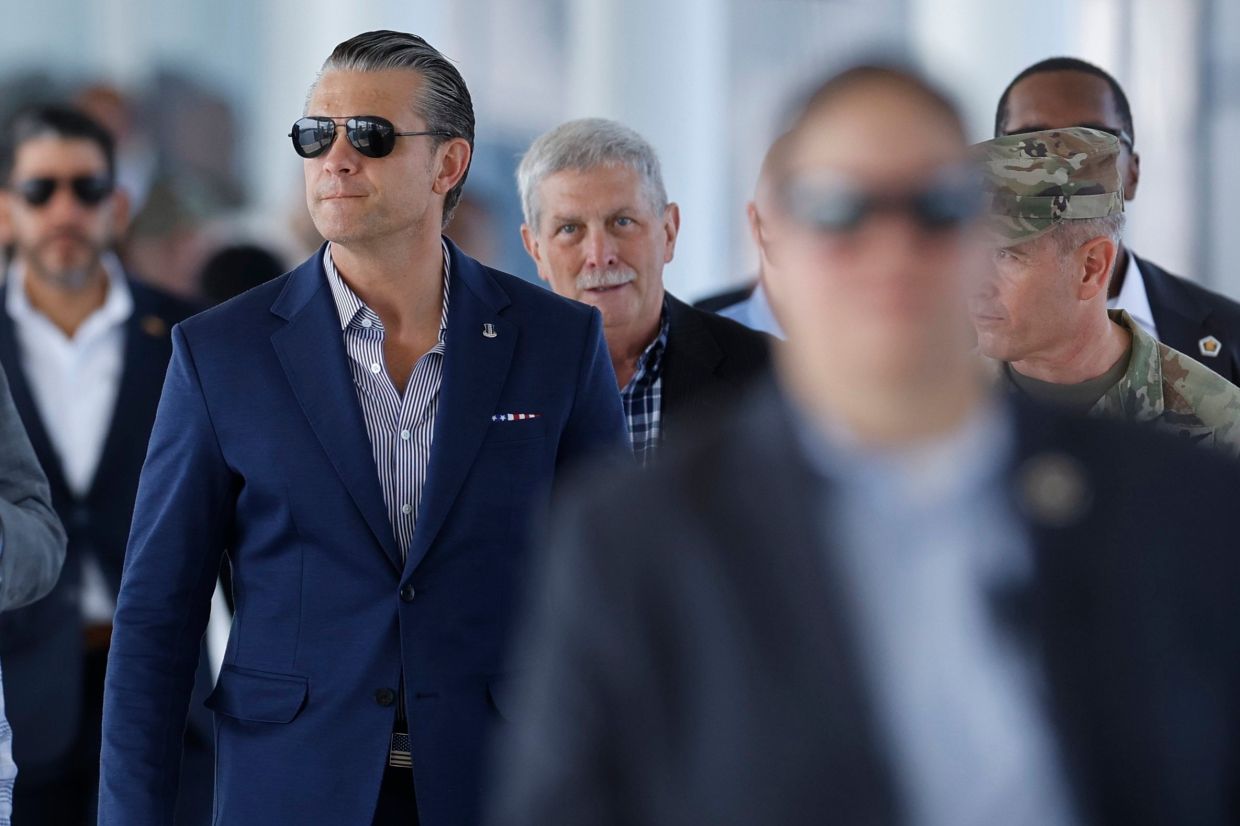
Anonymous officials have suggested that Pete Hegseth, the US Defense Secretary, faces imminent removal from his post, casting uncertainty over the carefully cultivated military relationship between Washington and Beijing at a critical diplomatic moment. The sources, speaking without authorisation, attributed the pressure to an ongoing deadlock centred on Iran policy and a barrage of critical media coverage that has eroded his standing within the administration. This personnel turbulence arrives as US-China defence ties have entered their strongest phase in over a decade following Donald Trump's May visit to Beijing, where he and President Xi Jinping committed to building a constructive bilateral relationship that extends to military-to-military engagement.
The thawing of US-China defence relations under Trump's second term represents a dramatic reversal from years of escalating tensions and mutual distrust. Military contacts have resumed at nearly every institutional level, signalling a genuine effort by both capitals to establish communication channels that had previously deteriorated. During a defence forum held weeks after Trump's Beijing summit, Hegseth himself declared that the relationship between the two militaries had reached its best condition in many years, positioning military ties as a natural extension of Trump and Xi's broader diplomatic realignment. Alvaro Smith, the deputy assistant defence secretary responsible for China, Taiwan, and Mongolia, reinforced this progress publicly, crediting Hegseth's leadership for actively repairing what he described as a previously fractured military-to-military channel.
Yet Hegseth's potential departure presents a thorny challenge for the sustainability of these diplomatic gains. Zhao Minghao, an international relations scholar at Fudan University, suggested that Trump might engineer a cabinet reshuffle to assign responsibility for difficult policy outcomes, noting that such reshuffles are historically common as administrations approach midterm elections. The professor warned that removing Hegseth would disrupt the delicate relationship-building work, particularly given his established rapport with Chinese Defense Minister Dong Jun through previous meetings held in Malaysia and during Trump's China trip. If Hegseth exits and a successor must establish trust from scratch, the momentum accumulated over recent months could dissipate, requiring months or years to rebuild the interpersonal and institutional foundations currently being cemented.
However, several US officials and analysts have pushed back against the notion that Hegseth's departure would necessarily derail military cooperation. They point to the presence of other Pentagon figures, particularly Deputy Secretary of Defense Stephen Colby, who appears to have cultivated a favourable impression among Chinese officials. Colby's recent participation in high-level meetings with Ma Zhaoxu, China's vice-minister for foreign affairs, reportedly impressed Beijing officials through substantive and in-depth exchanges. According to sources familiar with these interactions, the Chinese side has taken particular note of Colby's previous statements regarding Taiwan, viewing his pragmatic approach to cross-strait matters as more aligned with Beijing's strategic interests than the positions of traditional China hawks in Washington.
The Taiwan question has long been the most sensitive flashpoint in US-China relations, and Beijing's apparent comfort with Colby's positioning signals potential flexibility in the relationship if institutional continuity can be maintained. China continues to regard Taiwan as an inseparable part of its sovereign territory and has refused to renounce military options for eventual reunification. The United States, while avoiding formal diplomatic recognition of Taiwan's independence and refusing to take sides on the sovereignty question, remains legally obligated to provide the island with defensive weapons and is firmly committed to preventing any unilateral attempt to seize the territory by force. Colby's measured approach to these competing interests appears to have resonated with Beijing more than hardline posturing, suggesting that the defence partnership could weather Hegseth's exit provided his successor maintains similar diplomatic pragmatism.
The broader strategic context underpinning the military rapprochement reflects Trump and Xi's mutual interest in what officials describe as building relations based on "strategic stability." This framework fundamentally reorients US-China military engagement away from confrontational posturing toward dialogue aimed at managing competition and reducing miscalculation risks. Zhao noted that the revival and strengthening of defence exchanges flows directly from this shared commitment to stability, meaning that the momentum extends beyond any individual defence secretary's tenure. The consensus among observers is that unless Hegseth's replacement emerges as a committed China adversary determined to reverse the thaw, the military-to-military channels will likely persist and continue their gradual deepening.
The timing of this personnel uncertainty carries particular weight given Xi Jinping's imminent state visit to Washington, scheduled for the coming month and representing his first formal state visit to the United States since 2015. This engagement is expected to serve as a capstone to the relationship-building efforts initiated during Trump's Beijing trip, with military-to-military cooperation featuring prominently on both delegations' agendas. Chinese officials clearly view the defence relationship as integral to the broader strategic partnership that Trump and Xi are attempting to construct, and a smooth visit would reinforce the commitment to military dialogue at the highest levels. Should Hegseth remain in post through Xi's visit, continuity would be assured; should he depart before the trip, his successor would inherit a critical window for demonstrating commitment to ongoing military engagement.
Sources familiar with current military contacts characterise the present state of US-China defence relations as "very good right now," with cautious optimism that current trajectories will persist regardless of Hegseth's immediate fate. The consensus view holds that military-to-military engagement has developed sufficient institutional momentum and high-level political backing that personnel changes at the Defence Secretary level need not prove disruptive, provided the replacement maintains basic continuity of approach. The working-level military talks that have resumed across numerous institutional channels represent investments of time and diplomatic capital that both sides are reluctant to abandon after years of frozen communication.
For regional observers, particularly Southeast Asian nations navigating between Washington and Beijing, the strength of US-China military dialogue carries profound implications. A durable and predictable military-to-military relationship between the two superpowers reduces the risk of accidental escalation in regional flashpoints, including the South China Sea, Taiwan Strait, and Korean Peninsula. Countries like Malaysia have geographic and economic interests that depend upon stable great-power relations, and the recent military thaw directly affects regional security architecture. Should military ties falter due to internal US political turmoil, the resulting uncertainty could trigger renewed tension and risk-taking by actors at lower levels of military command who might lack clear guidance from deteriorating civilian-military channels.
Zhao's assessment that institutional continuity at the Pentagon would enable military exchanges to proceed irrespective of leadership changes reflects the structural reality that defence relations have developed beyond the personal relationships of individual officials, though such relationships certainly matter. Military visits, joint protocols, and communication mechanisms are now sufficiently established that they generate their own momentum. The secretary of defence remains a crucial figure in setting tone and priorities, but the foundational work of rebuilding channels and establishing trust has advanced sufficiently that a new defence secretary would inherit a functioning relationship rather than one requiring complete reconstruction.
Ultimately, the uncertainty surrounding Hegseth's position reflects broader turbulence within the Trump administration that extends beyond defence policy. The Iran policy deadlock mentioned as contributing to pressure on Hegseth suggests deeper ideological divisions within the administration about America's role in Middle Eastern affairs, with implications for alliance relationships and military doctrine. Should Hegseth be removed, the signal sent would carry meaning both domestically and internationally about Trump's willingness to enforce discipline on his cabinet and the administration's tolerance for policy dissent. For China, the key question is whether whatever defence secretary emerges from a reshuffle represents continuity with the strategic stability framework or a reversion to containment postures that characterised recent years.
The convergence of Hegseth's uncertain tenure with Xi's impending state visit creates a moment of unusual consequence for bilateral military relations. Both governments have invested significantly in the recent thaw and appear genuinely committed to sustaining it, yet the fragility of those commitments to political disruption has been exposed. Should the Trump administration resolve its internal dynamics before Xi's arrival, the visit could crystallise the military partnership on firmer ground. Should personnel instability continue or worsen, the visit risks becoming a diplomatic exercise in damage control rather than a genuine milestone in relationship-building. For Southeast Asia and the broader region, the outcome of this diplomatic juncture will shape the security environment for years to come.

