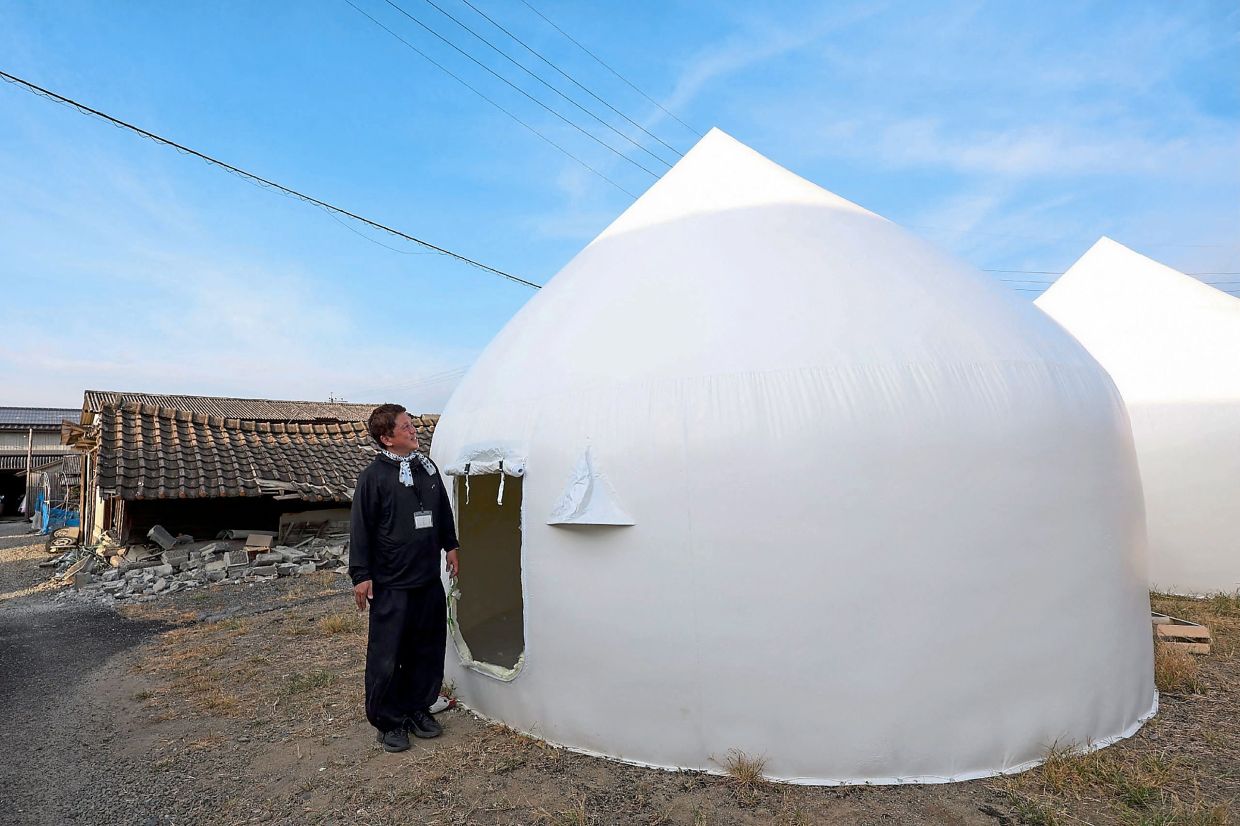
The death toll from Japan's devastating Kumamoto earthquake has climbed to 36, with authorities now confronting a grim secondary crisis: soaring temperatures claiming lives among those already traumatised by the disaster. An elderly woman in her 70s was discovered dead in a stationary vehicle this week, succumbing to heat stroke in conditions that forecasters describe as dangerously extreme. Her passing underscores warnings that emergency officials and disaster management experts have long issued about the compounding perils that survivors face in the immediate aftermath of major seismic events.
The magnitude 7.1 earthquake struck Kumamoto Prefecture on Japan's southern island of Kyushu on Tuesday, triggering widespread structural damage and displacing tens of thousands of residents. Initial search-and-rescue efforts have been intensive and often heartbreaking. At the Aeon Mall in the town of Kashima, one of the most severely affected locations, rescue teams concluded a prolonged operation on Saturday after extracting five survivors but also recovering seven bodies. The shopping centre suffered catastrophic damage when an explosion believed to have been triggered by a gas leak caused walls and an entire floor to collapse, even though roughly 3,000 shoppers had been evacuated to the carpark beforehand.
What makes the current situation particularly precarious for survivors is the convergence of two natural emergencies. The Japan Meteorological Agency reported that temperatures in Kumamoto city reached 36.6°C on Saturday and were forecast to climb further, meeting the agency's threshold for "extreme heat" conditions. In Southeast Asia, where Malaysia experiences year-round tropical warmth, such temperatures might seem routine, yet for survivors of a major earthquake—many of whom are elderly, injured, or already stressed—the compounding effect of heat exposure creates genuine medical peril. Dehydration, heat exhaustion, and heat stroke emerge as silent killers targeting those too traumatised or disabled to seek adequate shelter.
Kumamoto Governor Takashi Kimura has acknowledged the tragedy and called for urgent measures to protect vulnerable evacuees. His immediate appeal focused on those sheltering in vehicles, urging them to keep their cars refuelled so they can run air-conditioning continuously, or better still, to relocate to designated evacuation centres with functioning cooling systems. This recommendation highlights the difficult choices facing disaster survivors: many prefer the relative privacy and autonomy of sleeping in cars to the crowded conditions at communal shelters, yet this preference now carries heightened health risks.
The scale of displacement is substantial. More than 9,000 people remain in crowded emergency shelters housed in converted community centres, school gyms, and classrooms—many of which lack air-conditioning altogether. Thousands more have opted to sleep in vehicles parked at municipal lots and parks or outdoors near their destroyed homes. This fragmentation of the shelter population, while understandable from a psychological standpoint, complicates the delivery of aid and medical monitoring. Authorities are now preparing to distribute informational leaflets to vehicle-sheltering evacuees with practical guidance on hydration, physical activity to prevent dangerous blood clotting, and the importance of maintaining cool environments.
Underlying infrastructure failures are exacerbating the humanitarian crisis. Nearly 47,000 homes remain without access to fresh running water, a catastrophic shortfall in basic sanitation and survival necessities. Simultaneously, fuel shortages are affecting the broader region, creating shortages of petrol needed to power vehicle engines for air-conditioning and generators needed to cool shelters. These twin scarcities—water and fuel—form a vicious circle that intensifies heat-related illness risks while hampering rescue and recovery operations.
Prime Minister Sanae Takaichi acknowledged the mounting challenges during a government task force meeting on Saturday, announcing that supplies including water, food, portable toilets, air-conditioning units, and privacy partitions would be distributed to evacuation centres. Her commitment to "do everything we can" reflects growing public and political pressure to address what experts have long criticised as inadequate Japanese disaster shelter standards. Academic researchers and humanitarian organisations have documented how crowded, poorly ventilated, and unsanitary emergency facilities create additional stress and vulnerability to secondary health crises beyond the immediate earthquake injuries.
The broader casualty picture remains fluid. Official figures place earthquake-related deaths at 36, with 105 injured across the prefecture. However, authorities are investigating two additional deaths to determine causation, suggesting that the actual toll attributable to the seismic event may yet rise. More troubling still is that the total number of missing persons remains unknown, meaning search operations will continue intensively as temperatures persist. Thousands of Self Defence Force personnel, police officers, rescue workers, and search dogs remain deployed throughout the affected area.
Physical destruction has been extensive. Authorities have documented more than 180 homes completely destroyed and over 3,800 buildings suffering damage ranging from moderate to severe. This scale of structural loss means that many survivors cannot simply return home even once shelters close; reconstruction will take months or years, and many will require prolonged displacement. The convergence of ongoing seismic aftershocks, extreme heat, water shortages, and the trauma of loss creates conditions unusually hostile to human survival and recovery.
For Malaysian observers and Southeast Asian disaster management authorities, Kumamoto's unfolding crisis offers sobering lessons. While tropical regions like Malaysia are accustomed to heat management, they face similar challenges when earthquakes or other disasters displace populations into ad-hoc shelters. The Kumamoto experience demonstrates that post-disaster death counts are never simply products of the initial natural event; secondary and tertiary causes—heat illness, water-borne disease, malnutrition, stress-induced medical episodes—can prove equally lethal if not managed proactively. Effective disaster preparedness in earthquake-prone regions must account for realistic shelter conditions, supply chain vulnerabilities, and the physiological stresses that survivors face in the days and weeks following impact.
As recovery efforts proceed, Japanese authorities face mounting pressure to improve shelter standards, accelerate infrastructure restoration, and provide targeted medical and psychological support to the most vulnerable survivors. The death of a woman from heat stroke in a parked car—preventable through adequate cooling and care—symbolises the difference between initial disaster response and sustained, humane recovery. Whether Kumamoto's experience catalyses meaningful reforms to Japanese emergency management protocols remains to be seen, but the lessons for disaster preparedness across Asia are already evident.

