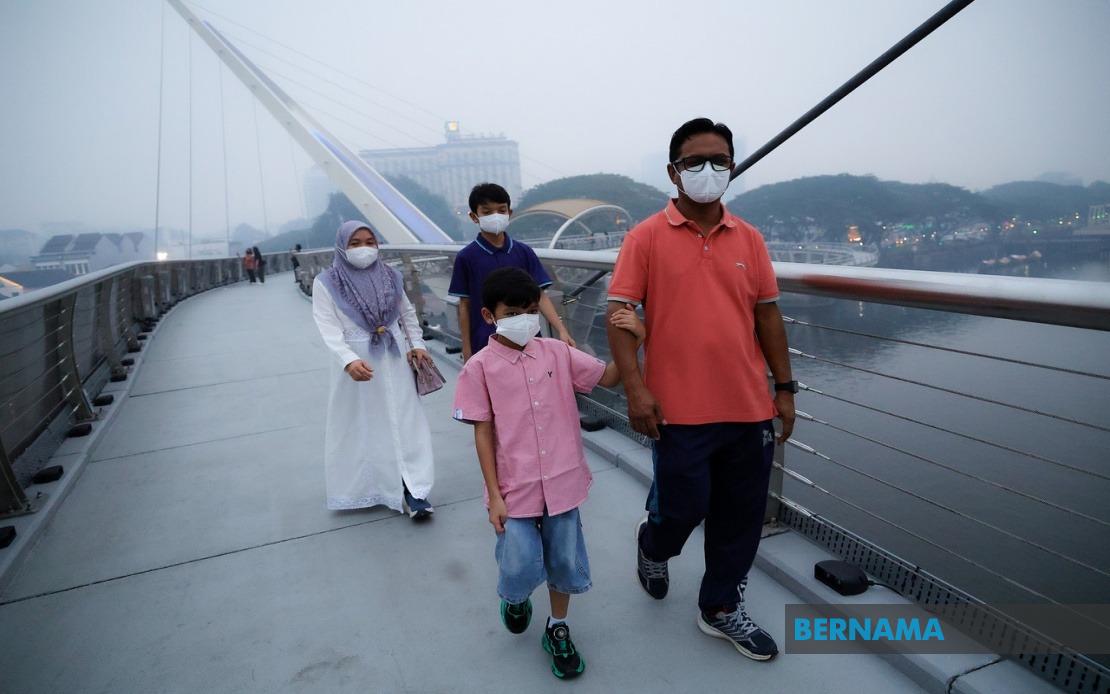
Medical professionals across Malaysia are sounding the alarm on haze-related health risks, calling for the public to take daily Air Pollutant Index readings seriously and implement protective strategies during air quality crises. The warning comes as hospitals report a dramatic surge in pollution-related illnesses, underscoring the urgent need for informed public action rather than waiting for severe pollution episodes to disrupt daily life.
Dr Anas Ahmad Jamhari, a lecturer at Universiti Sultan Zainal Abidin's Faculty of Health Sciences, emphasises that individuals should consult daily API readings published by the Department of Environment before venturing outdoors, particularly when measurements climb above 100. Those with essential reasons to leave their homes should invest in proper respiratory protection, specifically N95 masks that form an effective seal against harmful particles. The key distinction here lies not merely in purchasing a mask but in wearing it correctly—a point many Malaysians overlook. A loose-fitting mask, one frequently removed and reapplied, or a damp or damaged mask provides minimal protection. Even more problematically, facial hair compromises the seal that these masks require to filter fine particulate matter, rendering them substantially less effective.
The concern surrounding children presents particular challenges for Malaysian families during haze season. When N95 masks fail to fit properly on smaller faces, they cannot create the necessary seal to block fine particles. This vulnerability means children may require alternative protective strategies or supervised indoor activities during hazardous air quality periods. The implications extend beyond individual households to schools and childcare centres, which must grapple with balancing educational continuity against respiratory health protection.
Beyond mask usage, Dr Jamhari strongly advises against strenuous outdoor activities such as jogging, cycling, and competitive sports during periods of elevated air pollution. Exercise fundamentally alters breathing patterns, causing individuals to inhale larger volumes of air and draw contaminated particles deeper into the respiratory system. This physiological reality creates a paradox: activities that normally benefit health become counterproductive during haze episodes. Yet field observations suggest many Malaysians continue their regular exercise routines even when API readings indicate unhealthy air quality, unwittingly increasing both immediate and long-term respiratory damage.
Within residential spaces, maintaining air quality requires deliberate action. Closing doors and windows forms the first line of defense, though this approach becomes challenging in Malaysia's tropical climate. Simultaneously, households should eliminate internal pollution sources: cigarette and vape smoke, incense and candles, and cooking activities that generate substantial smoke. For vehicle occupants, ensuring air-conditioning systems recirculate internal air rather than drawing contaminated outdoor air proves particularly important during commutes through polluted areas. At the national level, authorities must cease all open burning activities immediately, though enforcement remains inconsistent across regions.
From a toxicological standpoint, haze represents far more than a visibility problem. Dr Jamhari explains that haze comprises a complex mixture of particles and chemical compounds. The specific danger emerges from fine PM2.5 particles—particulate matter measuring 2.5 micrometres or smaller—which penetrate deep into lung tissue due to their diminutive size. Once lodged within the respiratory system, these particles trigger oxidative stress, a biochemical process that generates inflammation, damages cellular structures, and impairs respiratory function. This mechanism distinguishes haze from other environmental hazards, requiring targeted public health responses.
Datuk Dr Zainal Ariffin Omar, a public health medicine specialist, introduces a crucial but often overlooked dimension: the interaction between haze and climatic conditions. Temperature and humidity profoundly influence health outcomes during air quality crises. The public must maintain adequate hydration, as the combined effect of haze exposure and elevated temperatures substantially increases dehydration and heatstroke risks. During El Niño phenomena, Malaysia faces what Dr Zainal Ariffin describes as a dual threat—simultaneous exposure to both air pollution and extreme heat. This convergence demands comprehensive public health strategies addressing both hazards rather than focusing narrowly on API readings alone.
Treating haze as merely a seasonal inconvenience fundamentally undermines community preparedness. When citizens postpone protective measures until pollution reaches dangerous levels, they sacrifice opportunities for early intervention and suffer greater cumulative exposure. Dr Zainal Ariffin advocates for strengthened public awareness campaigns employing simple, accessible messaging that encourages proactive behaviour regardless of current API readings. This approach reverses the reactive pattern that characterises current public response.
Recent Health Ministry data validates expert concerns. Asthma cases at sentinel healthcare facilities surged more than eightfold during Epidemiological Week 34, reaching 1,811 cases compared to 219 cases the previous week. Conjunctivitis cases similarly escalated from 146 to 720 during the same period. These statistics quantify the human cost of air pollution, representing thousands of Malaysians suffering respiratory distress and eye inflammation. The surge occurs across the country's sentinel facilities, indicating geographically distributed impacts rather than isolated regional problems.
For Malaysian residents and policymakers alike, these expert warnings and clinical data points converge on a singular message: haze episodes demand serious, sustained individual and collective responses. The measures recommended—API monitoring, proper mask usage, modified activity patterns, home environmental controls, and hydration attention—represent practical strategies within individual control. Simultaneously, addressing haze requires systemic changes including elimination of transboundary pollution sources, stricter enforcement against open burning, and integrated climate resilience planning. The health implications are too significant, and the preventive options too available, for complacency.

